Dog Boarding in Charlotte: The In-Home Approach
Mike and Colleen Bass
Overnight Dog Boarding

Key Takeaways
In-home dog boarding is overnight care in a handler's private residence, matched to your dog's temperament and energy level, not a kennel facility.
Pup Scouts' Charlotte in-home boarding matches each dog to a certified handler's home where routine, calm, and predictable structure replace crate schedules and multi-dog chaos.
Every Charlotte boarding stay includes pre-boarding assessments, daily photo updates, and post-stay behavior reports to maintain transparency and trust.
Charlotte households move quickly. Morning commutes fill I-77 and I-485. Workdays stretch past dinner. Travel plans stack up. When a weekend trip or a work conference arrives, the question surfaces: where does your dog stay?
The default answer for decades has been a kennel facility. Rows of runs. Concrete floors. Scheduled rotations. Dogs cycled through outdoor yards at fixed intervals. It works for some dogs. For others, it introduces stress the family spends weeks unwinding after pickup.
Overnight boarding in Charlotte operates differently at Pup Scouts. No facility. No rotating staff. No multi-dog chaos in shared spaces. Your dog stays in a handler's private home, matched to temperament and energy, where calm and routine replace crate schedules and noise.
What in-home boarding means in practice
In-home dog boarding is overnight care provided in a handler's private residence. The dog lives as part of that household for the duration of the stay. Meals happen on the same schedule. Walks follow the same route structure. Downtime looks like a living room, not a kennel run. The environment stays predictable.
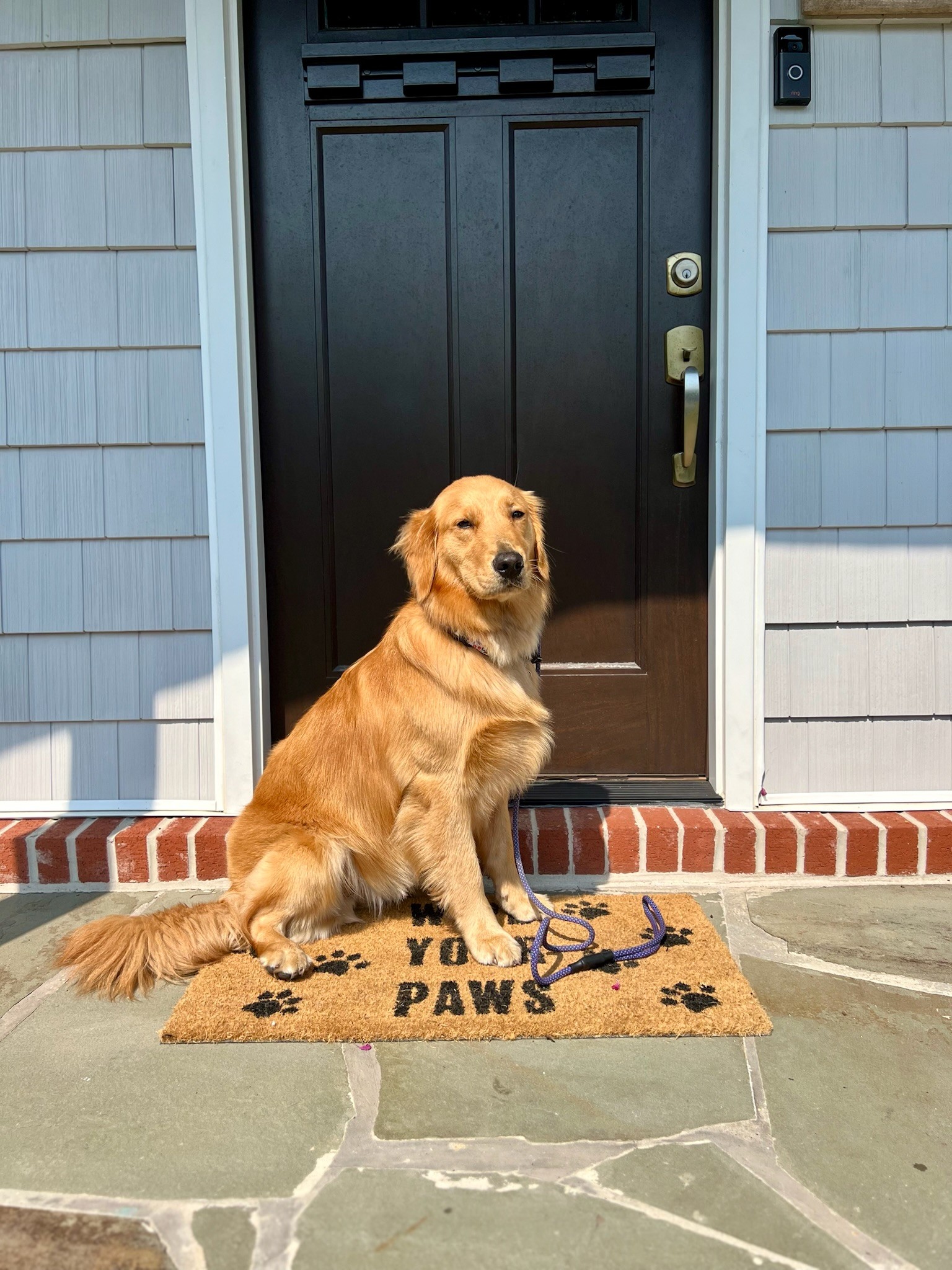
A comfortable pup waits at the door, ready for the personalized care that in-home boarding provides.
Why the in-home model works for Charlotte dogs
Charlotte's residential neighborhoods stretch across Mecklenburg County. Myers Park. Dilworth. NoDa. Plaza Midwood. SouthPark. Each area has its own density, its own noise floor, its own sidewalk traffic. Dogs who live in these neighborhoods adapt to specific routines. Morning walks before the commute. Evening walks after work. Quiet afternoons inside.
A kennel facility disrupts that pattern. The dog enters a high-stimulus environment with unfamiliar dogs, unfamiliar handlers, unfamiliar sounds. Some dogs adjust quickly. Others spend the first 24 hours pacing, barking, refusing meals. The stress compounds if the stay extends beyond a weekend.
In-home boarding preserves the rhythm. The dog wakes in a quiet house. Walks happen on neighborhood sidewalks, not facility yards. Downtime happens on a couch or a dog bed in a living room, not in a crate under fluorescent lights. The structure mirrors what the dog knows.
How dogs are matched to host homes
Not every dog fits every home. A high-energy adolescent retriever needs a different environment than a senior hound with mobility limits. A dog reactive to other animals cannot board in a home with resident cats. A dog who thrives on structure needs a handler who maintains consistent routines.
Pup Scouts' Charlotte boarding process starts with an in-home assessment. A handler visits your home, meets your dog, reviews behavior history, observes how your dog responds to new people and changes in routine. The assessment produces a match profile: energy level, reactivity patterns, comfort with other dogs, separation tolerance, crate training status, medical needs.
That profile determines placement. High-energy dogs go to handlers with fenced yards and active schedules. Anxious dogs go to handlers experienced with gradual desensitization. Multi-dog households are matched only to dogs with proven pack experience. Senior dogs with mobility limits go to single-story homes with minimal stairs.
The result is a boarding placement built around the dog's actual needs, not the first available kennel slot.
Comparison: In-home boarding vs facility boarding in Charlotte
Factor | In-home boarding | Facility boarding |
|---|---|---|
Environment | Private residence, calm household | Multi-dog facility, rotating kennel runs |
Handler consistency | Same handler for duration of stay | Rotating facility staff across shifts |
Routine structure | Mirrors home routine (meal times, walk schedule) | Facility schedule (fixed feeding/yard rotations) |
Other dogs | None, or temperament-matched only | Multiple dogs in shared spaces |
Updates | Daily photo reports, direct handler contact | Scheduled facility check-ins, less frequent |
Stress triggers | Minimal (familiar home-like setting) | Higher (noise, unfamiliar dogs, facility stimuli) |
Facility boarding serves a purpose for dogs who adapt quickly to high-stimulus environments or for families needing last-minute, high-volume availability. In-home boarding serves dogs who need predictability, handlers who prioritize behavior continuity, and families who want verifiable transparency during the stay.
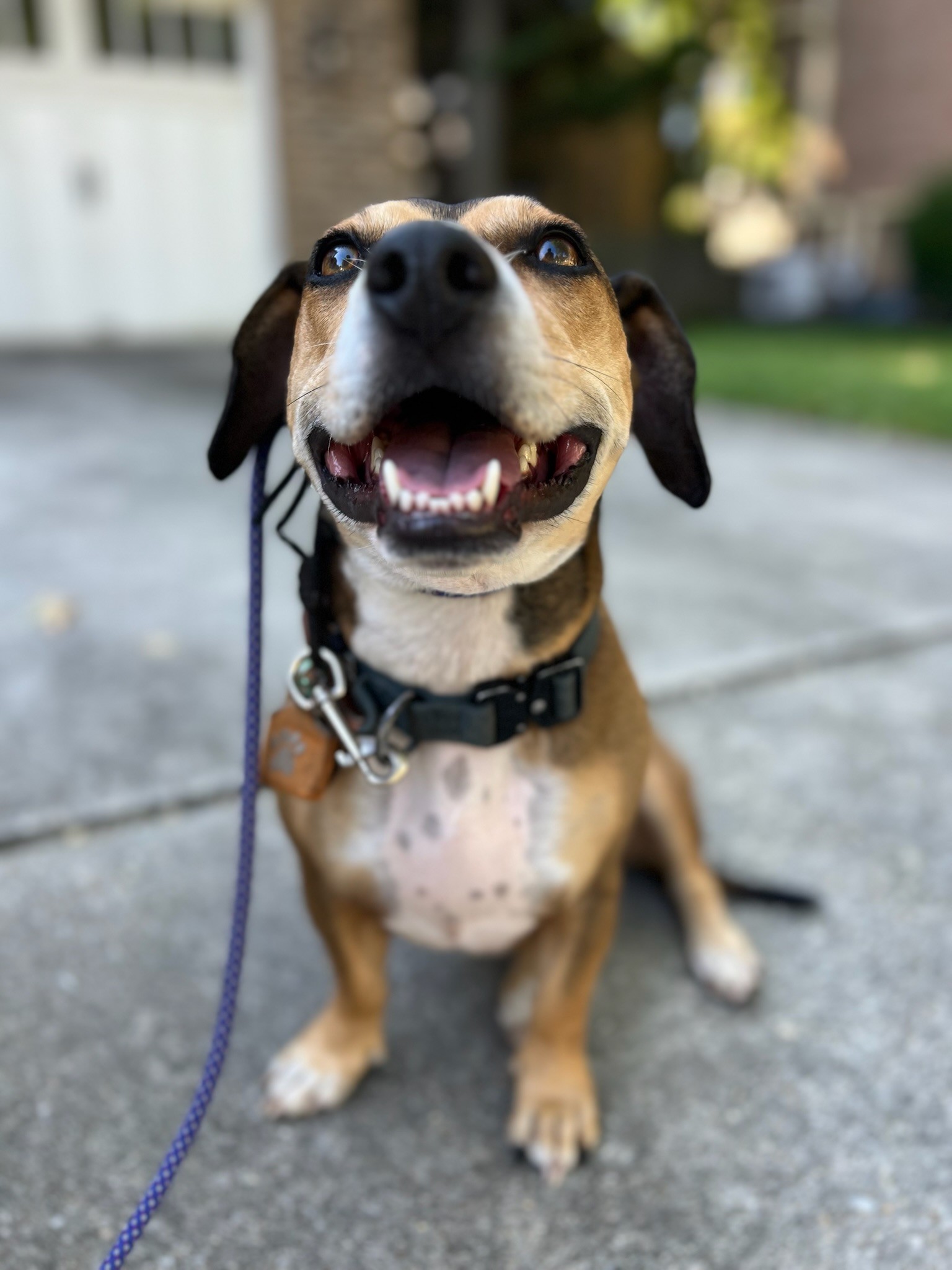
A cheerful pup eagerly awaits the start of the Charlotte boarding process with their Pack Leader.
How the Charlotte boarding process works
The process is structured to reduce surprises for both the family and the dog. Six steps, each with a verifiable checkpoint.
Initial inquiry and match review. Family contacts Pup Scouts with travel dates, dog profile (breed, age, temperament notes, any behavioral or medical considerations). Boarding coordinator reviews handler availability and identifies potential matches based on the dog's needs.
In-home assessment. A handler visits the family's home. Meets the dog. Reviews daily routine, feeding instructions, medication needs, emergency contact preferences. Observes how the dog responds to a new person entering the space. Documents any reactivity, separation anxiety, or comfort signals.
Match confirmation. Based on the assessment, the coordinator confirms the handler placement. Family receives handler bio, home environment details, and a pre-boarding checklist (food, medications, veterinary contact, preferred walking routes if specific).
Drop-off and transition. Family brings the dog to the handler's home or arranges a pickup if distance permits. Handler walks the dog around the property, introduces the dog to the space, establishes feeding and walk schedule for day one.
Daily updates during the stay. Handler sends photo updates daily. Notes meals eaten, walks completed, behavior observations (calm, playful, anxious moments, sleep quality). Updates go directly to the family via text or email, not through a facility portal requiring login.
Post-stay pickup and debrief. Family retrieves the dog. Handler provides a written behavior report covering the full stay: eating patterns, energy levels, any stressors observed, how the dog responded to the routine. Recommendations for future stays if adjustments would help.
Why this matters in Charlotte specifically
Charlotte's neighborhoods don't all operate the same way. Myers Park has wide sidewalks and low traffic. NoDa has higher pedestrian density and street noise. SouthPark has heavy car traffic during commuter hours. A dog conditioned to one environment may struggle in another.
In-home boarding allows geographic matching. A dog from a quiet Myers Park street boards with a handler in a similar low-density area. A dog from a high-energy NoDa household boards with a handler comfortable with urban sidewalk traffic. The environment stays consistent.
This also matters for multi-day stays. A dog boarding for five nights in a facility may show behavioral regression by day three, increased barking, refusal to eat, pacing in the kennel. The same dog in an in-home setting often stabilizes by day two once the routine becomes predictable.
From kennel stress to calm routine
The shift from facility boarding to in-home boarding changes what families see at pickup. Facility pickups often show a dog who is overstimulated, jumping, pulling, vocalizing, needing hours to settle back into home routine. In-home pickups show a dog who transitions smoothly because the environment never deviated far from normal.
Families report fewer post-boarding behavioral disruptions. No multi-day refusal to eat. No separation anxiety spikes the week after pickup. No regression in leash manners or house training. The dog returns in the same behavioral state the family left them in, sometimes calmer due to consistent structure during the stay.
This is the standard Pup Scouts holds in Charlotte. Boarding is not a holding pattern. It is an extension of the routine the dog already knows.
Frequently Asked Questions
What if my dog has never stayed anywhere other than home?
We start with a shorter trial stay, one or two nights, to establish baseline comfort. The handler documents how the dog responds to the new environment, meal routine, and walks. If the dog shows significant distress, we adjust the approach for future stays or recommend gradual desensitization before longer bookings.
Can my dog board with a handler who has other dogs?
Only if your dog has demonstrated calm, neutral behavior around other dogs in structured settings. The in-home assessment verifies this. If your dog shows reactivity, resource guarding, or anxiety around other animals, we match them to a handler without resident pets.
How do you handle medical needs during boarding?
Handlers administer medications per the family's written instructions. If the dog requires injections, wound care, or mobility assistance, we match to a handler trained in those protocols. Veterinary contact information stays on file. In the event of an emergency, the handler contacts the family and the designated vet immediately.
What happens if my dog refuses to eat during the stay?
Handlers document meal patterns daily. If a dog skips one meal, the handler waits until the next scheduled feeding and tries again. If the dog refuses two consecutive meals, the handler contacts the family and adjusts the approach, sometimes switching food presentation, sometimes adjusting walk timing to increase appetite. Persistent refusal triggers a veterinary consult.
How far in advance do I need to book?
For holiday weekends and peak travel seasons (Thanksgiving, Christmas, spring break), we recommend booking four to six weeks ahead. For standard weekdays or non-peak weekends, two weeks' notice is usually sufficient. Last-minute availability depends on handler capacity at the time of inquiry.
Written by Mike and Colleen Bass, founders of Pup Scouts. Mike and Colleen have led structured dog care across Maryland, Orange County, and Charlotte since 2015. More about our team.
Get started with CLT Pup Scouts, or call (704) 330-3089. Find us on Google as CLT Pup Scouts.
Similar Blogs


