Dog Training in Huntington Beach for Puppies
Mike and Colleen Bass
Dog Training

Key Takeaways
Dog training in Huntington Beach for puppies and adolescent dogs has to account for pier crowds, bike-path traffic, and off-leash dogs at Huntington Dog Beach, not quiet-yard repetition.
Fall is the strongest training window in Huntington Beach: cooler afternoons, lighter tourist crowds, and steadier daily walk routines make new skills easier to reinforce.
Most Huntington Beach puppies and adolescent dogs hold a loose leash through moderate distraction within four to six weeks when in-home sessions are paired with real neighborhood walks.
Late afternoon on Main Street, the sidewalk fills up. Surfers carry boards toward the pier. Cyclists move fast along the beach path. A family walks out of Pacific City with shopping bags and an adolescent dog who stops dead every time a skateboard rolls past. Two blocks over, a new puppy owner is doing laps around the block, trying to get ten calm minutes before the leash tension starts again.
Huntington Beach is not a quiet-yard town. Between the pier, the bike path, and Huntington Dog Beach, a young dog here meets more moving stimuli in one walk than most dogs see in a week. Puppies and adolescent dogs either learn to filter that activity early, or they spend the next year reacting to it.
Dog training in Huntington Beach for puppies and adolescent dogs is structured leash work and controlled exposure to beach-town activity, built through short in-home sessions and real walks along the routes a family actually uses. It teaches a young dog to stay oriented to its handler instead of every passing bike, board, or dog.

Fall is the perfect time to begin training, when dogs are naturally more focused and ready to learn.
Why Fall Is the Right Season to Start Training in Huntington Beach
Huntington Beach summers bring peak pier crowds, packed parking near Pacific City, and hot afternoon pavement that shortens every walk. Fall changes that. Foot traffic along Main Street and the bike path thins out, mornings and evenings cool down enough for longer sessions, and families settle back into a school-year routine that makes daily practice realistic.
That routine matters more than any single session. A puppy walked the same route at the same time most days generalizes faster than one trained inconsistently. Fall's steadier schedules and calmer sidewalks make it the easiest season in Huntington Beach to build a leash habit that holds once summer crowds return.
🖼️ Inline photo: placeholder. Drag in a puppy on-leash walking calmly along a Huntington Beach sidewalk near Main Street from bunny.net OC folder.
How Does a Young Dog Learn to Handle Huntington Beach's Crowds?
A young dog learns to handle crowds through distance, repetition, and a handler who reads the dog's threshold before it reacts. Training does not start at the pier. It starts on a quiet side street, where the puppy or adolescent dog can hold a loose leash without any real distraction, and only moves toward busier ground once that foundation is solid.
From there, exposure increases in small steps: a side street near Huntington Central Park, then a slower stretch of the bike path, then the edge of pier foot traffic at a distance where the dog can watch without reacting. Each step only advances once the dog shows calm body language at the current level. Dogs rushed straight into pier crowds or a full afternoon at Huntington Dog Beach tend to shut down or escalate. Dogs walked through it in stages tend to generalize the skill and carry it into new environments on their own.
Puppy, Adolescent, and Adult Dogs: What Training Looks Like at Each Stage
Training priorities shift as a dog matures, and Huntington Beach's environment puts pressure on each stage differently.
Stage | Typical age | Main training focus | Common Huntington Beach distraction |
|---|---|---|---|
Puppy | 8 to 16 weeks | Name recognition, handler focus, first controlled exposure | Bicycles and skateboards on the beach path |
Adolescent | 5 to 14 months | Proofing leash skills, holding focus around other dogs | Off-leash dogs near Huntington Dog Beach |
Adult | 18 months and up | Maintaining consistency, correcting learned pulling habits | Weekend pier crowds and Pacific City foot traffic |
A puppy's job is exposure without overwhelm. An adolescent dog's job is holding onto what it already learned while its confidence and hormones shift. An adult dog with an established pulling habit needs the same mechanics retaught more deliberately. All three stages train on the same streets. The difference is pace and patience, not the environment.
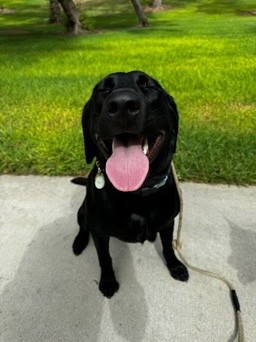
A confident pup ready to learn, embodying the positive results of consistent dog training in Huntington Beach.
How We Approach Dog Training in Huntington Beach
Walk the route first. Before the first session, a Pack Leader walks the family's usual streets, noting where the dog struggles most: the bike path, a school pickup corner, the block closest to the pier.
Start indoors or on a quiet street. The first session builds name recognition and loose-leash mechanics away from real distraction.
Introduce one distraction at a time. A bike passing at a distance, a person on a skateboard, a dog across the street. Each is added only once the dog holds calm at the level before it.
Move toward the busier ground gradually. Sessions progress from a residential block to the edge of Main Street, then closer to the pier and Huntington Dog Beach as the dog's threshold allows.
Practice in real conditions. A later session runs during a busier window, deliberately, to confirm the dog can hold its training when several distractions stack at once.
Send owners home with a plan. Every session ends with notes on what worked and a specific next step for the family to repeat between visits.
🖼️ Inline photo: placeholder. Drag in an adolescent dog holding a loose leash near a Huntington Beach bike path with a cyclist passing from bunny.net OC folder.
Training Near the Pier, Pacific City, and Huntington Dog Beach
Huntington Beach gives a young dog more verifiable real-world training ground than almost any neighborhood in Orange County. Huntington Central Park offers quiet trails for early exposure work, wide open space, and enough foot traffic to practice calm greetings without the intensity of the coastline. The HB Pier and the shops around Pacific City add foot traffic, food smells, and tight sidewalk spacing that test a dog's focus under real pressure. Huntington Dog Beach itself, one of the few beaches in the state where dogs run off-leash, is often the single hardest environment a young dog in this market has to learn to handle calmly on a leash from the sand's edge.
Neighboring Fountain Valley and Newport Beach add supporting context to this same corridor. Families who split time between Huntington Beach and Fountain Valley need a young dog that generalizes past one zip code, and adolescent dogs that have practiced around Newport Beach's coastal foot traffic tend to handle Huntington Beach's pier crowds with less friction the first time they meet them.
From Distracted Puppy to Confident Walking Companion
The dog pulling toward every skateboard on Main Street and the dog walking calmly past the same skateboard are often separated by a few months of structured, staged exposure, not a different temperament. Training builds the pattern in small, repeatable steps: quiet street, moderate distraction, busier ground, real conditions.
By the time winter crowds thin out further and next summer's pier traffic returns, a puppy or adolescent dog trained through this fall in Huntington Beach should be walking the same routes with a loose leash and a handler it actually checks in with, not one it's dragging toward the next distraction.
Frequently Asked Questions
When should I start training my puppy in Huntington Beach?
Start as soon as the puppy is home and settled, ideally by eight to ten weeks. The earliest weeks fall inside the primary socialization window, so beginning now, especially heading into fall's calmer schedule, gives a puppy the most time to practice before next summer's crowds return.
How do I get my adolescent dog to stop reacting to other dogs at Huntington Dog Beach?
Work at a distance first, on-leash, well back from the sand where the dog can see other dogs without close proximity. Reward calm attention to you rather than fixation on the other dogs, then shorten the distance gradually over multiple sessions as the dog's response stays calm.
Is fall really a better time to train than summer in Huntington Beach?
Yes. Cooler temperatures allow longer walks, pier and Pacific City crowds thin out compared to peak summer, and most families settle into a steadier daily schedule once school starts, which makes consistent practice easier to maintain.
Can I train my dog myself, or do I need in-home sessions?
Many owners can maintain skills once they're established, but building the initial foundation, especially around specific triggers like the bike path or off-leash dogs at the beach, goes faster with a Pack Leader who can read the dog's threshold in real time and adjust the pace of exposure.
How long does it take before my dog can handle the pier or Pacific City calmly?
Most Huntington Beach puppies and adolescent dogs hold a loose leash through moderate distraction within four to six weeks of consistent practice. Reaching full pier-crowd or Pacific City comfort usually takes longer and depends on how often the family reinforces the skill between sessions.
Written by Mike and Colleen Bass, founders of Pup Scouts. Mike and Colleen have led structured dog care across Maryland, Orange County, and Charlotte since 2015. More about our team.
Ready to bring concierge-level training to your Huntington Beach puppy or adolescent dog? Get started with OC Pup Scouts, or call (949) 629-0932. Find us on Google as OC Pup Scouts.
Similar Blogs


