Canine Good Citizen: What the Test Involves
Mike and Colleen Bass
Dog Training

Key takeaways
The Canine Good Citizen test is ten items, all pass or fail, all assessing manners rather than obedience precision. There is no score.
Any dog of any breed or age can take it, including mixed breeds and dogs who have never competed at anything.
The two items that fail most dogs are the supervised separation and the reaction to another dog. Both are about your dog coping without you, which is the real point of the award. If you're thinking about the CGC, you probably already have a dog who's pretty good and you'd like something to aim at. That's exactly who this test is for. The Canine Good Citizen test is a ten item assessment run by the American Kennel Club that checks whether a dog is well-mannered in ordinary public situations. It's pass or fail on each item, there's no scoring, and your dog needs to pass all ten in one session.
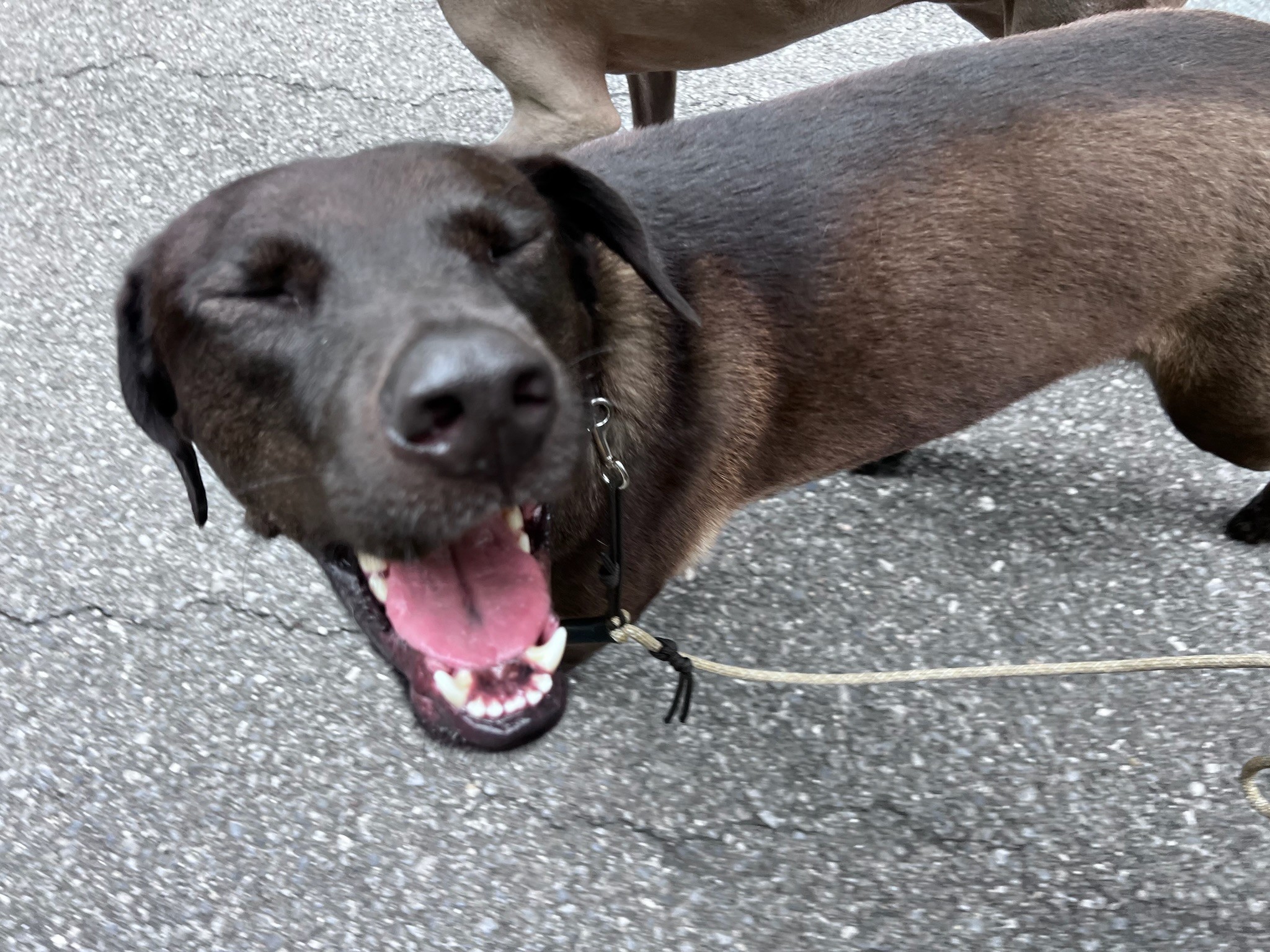
Dog training in Charlotte
The ten items
# | Item | What it is really testing |
|---|---|---|
1 | Accepting a friendly stranger | The dog stays settled while someone greets you |
2 | Sitting politely for petting | Tolerating handling from a stranger |
3 | Appearance and grooming | Allowing brushing, ears and front feet handled |
4 | Out for a walk, on a loose lead | Attention to the handler, not heel precision |
5 | Walking through a crowd | Neutrality around people and movement |
6 | Sit, down, and stay on command | Basic control, position held briefly |
7 | Coming when called | Recall from ten feet, on a long line |
8 | Reaction to another dog | Neutrality, not friendliness |
9 | Reaction to distraction | Startle is allowed, panic is not |
10 | Supervised separation | Three minutes with a stranger, calm |
Notice how little of that is obedience. Item 4 doesn't ask for a competition heel, and item 8 doesn't ask your dog to like the other dog. Neutrality passes. Enthusiasm often doesn't, which surprises a lot of people with lovely friendly dogs.
The two that fail most dogs
Item 10, supervised separation. Three minutes, you out of sight, your dog held by a stranger. Dogs fail it by barking continuously, whining or straining at the leash. It's the closest thing the test has to a separation anxiety screen, and it's the one almost nobody thinks to practice.
Item 8, reaction to another dog. Two handlers approach, shake hands, exchange a few words and move on. The dogs should show casual interest at most. Lunging fails, and so does the dog who drags you over to say hello. If your dog is the friendly one, this item is just as hard for you as it is for the reactive dog's owner.
Preparing, in five steps
Start with item 10. It takes the longest and hardly anyone practices it. Build up from thirty seconds with someone your dog already knows, somewhere boring.
Work neutrality, not greeting. For item 8, walk past other dogs at a distance where your dog can disengage, then shorten that distance over weeks. Try not to let the rehearsal turn into a greeting, however much both dogs want it to.
Practice grooming handling on purpose. Item 3 catches dogs who've never had their feet held by anyone but you, which is most dogs.
Do recall on a long line in real places. Ten feet in a quiet hallway isn't the same ask as ten feet in a park with squirrels.
Take the test on a good day. It's pass or fail in one session, and a tired or unwell dog will fail items it can do perfectly well on a Tuesday.
Is it worth doing?
For a lot of dogs and owners, genuinely yes.
It's worth it if you want a structured goal, if you're working toward therapy dog visits where the CGC is usually a prerequisite, if your landlord or insurer recognizes it, or if your dog's training has plateaued and you want something concrete to aim at together.
It's worth less if you're hoping it will fix reactivity. A reactive dog needs a distance-based plan first, and the test belongs at the end of that work rather than at the start of it. That isn't a no, it's a not yet.
The real value for most owners is items 10 and 8. Preparing for those two gives you a noticeably easier dog to live with, whether or not you ever book the test.
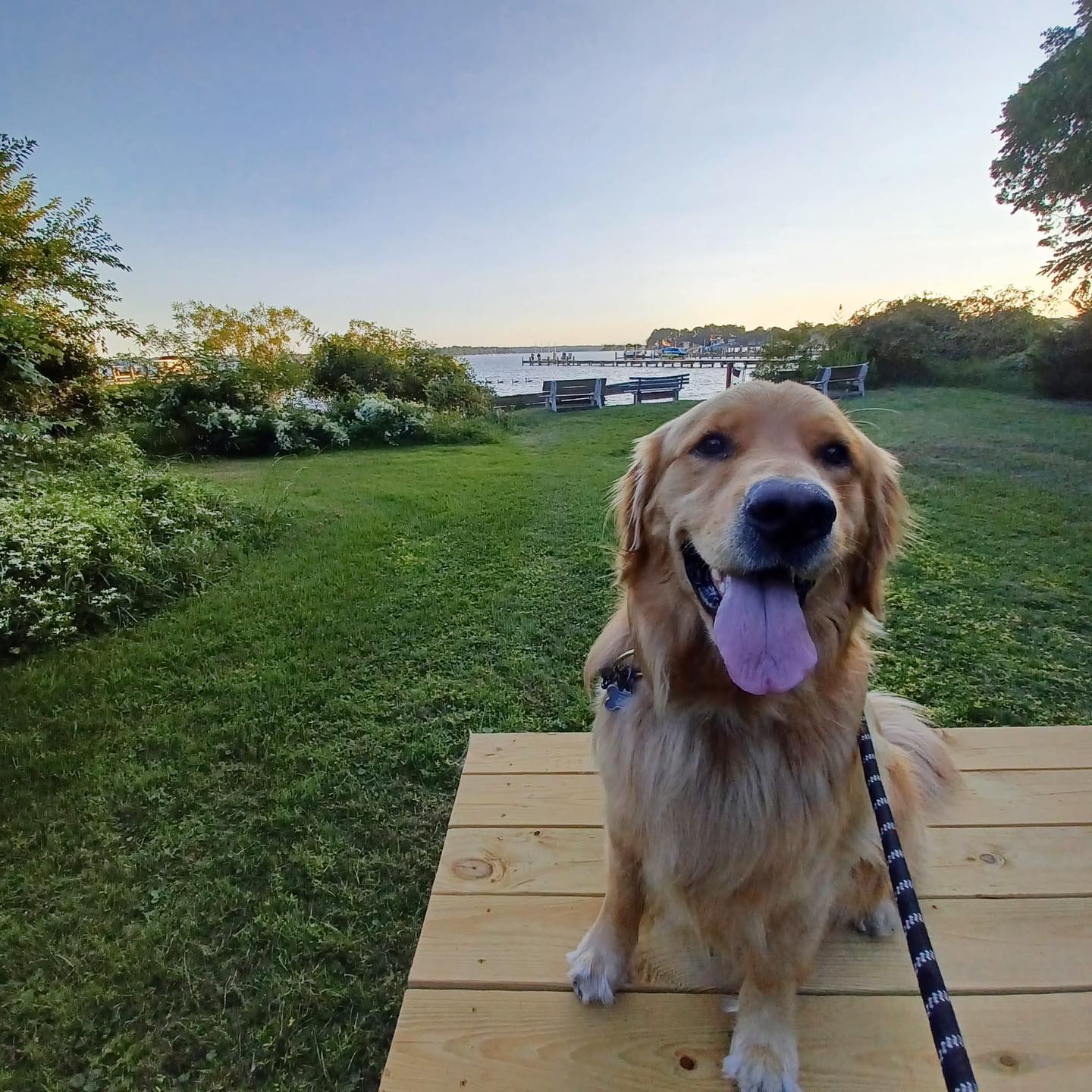
A golden retriever sits on a wooden dock facing the camera with its tongue out, with a waterfront and grassy area visible behind.
Preparing for it in Charlotte
The items that fail dogs are the ones about coping near other dogs and coping without you, and both are much easier to work on with other dogs around than in your living room.
Our dog training in Charlotte runs in-home sessions, so we can work item 10 in the house your dog actually lives in. For item 8, pack walking in Charlotte is close to a purpose-built rehearsal: five to eight temperament-matched dogs on leash, walking together, with nobody asked to greet anybody. That's the exact neutrality the test is looking for, and your dog gets to practice it weekly without it feeling like a test.
If your dog needs daily repetition rather than a weekly session, we run a multi-week Board and Train program in North Carolina and Maryland. Current availability is on the Pup Scouts Charlotte Google profile.
Frequently asked questions
What is the Canine Good Citizen test?
A ten item assessment run by the American Kennel Club that checks whether a dog is well-mannered in everyday public situations. It's pass or fail on each item, there's no score, and all ten have to be passed in one session.
How hard is the Canine Good Citizen test?
It isn't technically difficult, but two items catch most dogs: three minutes of supervised separation from you, and staying neutral when another dog passes. Both need deliberate practice, and both are worth doing anyway.
Can any dog take the CGC test?
Yes. Any breed, any age, mixed breeds included, and your dog doesn't need to be AKC registered.
How long does it take to prepare for the CGC?
Six to twelve weeks if your dog already has basic manners. Longer if supervised separation or dog neutrality is being built from scratch, and there's no prize for rushing it.
Is the CGC useful for a reactive dog?
As a milestone, yes. As a starting point, no. Your dog needs distance-based work first, and then the test is a great thing to aim at once that's going well.
Written by
Mike and Colleen Bass. Mike and Colleen run Pup Scouts across Maryland, Orange County and Charlotte, with certified trainers in each market. Test details follow the American Kennel Club's official Canine Good Citizen program.
Work toward it in Charlotte
The two items that fail most dogs are the two worth fixing whether or not you ever take the test, and we'd love to help you get there. See dog training in Charlotte.
Similar Blogs


