Dog Training in Maryland: Weekly vs Board and Train
Mike and Colleen Bass
Board & Train

Key Takeaways
Dog training in Maryland comes in two formats: weekly in-home sessions and Board and Train, and the right one depends on your timeline and how much behavior change you need before the holidays.
Families who start weekly training or Board and Train in late September typically have a settled dog by Thanksgiving, when doorbells, guests, and travel bags spike household stress.
Board and Train is Maryland-only and moves faster on reactivity and impulse control, while weekly in-home sessions build the same skills at a slower pace with the family present at every step.
Labor Day passed. The mail carrier still gets barked at every afternoon in Columbia. The dog still bolts the front door in Arnold when a delivery truck pulls up. Families who've been meaning to fix it all summer are now looking at a calendar with Thanksgiving six weeks out and a guest list that keeps growing. Dog training in Maryland has two real paths at this point in the year: keep working weekly sessions at the current pace, or move faster with a structured live-in program. Neither is wrong. The calendar decides which one makes sense.
Dog training in Maryland covers a range of formats, but the two families ask about most are weekly in-home sessions and Board and Train. Weekly in-home training is a series of one-on-one sessions in your house and neighborhood, spaced across several weeks, with the family practicing between visits. Board and Train is a live-in program where a certified Pack Leader works with the dog daily, then hands the routine back to the family at the end. They differ in speed, in how much the family does day to day, and in what kind of behavior problem they solve.

Board and Train programs provide focused, intensive instruction to help your dog master essential skills before the holiday season.
Which Training Path Gets My Dog Ready Before the Holidays?
The honest answer depends on two things: how much time is left on your calendar and how far off your dog's behavior currently is from where you need it.
If your dog is mostly fine and just needs polish, weekly in-home training started now has time to work before Thanksgiving. Eight to ten weeks is a normal runway for leash manners, a better door greeting, and a reliable place command, if the family practices consistently between sessions.
If your dog is lunging at the doorbell, jumping guests, or too reactive on leash to walk past another dog calmly, weekly sessions may not close the gap in time. Board and Train compresses that timeline because the dog trains daily instead of once a week. Families with a big Thanksgiving gathering tend to lean this direction when the behavior is more than mild.
What Weekly In-Home Training Looks Like in Maryland
Weekly in-home training is one session per week, usually 45 to 60 minutes, at your house or in your neighborhood. A Pack Leader works through leash skills, recall, door manners, and impulse control at your dog's pace, and you're present for every session. Between visits, the family practices the drills, and progress depends on how consistently that practice happens.
This format fits households that want to be hands-on with the training, dogs who do better staying in their own environment, and behavior goals that are moderate rather than urgent. A dog who pulls on the leash in Bethesda's commuter foot traffic or jumps on visitors in Towson can make real progress this way. It just takes longer, because the dog gets structured repetition once a week instead of daily.
The Board and Train Difference
Board and Train is Maryland's live-in option: the dog stays with a certified Pack Leader for a multi-week stretch and trains daily instead of weekly, then comes home to a handoff session where every cue transfers to the family. We've covered exactly what the program includes, who it fits, and how the process runs in our full breakdown of Board and Train in Maryland. The short version for this comparison: it's the faster path, built for reactivity, impulse control gaps, and holiday timelines that don't leave room for a slow build.
Board and Train remains a Maryland-exclusive service, not available anywhere else in the Pup Scouts service area, and it isn't a bundled add-on to weekly training. A family chooses one path or the other based on timeline and goals.
Weekly In-Home Training vs Board and Train: A Side-by-Side Look
Here's how the two paths compare on the factors that actually decide which one fits your dog and your calendar.
Factor | Weekly In-Home Training | Board and Train |
|---|---|---|
Timeline | 8 to 12 weeks, one session per week | Several weeks, live-in, daily repetition |
Family involvement | Present at every session, practices between visits | Present for intake and the handoff session at the end |
Environment and repetition | Your home and neighborhood, once-weekly practice | Pack Leader's home and varied real-world settings, daily practice |
Best-fit dog profile | Mild to moderate issues, dogs who do best in their own environment | Reactivity, impulse control gaps, dogs needing accelerated results |
What you get back | Gradual improvement tied to how consistently the family practices | A dog with new behavior already built, plus a routine to maintain it |
Neither path is better in the abstract. Weekly training suits a family with time and a dog with a lighter list of issues. Board and Train suits a shorter runway and a heavier list.
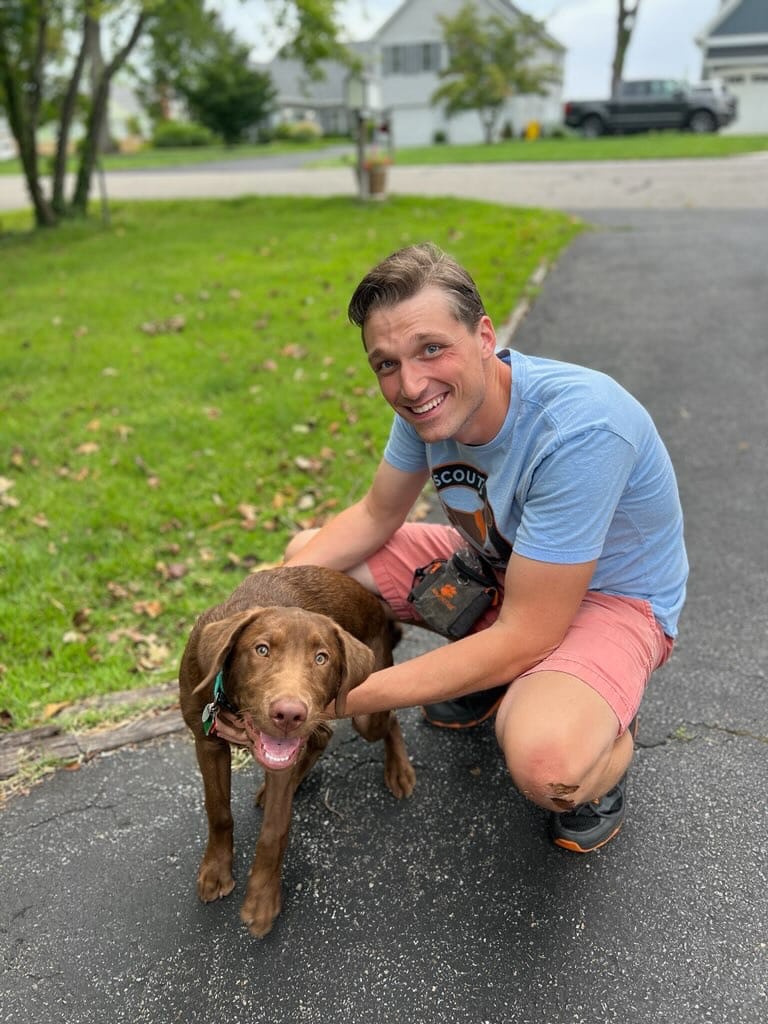
Our Board and Train program pairs your dog with a dedicated Pack Leader to build lasting skills and confidence.
How We Help You Choose the Right Training Path
Families rarely know which format fits before they talk it through. Here's how we walk through that decision with Maryland households.
Start with the calendar. We ask what's coming up: a holiday gathering, out-of-town guests, a trip. That date sets the outer edge of how much time is available.
Name the specific behavior. Vague concerns ("he's just a lot") get sorted into concrete issues: leash reactivity, door bolting, jumping on guests, poor recall. The list shapes which format fits.
Weigh how hands-on you want to be. Some families want to be in every session and see the dog learn in real time. Others want the behavior handled and are ready to receive a trained routine at handoff.
Match the dog's temperament to the setting. A dog who does better in familiar surroundings often points toward weekly in-home sessions. A dog who needs distance from home distractions to make progress often points toward Board and Train.
Book the intake conversation early. Board and Train availability is limited, and weekly training schedules fill up fastest in September and October as families plan around the holidays. Either way, starting the conversation now protects your timeline.
Why Starting Before the Holidays Matters in Maryland
Thanksgiving and the weeks around it bring more foot traffic through Maryland households than any other stretch of the year: relatives staying over in Severna Park, delivery trucks doubling up in Crownsville, doorbells ringing through dinner in Columbia. A dog who hasn't had structured work on door manners or leash reactivity by then works through all of that stress while the family is hosting.
According to the American Kennel Club, structured training started well before a high-stimulus event gives dogs more reliable results than managing behavior in the moment. Six to eight weeks of runway, whichever format you choose, gives the dog time to build the skill and the family time to see it hold before guests walk through the door.
From Not Sure Which Path to Ready by Thanksgiving
Most families start this conversation the same way: unsure whether their dog's behavior counts as "bad enough" for Board and Train, or whether weekly sessions will simply take too long. The answer isn't about severity alone. It's about how much time is left and how the family wants to spend it, hands-on across ten weeks, or handed a finished routine after a shorter stay.
Either path gets a Maryland dog to the holidays in better shape than doing nothing. The one that fits is the one that matches your calendar and your dog's specific list of behaviors. If you're not sure which that is, Board and Train in Maryland and weekly in-home sessions both start with the same first step: a conversation about what's actually going on and when you need it fixed by.
For more on what that looks like week to week, see dog training in Severna Park, dog training in Annapolis, and our guide to holiday readiness training in Arnold.
Frequently Asked Questions
How do I know if my dog needs Board and Train instead of weekly sessions?
If the behavior involves reactivity, aggression around doorways, or impulse control that hasn't improved with basic practice, Board and Train's daily repetition usually closes the gap faster. If the behavior is mild, like pulling on leash or an overexcited greeting, weekly in-home sessions are often enough.
Is it too late to start training before Thanksgiving if I begin in late September?
No. Late September gives roughly eight to ten weeks before Thanksgiving, which is enough runway for either weekly in-home training or a Board and Train stay, as long as you book the intake conversation soon so scheduling doesn't slip.
Can I switch from weekly training to Board and Train partway through?
Yes. If weekly sessions aren't closing the gap fast enough as the holidays approach, we can reassess and move to Board and Train if there's still enough calendar time left for a live-in stay before your target date.
Does weekly in-home training work for leash reactivity, or do I need Board and Train?
Mild to moderate leash reactivity can improve with weekly sessions if the family practices consistently between visits. More entrenched reactivity, especially around other dogs at close range, tends to improve faster with Board and Train's daily repetition.
What happens if I don't start training before the holidays?
Nothing dramatic, but the behavior you're managing today is the same behavior you'll be managing at the table on Thanksgiving. Starting now, in either format, gives the dog time to build new habits before the household gets busier and more distracting.
Written by Mike and Colleen Bass, founders of Pup Scouts. Mike and Colleen have led structured dog care across Maryland, Orange County, and Charlotte since 2015. More about our team.
Get started with MD Pup Scouts, or call (410) 980-7855. Find us on Google as MD Pup Scouts.
Similar Blogs


