Dog Boarding in Charlotte: In-Home vs Kennel
Mike and Colleen Bass
Overnight Dog Boarding

Key Takeaways
In-home dog boarding is an overnight stay where your dog sleeps in a home, either yours or a caregiver's, with a person there through the night instead of a kennel run.
A kennel can work well for confident, social dogs, while an in-home stay usually suits dogs who are anxious, older, on medication, or used to sleeping near their people.
Our dog boarding in Charlotte is reserved for dogs already in our pack, and the usual way in is Pack Walking Adventures.
You've got a trip coming up, and the hardest part isn't the packing, it's figuring out where your dog will sleep while you're gone. You want them safe, you want them calm, and you want to stop picturing them staring at a gate all night, which is exactly why this decision deserves more than a quick search.
There are two broad ways to handle dog boarding in Charlotte: a kennel at a boarding facility, or an in-home stay with a caregiver. We'll walk you through what a night looks like in each, which dogs do better where, and what to ask before you hand over the leash.
What in-home dog boarding means
In-home dog boarding is overnight care that happens in a house instead of a facility. Your dog either stays in your own home with a caregiver who moves in for the night, or stays in the caregiver's home, and in both cases a person is with them through the evening, overnight and in the morning. It's built around your dog's routine, so meals, walks and bedtime look as much like home as possible.

Two dogs lie together on a textured surface, one holding a cream-colored plush toy.
What a Night Looks Like at a Kennel
Most boarding facilities keep each dog in an individual run or suite, with set times for potty breaks, play and meals. Staff usually work in shifts, and the busiest hours are the daytime ones, when dogs come and go and the play yards are open. Some facilities have a person on site overnight and some don't, which is one of the first things worth asking.
For a confident, social dog, that can be a fun few days. They get company, a predictable schedule and plenty to look at. For a dog who's sensitive to noise, nervous around unfamiliar dogs, or used to sleeping on the end of your bed, the constant barking and the unfamiliar run can make for long nights, and you'll often see it when they come home tired in the wrong way.
What a Night Looks Like In-Home
An in-home stay trades the facility for a living room. There's no run and no crate, just a person who knows your dog's routine and follows it, from the feeding schedule and the medication timing to the walk before bed. We offer our boarding two ways:
In your home. A caregiver from our team stays with your dog overnight, so your dog keeps their own bed, their own yard and their own routine. You get real-time photo updates and a daily summary, and it's often the gentlest option for senior dogs and dogs who get anxious in new places.
In a Pack Leader's home. Your dog stays with one of our Pack Leaders in a home we've chosen for comfort and calm. They get multiple walks a day, enrichment and calm bedtime routines, and time with compatible dogs if that suits them.
Both options include 24/7 care, personalized feeding, medication and behavior notes, real-time photos, and emergency protocols with vet access if it's ever needed. Multi-dog families save 35% on each additional dog.
In-Home Boarding vs a Kennel, Side by Side
Here's how the two formats compare on the things most people care about:
What you're comparing | Kennel at a facility | In-home boarding |
|---|---|---|
Where your dog sleeps | An individual run or suite | A home, yours or a caregiver's |
Overnight supervision | Varies, so ask whether staff stay overnight | A person is there through the night |
Other dogs | Many, often within earshot all day | None, or a few compatible dogs |
Routine | The facility's schedule | Your dog's schedule, as close to home as possible |
Medications | Usually given on the facility's rounds | Given on your dog's usual timing |
Updates | Varies by facility | Real-time photos and a daily summary |
Neither format is right for every dog. The table is really a way to match the setting to the dog you have.
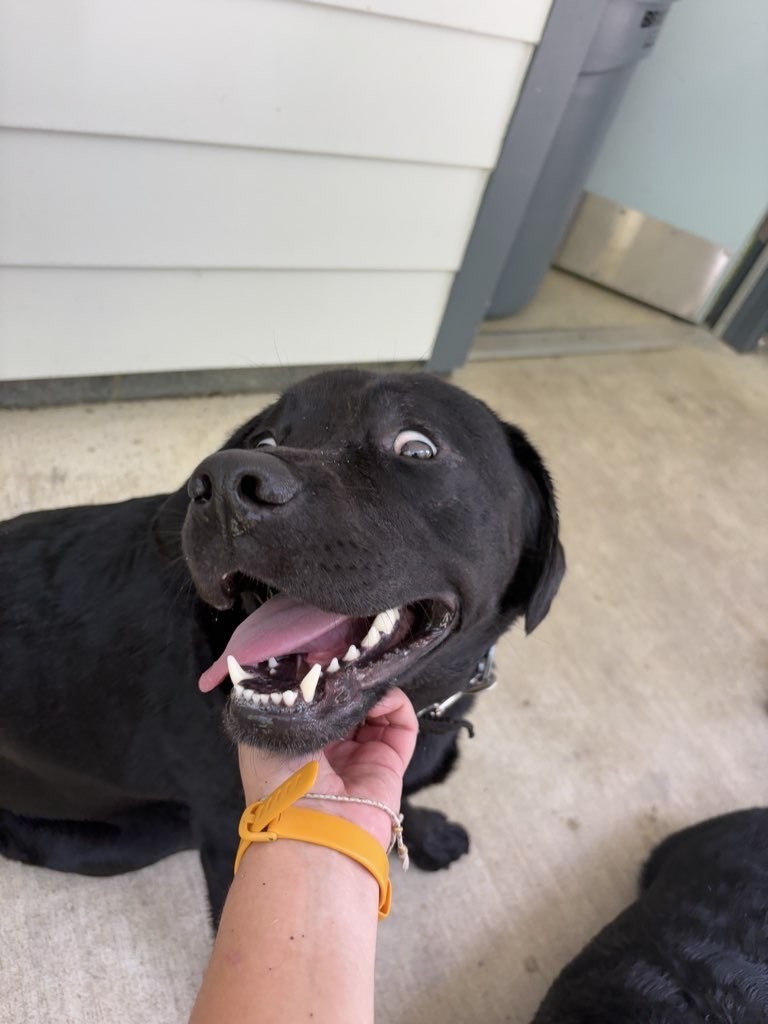
A black dog with its tongue out sits indoors on a light-colored floor beside a person's outstretched hand.
Which Dogs Do Better at Home?
Some dogs bounce into a kennel lobby and never look back, and if that's your dog, a good facility may be all you need. In-home boarding tends to make the biggest difference for a few kinds of dogs, and you'll probably recognize yours if they're one of them.
Senior dogs often sleep better in a quiet house and move more comfortably without hard floors and unfamiliar runs. Anxious dogs settle faster with one calm person than with a room full of barking. Dogs on medication do better when someone's giving it on the exact schedule you set. And dogs who've always slept near their people tend to handle a few nights away much more easily when there's still someone in the room.
Questions to Ask Any Charlotte Boarder
Whoever you choose, you deserve clear answers before your trip. Here's the list we'd bring if we were the ones packing:
Is a person with the dogs overnight? Ask exactly who is there between closing time and morning.
How many dogs will be with mine? Ask about the overnight hours as well as the daytime.
How do you give medications? Ask who gives them, when, and how it's recorded.
What happens in an emergency? You want to hear a plan and the name of a vet, not a vague promise.
What updates will I get? Photos and a short daily note go a long way when you're away.
Which vaccines do you require? A careful boarder asks about your dog's vaccine history before the first night.
Can my dog do a trial stay first? A short first visit tells you more than any tour will.
A boarder who's glad to answer every one of these is usually one who'll take good care of your dog.
Why Our Boarding Is Only for Dogs We Already Know
We want to be upfront about this. Our overnight boarding is reserved for dogs who are already part of our pack, and we keep it that way on purpose. A dog sleeps better with someone they already trust, and we can only promise familiar faces if we've spent real time with your dog before the first night.
For most families, the way in is Pack Walking Adventures in Charlotte. Your dog joins a small, temperament-matched pack with the same Pack Leader week after week, and by the time you need a sitter, your dog already knows the people who'd be caring for them. Here's how to choose between Explorer Hour and Scout Expedition if you're thinking of starting.
Frequently Asked Questions
What is the difference between dog boarding and a pet sitter?
Dog boarding usually means your dog sleeps somewhere else, at a facility or in a caregiver's home. A pet sitter comes to your home, either for drop-in visits or to stay overnight. Our in-your-home boarding option works like an overnight sitter, with a caregiver staying with your dog in your house.
Is in-home boarding better for anxious dogs?
For most anxious dogs, yes. A quiet home with one calm person has far fewer triggers than a facility full of barking dogs, and it keeps more of your dog's routine intact. We've written more about how anxious dogs do on pack walks versus private walks if your dog finds groups hard.
Can I book dog boarding with Pup Scouts if my dog isn't a client yet?
Our boarding is reserved for dogs already in our care, so it isn't open to new dogs straight away. Most families start with Pack Walking Adventures, and once your dog knows our team, boarding becomes available to you.
How should I prepare my dog for their first boarding stay?
Pack their own food, any medications with clear written instructions, and something that smells like home, like a worn T-shirt or their usual blanket. Keep the goodbye short and calm, because a long emotional exit tends to make dogs more anxious. Here's how we approach in-home boarding in Charlotte in more detail.
How far ahead should I book boarding for the holidays?
Book as early as you can, because good boarders fill up quickly around Thanksgiving, the winter holidays and summer weekends. If your dog has never boarded before, plan a short trial stay a few weeks ahead of the big trip.
Written by Mike and Colleen Bass, founders of Pup Scouts. Mike and Colleen have led structured dog care since 2015, built on a simple belief: your dog deserves to be treated like one of our own. More about our team.
We'd love to get to know your dog long before your next trip. Get started with CLT Pup Scouts, or call (704) 330-3089. Find us on Google as CLT Pup Scouts.
Similar Blogs


