Dog Walking in Cornelius NC for Active Dogs
Mike and Colleen Bass
Pack Walking

Key Takeaways
Pack Walking Adventures in Cornelius combine 60-minute structured group outings with consistent training reinforcement across real-world lakeside distractions.
High-energy dogs benefit from the physical exertion of lake trails and the mental engagement of temperament-matched pack dynamics without off-leash chaos.
Pup Scouts now serves the Lake Norman area including Cornelius, Davidson, and Huntersville with certified Pack Leaders who manage energy progression through structured movement.
Morning walkers loop Robbins Park before the parking lot fills. Retirees navigate the greenway past Ramsey Creek. Families cluster near the Jetton Park beach access. Cornelius moves at a lakefront pace. It's not slow, but it's not Charlotte's uptown rush either. The rhythm suits active dogs who need mileage and focus, not containment.
Active dogs in Cornelius face a calibration problem. They have the stamina for three-mile loops but the manners lag behind. The energy exists. The outlet doesn't always. Home yards back to wooded lots. Neighborhood streets are quiet. What they need is structured movement with consistent reinforcement across changing environments. Pack Walking Adventures in Cornelius deliver that without requiring off-leash training or daycare enrollment.
What Pack Walking Looks Like in a Lakeside Town
Pack walking in Cornelius is a 60-minute structured group outing where 5 to 8 temperament-matched dogs share a single route led by a certified Pack Leader. The outing builds leash composure, recall foundation, and social tolerance across lakefront trails, residential stretches, and greenway intersections where distractions intensify. Dogs walk together but not in a chaotic cluster. The Pack Leader maintains spacing, manages pace transitions, and reinforces calm behavior at high-traffic moments.
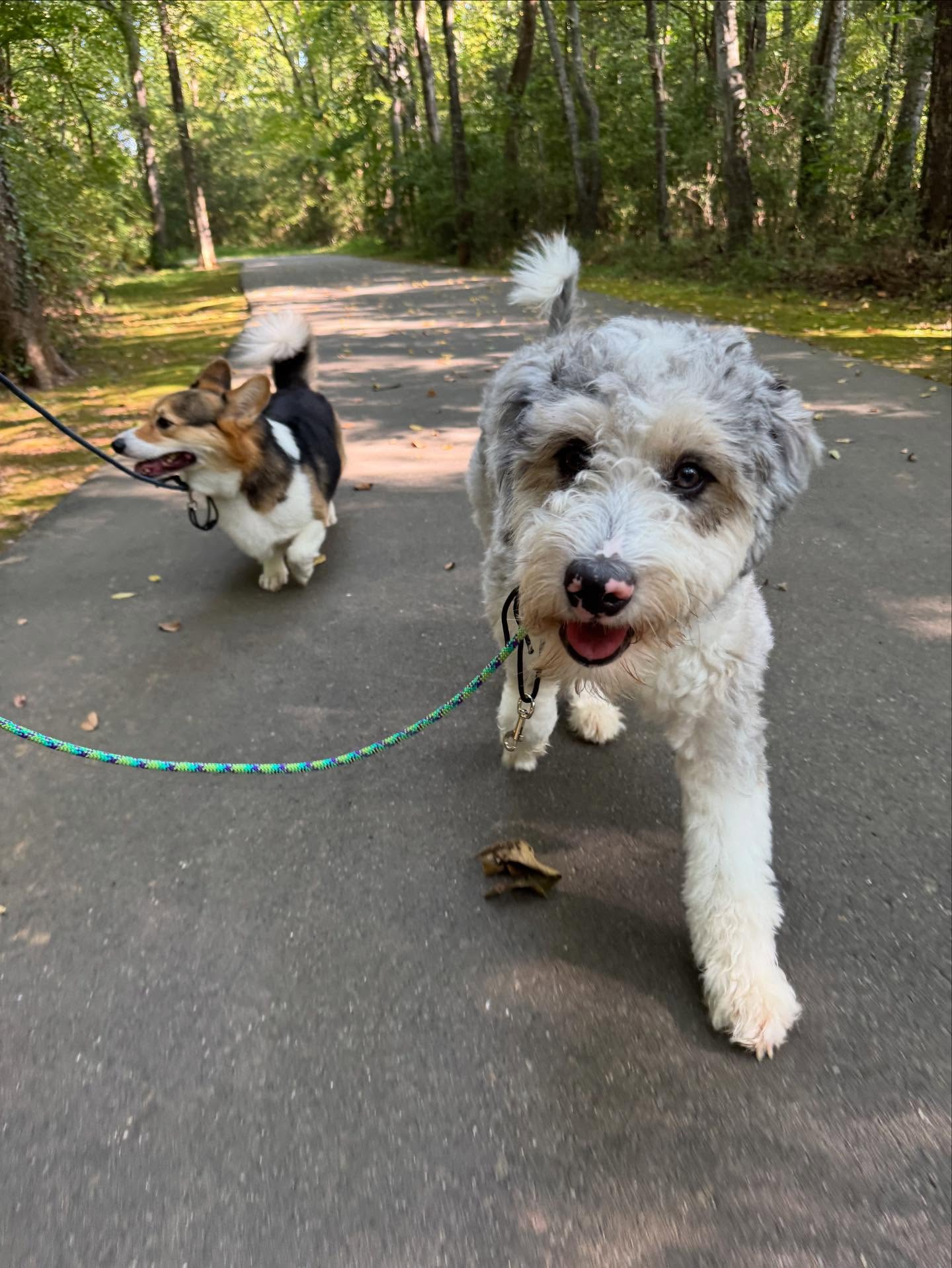
Active dogs thrive with structured outdoor time, like our Pack Walking Adventures through Cornelius trails.
Why Active Dogs Struggle Without Structured Outlets
Energy alone doesn't create behavior problems. Inconsistent release does. A high-drive dog confined to a backyard run develops pent-up arousal. The same dog walked twice daily without leash structure pulls, lunges, and fixates. Energy needs direction, not just depletion.
Cornelius offers terrain. Jetton Park trails run two miles along the lake. Bailey Road Park greenways connect through wooded sections. Robbins Park loops past open fields. The geography exists. What many active dogs lack is routine exposure paired with behavioral expectations. A solo walk burns calories but doesn't reinforce composure when another dog passes. A dog park visit allows socialization but no structured practice holding focus near distractions.
Pack walks fill the gap. The group setting provides real-world dog-to-dog exposure. The Pack Leader enforces spacing and neutral behavior. The 60-minute duration matches the stamina level of most active breeds without exhausting working capacity.
How Pack Dynamics Redirect Drive
Active dogs benefit from pack structure because it channels their natural inclination to move with others. A Vizsla or Australian Cattle Dog doesn't want to walk alone. They want to be part of something. The pack provides that without requiring constant handler interaction. The dog learns to hold position relative to the group, maintain pace, and ignore momentary stimuli because the pack keeps moving.
This differs from individual walks where the dog's only reference point is the handler. The handler becomes the entire universe of focus. That's fine for structured training drills but exhausting for daily walks. In a pack, the dog's attention distributes across the group, the environment, and the Pack Leader. The cognitive load spreads out. The dog relaxes into the routine.
The pattern tends to look the same across dogs on structured pack walks. The dog comes home tired but not wired. They settle faster. Evening reactivity drops. The change isn't dramatic in week one, but by week four it holds.
What the Lake Norman Route Network Offers
Route Type | Example Location | Distance | Distraction Level | Best For |
|---|---|---|---|---|
Lakefront trail | Jetton Park perimeter loop | 2.0 miles | Moderate (water access, joggers, cyclists) | Endurance foundation, recall prep |
Greenway connector | Ramsey Creek greenway to Bailey Road | 1.5 miles | Low to moderate (pedestrians, occasional bikes) | Leash-skill refinement, pace transitions |
Residential loop | North Cornelius neighborhoods near Westmoreland | 1.2 miles | Low (cars, doorbell triggers, occasional dogs) | Real-world composure, doorstep greetings |
Mixed terrain | Robbins Park to lakefront access trail | 1.8 miles | High (open fields, water, parking lot foot traffic) | Multi-environment exposure, impulse control |
Pack walks rotate across these zones. A Monday outing might focus on endurance at Jetton Park. Wednesday shifts to leash refinement along the greenway. Friday uses mixed terrain at Robbins Park. The variety prevents route burnout and exposes dogs to the full range of stimuli they'll encounter when walking with their families.
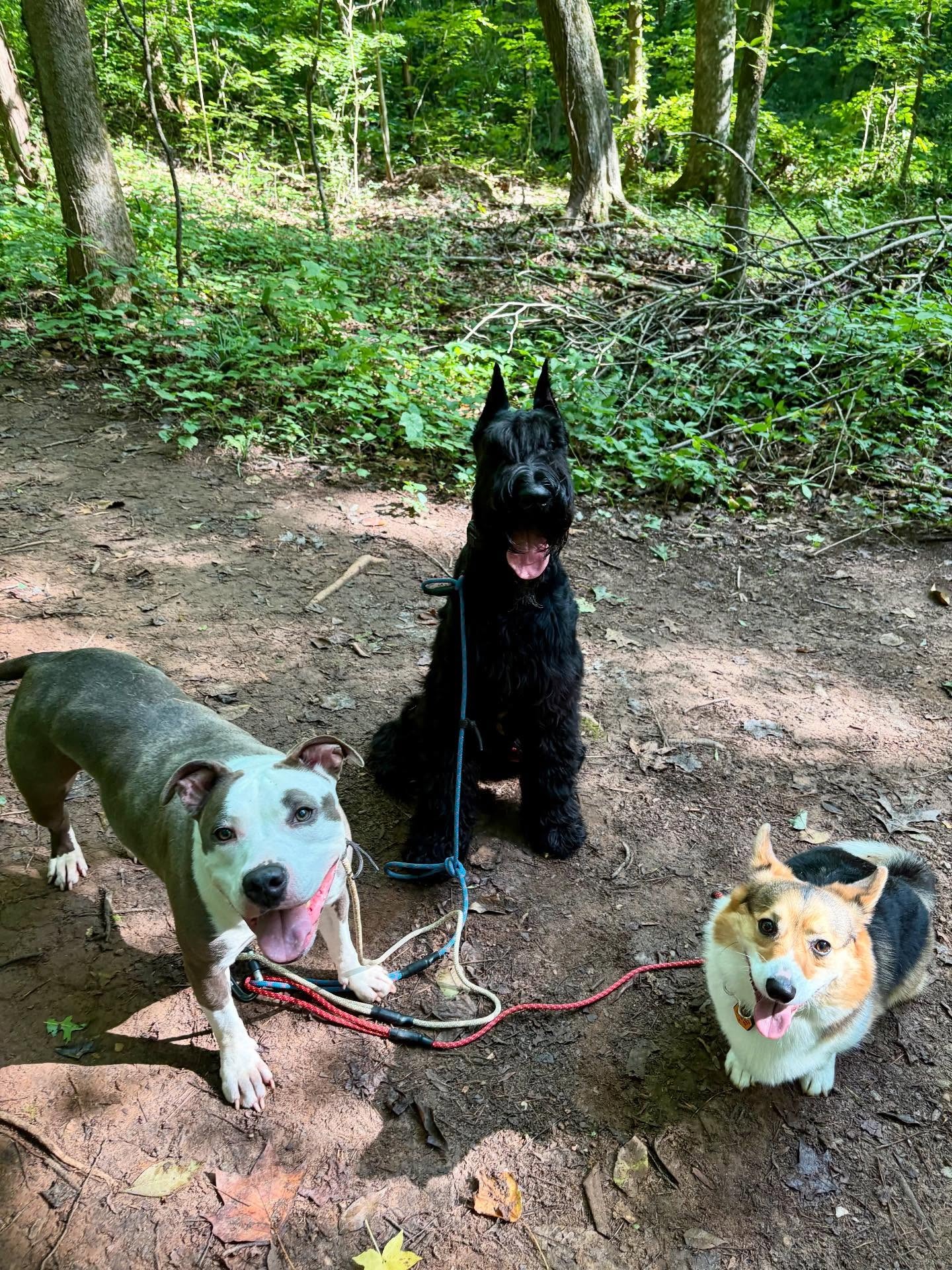
Our Pack Leaders integrate dogs of different temperaments and energy levels during forest adventures, building confidence for group outings.
The Lake Norman Integration Protocol
Pup Scouts structures onboarding for new Cornelius clients around lake-specific challenges: water distraction, seasonal cyclist volume, waterfront wildlife (geese, ducks), and the temperature swings lakeside towns experience between shaded trails and open fields.
Temperament assessment at a lakefront landmark. The initial evaluation happens at Jetton Park or Ramsey Creek greenway access. We observe leash behavior near water, response to cyclists, and impulse control around wildlife. This sets baseline expectations.
Week-one route selection by drive level. High-energy dogs start with endurance routes. Moderate-energy dogs begin on greenway connectors. The Pack Leader matches pace and distance to the dog's physical capacity without overwhelming focus.
Neutral-pass drills at trail intersections. Greenway nodes where multiple paths meet create natural dog-to-dog exposure moments. Pack Leaders use these junctions for structured neutral-pass practice. The pack pauses, allows the other dog to pass, then resumes. The dog learns to hold composure without engagement.
Water-boundary work for lakefront walkers. Dogs with strong water drive practice impulse control at shoreline access points. The pack approaches the water edge, pauses, then moves on without allowing entry. This builds off-leash recall foundation for families who later want lake access.
Post-walk report card with route notes. Every outing ends with a digital summary: distance covered, specific drills practiced, behavioral observations, and next-session focus. Families see what happened at Robbins Park or along Bailey Road greenway, not just "walked the dog."
From Backyard Circles to Lakefront Stamina
Active dogs don't need more space. They need structured use of the space they already access. A fenced acre doesn't teach leash manners. A three-mile solo walk doesn't teach neutral behavior near other dogs. Pack walks in Cornelius combine the physical outlet lakefront terrain provides with the behavioral reinforcement active dogs require to hold composure in dynamic environments.
The shift shows up in small moments. The dog who pulled toward every passing jogger now holds position when a cyclist approaches on the greenway. The dog who lunged at geese near the Jetton Park beach access now pauses, looks to the Pack Leader, and moves on. The family reports calmer evenings, fewer door-dash alerts triggering barking, better behavior on weekend lake visits.
These aren't dramatic transformations. They're incremental recalibrations that compound over weeks. By month two, the dog walks differently. The family sees it. The neighbors notice. The dog settles into routines that match Cornelius' lakefront rhythm instead of fighting against it.
New to structured walking around the lake? See how group pack walks work in Dilworth and why Charlotte dogs do best on structured midday walks for how the routine builds calm over time.
Frequently Asked Questions
How do Pack Leaders manage high-energy dogs safely in a group setting?
Pack Leaders assess drive level during intake and match dogs to groups with similar energy baselines. High-energy packs receive longer routes and more frequent pace transitions. The Pack Leader maintains spacing using leash positioning and verbal cues, preventing dogs from clustering or pulling toward each other. Safety comes from structure, not restraint.
What happens if my dog fixates on water during lakefront walks?
Water distraction is common in Cornelius. Pack Leaders use boundary work at shoreline access points to build impulse control. The pack approaches the water edge, pauses for a marked duration, then moves on. Over repeated sessions, the dog learns water presence doesn't mean water access. This prepares families for off-leash lake visits later.
Can my dog join pack walks if they've never walked in a group before?
Yes. Most active dogs adapt to pack structure within two to three outings. The Pack Leader introduces new dogs to the group gradually, starting with shorter routes and fewer distractions. Temperament matching ensures the new dog joins a pack with compatible energy levels. Solo orientation walks are available for dogs with significant leash reactivity or anxiety.
Do pack walks replace solo training for behavior issues?
Pack walks build foundational skills but don't replace focused behavior modification for severe reactivity or aggression. They work best as routine exercise paired with composure reinforcement. Families addressing specific issues like resource guarding or fear-based reactivity benefit from combining pack walks with private training sessions.
How often should an active dog participate in pack walks?
Most active dogs benefit from three to five pack walks per week. This provides consistent exercise and behavioral reinforcement without over-scheduling. Families can supplement with solo weekend walks or lake outings. The goal is routine exposure, not daily exhaustion.
Written by Mike and Colleen Bass, founders of Pup Scouts. Mike and Colleen have led structured dog care across Maryland, Orange County, and Charlotte since 2015. More about our team.
Get started with CLT Pup Scouts, or call (704) 330-3089. Find us on Google as CLT Pup Scouts.
Similar Blogs


