Dog Walking in Lake Norman: How Pack Walks Actually Work
Mike and Colleen Bass
Pack Walking

Key Takeaways
Pack walking is a structured group walk where 5 to 8 temperament-matched dogs share a 60-minute outing led by a single certified Pack Leader.
Pup Scouts assigns one consistent Pack Leader per pack so your dog learns the routine and the handler learns your dog.
Every walk includes post-walk report cards with photos, behavior notes, and mileage tracking sent to your phone.
Lake Norman sits quiet most mornings. The marina parking lots fill slowly. Dock workers prep slips. Joggers loop the greenways before the heat climbs. It's calm, but it's active. Dogs walking these routes need composure around boats, bike traffic, waterfront restaurant patios, and off-leash retrievers launching into the shallows.
That's what Pup Scouts builds. Not a loose neighborhood stroll. Not a daycare yard session. Pack Walking Adventures are structured group outings where 5 to 8 temperament-matched dogs walk together for 60 minutes, led by one certified Pack Leader who shows up the same day, same time, every week. Your dog learns to hold composure where distractions are real and movement is constant.
What Pack Walking Actually Means
Pack walking is a behavior-first dog walking service where small groups of dogs move together on leash under a single handler. The walk isn't social time. It's structured exercise with embedded training principles: neutral passing, distance holding, cross-traffic composure. Dogs come home tired and calmer because the walk asked them to think, not just run.
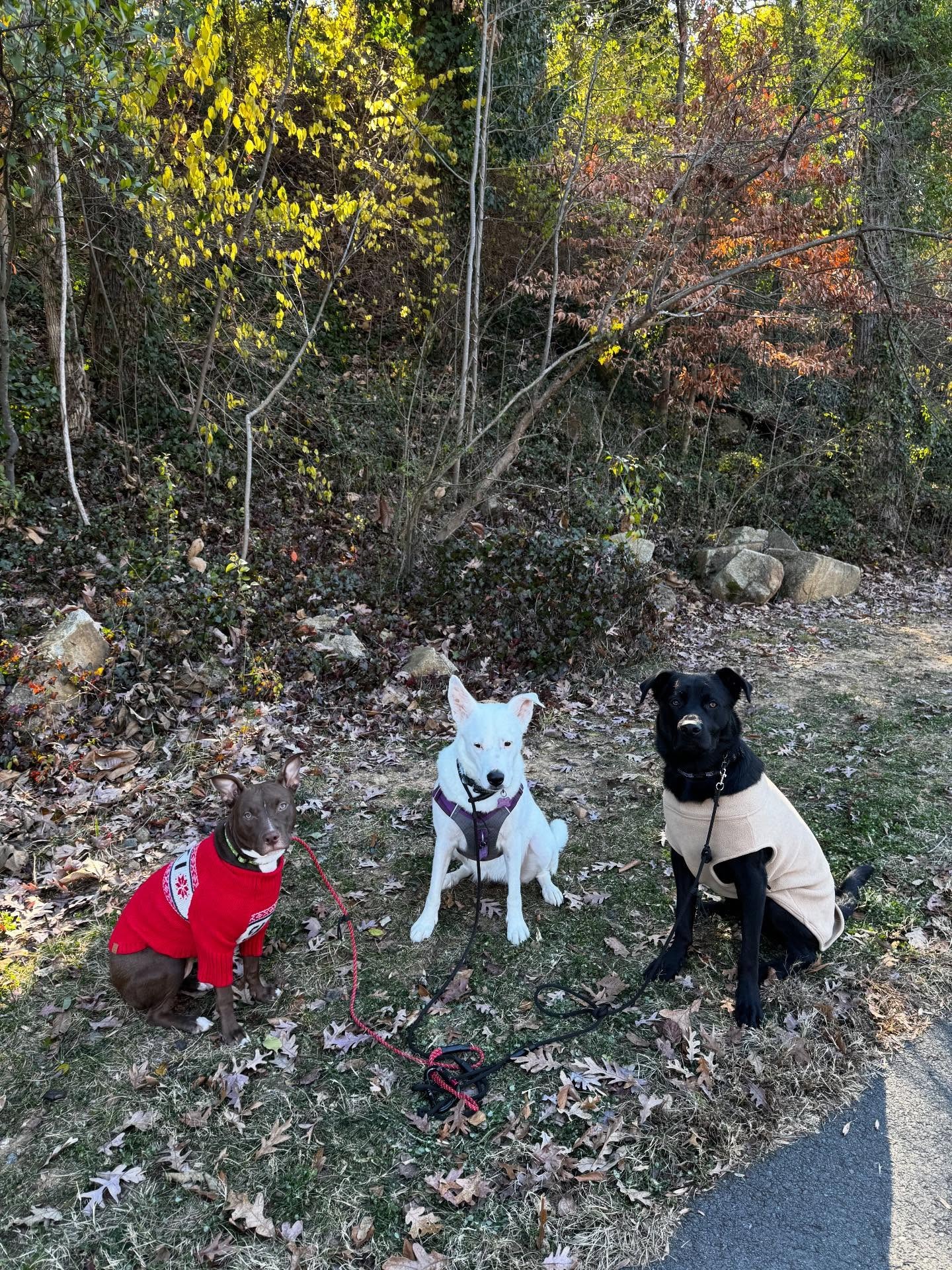
Our pack walks bring together dogs of different sizes and temperaments, the foundation of both Explorer Hour and Scout Expedition experiences.
The Two Tiers: Explorer Hour and Scout Expedition
Pup Scouts runs two formats. Both use the same structure. The difference is duration and intensity.
Explorer Hour is the 60-minute standard. The Pack Leader picks up 5 to 8 dogs from homes across Cornelius, Davidson, Huntersville, or Mooresville, drives to a route matched to the group's energy level, and walks the pack for 45 to 50 minutes of active movement. Dogs get 3 to 4 miles depending on pace. Post-walk reports go out within the hour.
Scout Expedition extends to 90 minutes. Same structure, longer route. The Pack Leader adds trail segments or waterfront loops that require sustained focus. This tier works for high-energy breeds, adolescent dogs still burning through behavioral spikes, or households where one walk per day needs to count for more.
Both tiers use the same temperament-matching protocol. A Great Pyrenees and a Vizsla don't walk together. A senior Cavalier and a 9-month-old Aussie don't share a pack. The Pack Leader builds groups where energy matches, size disparity stays manageable, and behavioral quirks don't compound.
How We Match Dogs to the Right Pack
Temperament matching starts with the in-home assessment. One of our Pack Leaders visits your home, watches how your dog greets at the door, reads reactivity cues on a short walk around the block, and asks about triggers: other dogs, bikes, skateboards, joggers, water.
From that visit, the Pack Leader gets a profile. Your dog goes into a cohort of 5 to 8 others with similar baseline energy, similar leash manners, and compatible play styles. A dog who lunges at bikes doesn't walk with a dog who freezes at bikes. A dog who pulls hard doesn't get paired with a dog learning to heel.
The packs stay fluid for the first month. If a dog's energy spikes or a behavioral pattern shifts, the Pack Leader moves them to a better-matched group. Once the routine locks in, the pack stabilizes. Your dog walks with the same 4 to 7 dogs every week.
🖼️ Inline photo: placeholder. Drag in a Lake Norman greenway or waterfront path photo from bunny.net.
How One Consistent Pack Leader Changes the Routine
Most group dog walking services rotate handlers. Your dog gets whoever is available that day. That breaks the learning loop. Dogs build trust through repetition. A new handler every week means your dog never settles into the routine.
Pup Scouts assigns one certified Pack Leader to your dog's cohort. Same person, same pick-up window, same week-over-week expectations. Your dog learns the routine because the handler stays consistent. The Pack Leader learns your dog's quirks: which curb triggers a pull, where the loose-leash attention drops, what distance your dog needs to pass another pack calmly.
That consistency compounds. By week four, your dog anticipates the routine. The Pack Leader doesn't have to re-teach the settle at every driveway. The walk becomes the training session, not the chaos management session.
Rotating handlers | Consistent Pack Leader |
|---|---|
Your dog re-learns expectations every walk | Your dog locks into a known routine by week 3 |
Handler doesn't know your dog's triggers | Pack Leader tracks quirks and adjusts routes accordingly |
Behavioral progress resets weekly | Progress builds week over week |
No personalized route adjustments | Routes flex based on your dog's needs and weather |
The 5 Stages: How Dogs Progress Through Pack Walks
Dogs don't walk the same way at 6 months and 6 years. Pup Scouts adjusts the structure as your dog's needs shift. The five progression stages:
Puppy onboarding (4 to 8 months). Short routes, high treat frequency, lots of sniff breaks. The Pack Leader focuses on leash comfort and neutral exposure to other dogs. Explorer Hour only. The goal is building positive association with the pack walk routine, not mileage.
Adolescent calibration (8 to 18 months). Energy spikes. Reactivity blooms. Impulse control drops. The Pack Leader lengthens routes, tightens leash expectations, and uses the pack dynamic to model composure. This stage benefits most from Scout Expedition's 90-minute format because adolescent dogs need the extra movement to settle.
Adult routine (18 months to 7 years). The dog knows the drill. Pick-up happens smoothly. The walk holds a steady pace. The Pack Leader uses this stage to refine advanced skills: off-leash recall prep on private trails, distance work around Lake Norman marina traffic, cross-pack neutral passing when two Pup Scouts groups meet on the same greenway.
Senior adaptation (7+ years). Mileage drops. Pace slows. The Pack Leader shortens routes, adds more water breaks, and chooses flatter terrain. Senior dogs still benefit from pack structure, but the goal shifts from exercise to routine maintenance and social continuity.
Multi-tier flex (any age). Some households need both. A senior dog gets Explorer Hour three days per week. A younger sibling in the same home gets Scout Expedition five days. The Pack Leader coordinates pick-ups so both dogs get what they need without doubling your scheduling work.
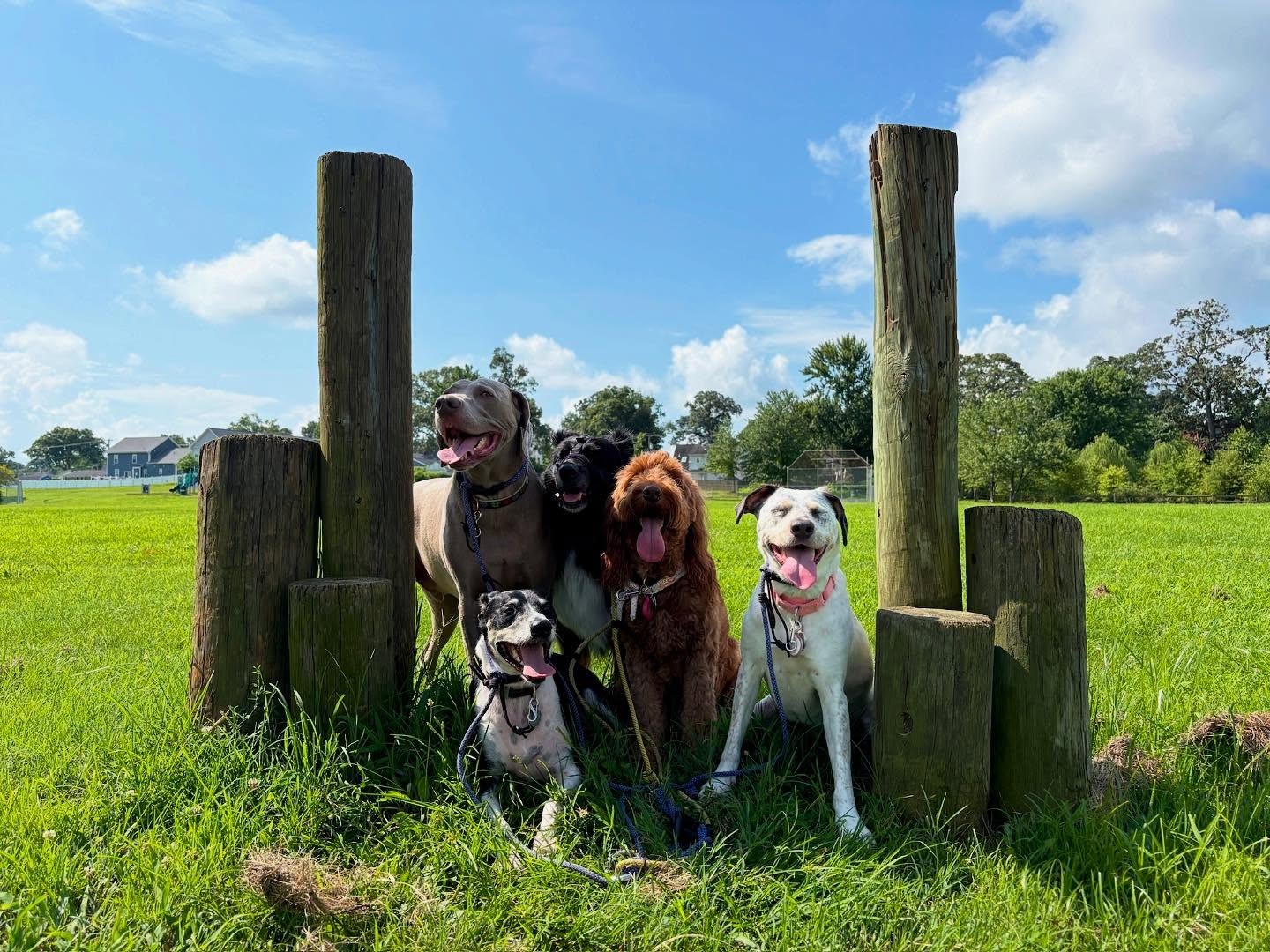
Our pack walks bring together dogs of all sizes and temperaments for a coordinated, monitored adventure in nature.
What the Post-Walk Report Card Tracks
Every walk ends with a report card sent to your phone. The Pack Leader logs:
Mileage and route. Exact distance walked, start and end points, any route deviations due to weather or pack behavior.
Behavior notes. How your dog handled passing other dogs, whether leash tension increased at specific triggers, and any training moments the Pack Leader worked through mid-walk.
Photos from the route. Two to four photos showing your dog in the pack, usually mid-walk at a scenic spot or post-walk group shot.
Next-walk adjustments. If your dog struggled with a specific segment, the Pack Leader flags it and adjusts the next route accordingly.
The report isn't fluff. It's accountability. You see exactly what happened, where your dog walked, and what the Pack Leader observed. If behavior patterns shift, you catch them early.
🖼️ Inline photo: placeholder. Drag in a photo of dogs on a Lake Norman greenway or waterfront from bunny.net.
Why Lake Norman Routes Work for Pack Structure
Lake Norman's geography suits structured walks. The greenways run long and mostly flat. Marina access roads stay wide enough for a 6-dog pack to hold formation without crowding sidewalk traffic. Waterfront parks offer off-peak windows where the Pack Leader can work on distance skills without heavy foot traffic.
Cornelius, Davidson, Huntersville, and Mooresville each have distinct route profiles. Cornelius routes run waterfront-heavy with marina exposure. Davidson routes use the college greenway system and residential loops with consistent tree cover. Huntersville routes mix suburban sidewalks with Ramsey Creek Park access. Mooresville routes pull from the northern lake access points and Queen's Landing trails.
The Pack Leader rotates routes based on pack composition and weather. A high-energy group gets the longer Ramsey Creek loop. A senior-heavy pack gets the flatter marina perimeter route. A pack with water-reactive dogs avoids the boat launch zones on high-traffic weekends.
From Inconsistent Walks to Predictable Routine
Most pet parents in Lake Norman try neighborhood walks first. The routine works until it doesn't. Your schedule shifts. Your dog pulls harder. The neighbor's unleashed Lab rushes the fence line every morning. The walk becomes a negotiation instead of a routine.
Pack walks replace that variability with structure. Same Pack Leader. Same pick-up window. Same behavior expectations. Your dog learns the routine because the routine doesn't change. You get the post-walk report, the photos, and the peace of mind that your dog moved, socialized appropriately, and came home calmer.
The walk happens whether you're in a meeting, traveling for work, or managing a toddler's preschool drop-off. The consistency is the point.
It is the same standard we run across the region, whether that is pack walks in Elizabeth or what sets a Pup Scouts walk apart from the average Charlotte dog walker.
Frequently Asked Questions
How does Pup Scouts decide which dogs walk together?
Temperament matching starts with the in-home assessment. Mike or Colleen Bass evaluates your dog's energy level, leash manners, and reactivity triggers. From there, your dog joins a pack of 5 to 8 others with similar baselines. Packs stay fluid for the first month while the Pack Leader fine-tunes the group composition.
What happens if my dog doesn't get along with another dog in the pack?
The Pack Leader monitors pack dynamics every walk. If tension builds between two dogs, one gets moved to a different cohort. Packs are built for compatibility, not convenience. The goal is a group that walks calmly together, not a rotating roster of mismatched dogs.
Can I request a specific route or avoid certain areas?
Yes. During onboarding, the Pack Leader asks about route preferences and avoidance zones. If your dog is reactive to water, lake-access routes get skipped. If you want your dog to get more greenway exposure, the Pack Leader prioritizes those segments. The route adjusts to your dog's needs and the pack's overall composition.
How long does it take for my dog to settle into the routine?
Most dogs lock into the routine by week three. The first few walks involve higher treat frequency, more breaks, and shorter distances while your dog learns the expectations. By the fourth or fifth walk, the Pack Leader can extend mileage and tighten leash structure because your dog knows what's expected.
What's the difference between Explorer Hour and Scout Expedition in terms of what my dog actually experiences?
Both use the same structure and behavior expectations. Scout Expedition adds 30 minutes and 1 to 2 miles of movement. The longer format works better for high-energy dogs, adolescent dogs burning through behavioral spikes, or households where one daily walk needs to cover more ground. Explorer Hour works for most adult dogs and all senior dogs.
Written by Mike and Colleen Bass, founders of Pup Scouts. Mike and Colleen have led structured dog care across Maryland, Orange County, and Charlotte since 2015. More about our team.
Get started with CLT Pup Scouts, or call (704) 330-3089. Find us on Google as Pup Scouts Charlotte.
Similar Blogs


