Mobile Dog Grooming in Plaza Midwood for Double Coats
Mike and Colleen Bass
Mobile Dog Grooming

Key Takeaways
Mobile dog grooming in Plaza Midwood brings Fear-Free Certified Groomers to your driveway with salon-grade equipment for undercoat removal and coat health.
The Shed-Buster package removes loose undercoat, reduces shedding by 80%, and maintains guard-hair integrity without damaging the coat.
Huskies, Golden Retrievers, German Shepherds, and other double-coated breeds shed year-round in Plaza Midwood's humid climate, making consistent grooming essential.
Summer mornings in Plaza Midwood start with coffee on the porch and dog hair on every surface. Huskies, Goldens, German Shepherds, Australian Shepherds, and Bernese Mountain Dogs love this neighborhood's tree-lined blocks and walkable corridors. Their coats don't love Charlotte's 90-degree humidity. You vacuum twice a day. The brushing routine doesn't keep up. The coat feels dense and matted near the undercoat. You know a de-shed would help, but drop-off grooming means coordinating schedules, crating anxiety, and a full day without your dog.
Mobile dog grooming in Plaza Midwood solves this. A Fear-Free Certified Groomer arrives at your driveway with a fully-equipped van. Your dog gets salon-quality grooming without leaving home. The process takes 90 to 120 minutes. You're present the entire time. No kennels. No waiting rooms. No multi-dog holding areas.
What Mobile Grooming for Double Coats Means
Mobile dog grooming for double-coated breeds is an at-home grooming service that uses undercoat-removal techniques and professional-grade equipment to reduce shedding, maintain coat health, and prevent matting. It's designed for breeds with a dense undercoat beneath a longer guard-hair layer.
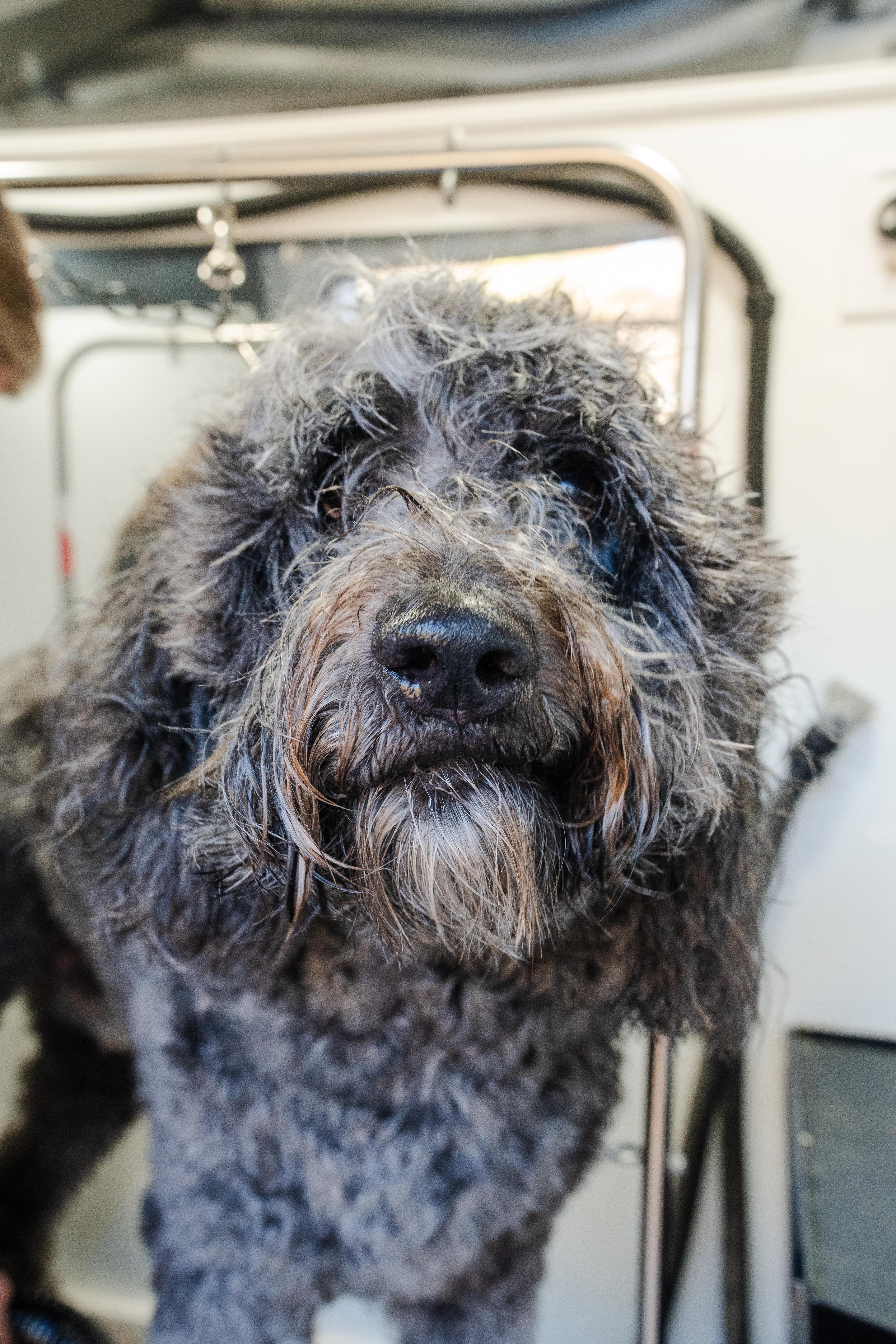
A well-maintained double coat requires specialized grooming techniques that our mobile service provides throughout Plaza Midwood.
Why Double-Coated Breeds Shed Differently
Double-coated breeds evolved for cold climates. The undercoat insulates. The guard hairs repel water and protect skin. In Charlotte's heat and humidity, that undercoat doesn't shed out as cleanly as it would in cooler regions. The loose undercoat stays trapped beneath the guard layer. It mats. Airflow drops. The dog overheats. Shedding spreads to furniture, car seats, and every fabric surface in the house.
Shaving isn't the answer. Clipping a double coat removes the guard hairs that regulate temperature and protect skin from sun exposure. The coat grows back unevenly. Texture changes. In some cases, the undercoat grows faster than the guard hairs, creating worse matting than before.
De-shedding removes the loose undercoat without cutting guard hairs. Done correctly, it reduces household shedding by 80% for four to six weeks. The coat stays intact. The dog stays cooler. You vacuum less.
What Happens During a Shed-Buster Session
Our Fear-Free Certified Groomers arrive in a climate-controlled van. The grooming station is self-contained. Water, power, ventilation, and all equipment travel with the van. Your dog doesn't leave the driveway.
The session follows this structure. The groomer assesses coat condition first. They check for mats, hot spots, skin irritation, and areas where the undercoat has compacted. A pre-bath brushing loosens surface debris and begins undercoat removal. The bath uses a deep-cleaning shampoo formulated for double coats. It penetrates to the skin and lifts oils without stripping the guard hairs.
High-velocity drying follows. This step does most of the undercoat removal. The dryer pushes air through the coat at controlled pressure. Loose undercoat blows out. The groomer works section by section, checking coat depth as they go. Post-dry brushing catches remaining loose fur. A final comb-through confirms the undercoat is evenly thinned and no mats remain.
The entire session takes 90 to 120 minutes for most double-coated breeds. Larger dogs like Bernese Mountain Dogs or Newfoundlands may run closer to two hours. Smaller Aussies or Corgis finish in 75 to 90 minutes.
Plaza Midwood's Grooming Reality vs Drop-Off Salons
Factor | Mobile Grooming | Drop-Off Salon |
|---|---|---|
Appointment flexibility | Scheduled to your availability; groomer arrives at your driveway | Drop-off windows (usually 7 to 9 a.m.); pick-up 4 to 6 hours later |
Dog's environment | Stays home; you're present the entire session | Crated in a holding area with other dogs; kenneled between steps |
Coat-drying method | High-velocity dryer in a quiet van; one dog at a time | Cage dryers or shared floor dryers; multi-dog rotation |
Post-groom transport | Walks back inside; no car ride stress | Car ride home after hours in a crate |
Plaza Midwood households value routine and low-stress living. Mobile grooming preserves that. Your dog sees the van pull up. The groomer greets them in the driveway. The session happens in a familiar space. When it's done, they walk back inside and sleep on the couch. No kennels. No waiting rooms. No multi-hour disruption.
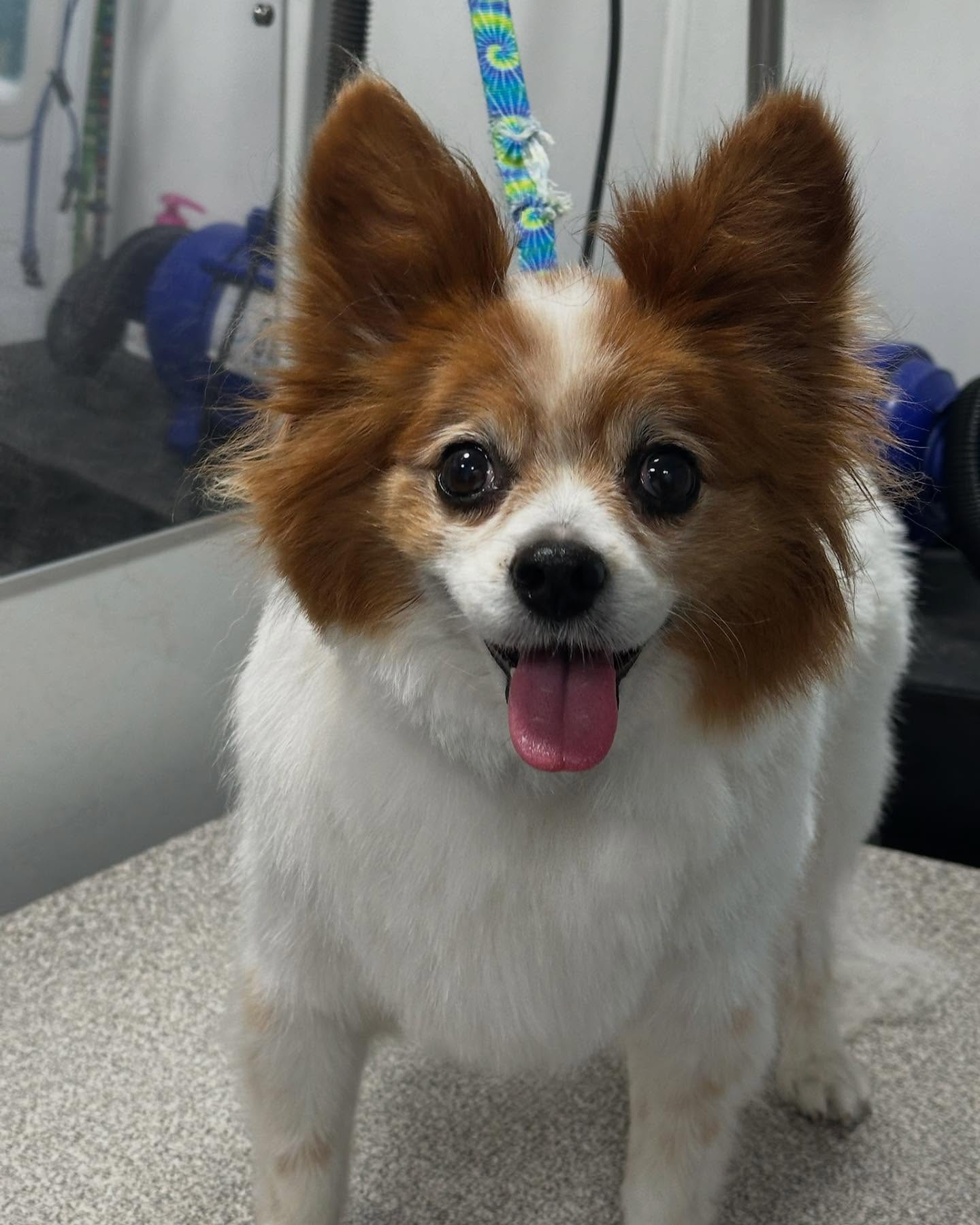
A freshly groomed double-coated pup ready for Charlotte's next seasonal stage, thanks to professional mobile grooming care.
The Four Seasonal Stages of Double-Coat Grooming in Charlotte
Charlotte's climate shifts across four grooming phases. Each phase requires different undercoat management.
Spring Blow (March to May). The heaviest shedding period. Winter undercoat releases as temperatures rise. Schedule grooming every three to four weeks during this window. The coat sheds faster than brushing at home can manage. A full de-shed removes 60 to 80% of loose undercoat in one session.
Summer Maintenance (June to August). Heat and humidity keep the undercoat shedding steadily. Grooming every four to six weeks prevents matting and keeps airflow through the coat. This phase is about thermal regulation. A thinned undercoat allows your dog to cool down more efficiently on Plaza Midwood's shaded walks.
Fall Prep (September to November). The coat begins thickening for winter. Shedding slows, but mats form more easily as the new undercoat grows in. Grooming every six to eight weeks keeps the coat even and prevents compaction near the skin. This is also the phase where skin irritation shows up if the summer coat wasn't managed well.
Winter Rest (December to February). The undercoat is fully grown. Shedding drops to baseline levels. Grooming shifts to every eight to ten weeks. Focus moves to mat prevention, paw-pad trimming for traction on wet sidewalks, and nail care. The coat stays denser during this phase, which is natural for the breed.
This cycle repeats every year. Consistent grooming across all four phases keeps the coat healthy, reduces household shedding, and prevents the skin issues that arise when undercoat mats near the surface.
What Double-Coat Grooming Looks Like on Central Avenue
Plaza Midwood runs along Central Avenue and the side streets that branch off it. The neighborhood is walkable, eclectic, and dense with coffee shops, breweries, and tree-lined residential blocks. Dogs here see foot traffic, outdoor seating areas, and other dogs on nearly every walk.
A well-groomed double coat matters for more than aesthetics. Matted undercoat traps heat. A dog overheats faster on summer walks. Loose fur sheds onto restaurant patios and into car seats after every outing. A de-shed session solves both problems. The coat stays clean. The dog stays cool. You spend less time lint-rolling the back seat.
Our groomers work with Huskies, Goldens, German Shepherds, Australian Shepherds, Border Collies, and Bernese Mountain Dogs across Plaza Midwood. The breeds vary. The grooming principles stay the same. Remove the loose undercoat. Preserve the guard hairs. Keep the coat functional.
From Constant Shedding to Managed Coat Cycles
Most double-coat owners assume shedding is just part of the deal. It is, but the volume is manageable. Consistent de-shed grooming reduces household fur by 80% for four to six weeks. The coat looks cleaner. The dog feels lighter. You vacuum once a week instead of twice a day.
The shift happens after the first session. You notice less fur on the couch. The dog moves more comfortably in the heat. Brushing at home takes five minutes instead of twenty. By the third or fourth session, the grooming cycle locks in. The coat sheds predictably. You schedule ahead. The process becomes routine.
Plaza Midwood households appreciate that consistency. Mobile grooming fits into the rhythm of the week without disrupting it.
Frequently Asked Questions
How often should double-coated breeds be groomed in Charlotte?
Every four to six weeks during peak shedding seasons (spring and summer). Every six to eight weeks in fall. Every eight to ten weeks in winter. Charlotte's humidity keeps the undercoat shedding longer than in cooler climates, so consistent grooming prevents matting and maintains coat health.
Can I brush my dog at home between grooming sessions?
Yes. Weekly brushing with a slicker brush and undercoat rake extends the de-shed results. Focus on areas where mats form first: behind the ears, under the legs, and along the chest. Home brushing won't replace professional grooming, but it reduces surface-level shedding between sessions.
Will mobile grooming work for a reactive or anxious dog?
Mobile grooming is often easier for anxious dogs than drop-off salons. The dog stays home. You're present. There's no multi-dog environment. Our Fear-Free Certified Groomers use low-stress handling techniques and adjust pacing to the dog's comfort level. Many reactive dogs groom calmly in the mobile van when they wouldn't tolerate a salon setting.
What's the difference between a de-shed and a regular bath?
A regular bath cleans the coat. A de-shed removes the loose undercoat that causes shedding. The process includes pre-bath brushing, a deep-cleaning shampoo, high-velocity drying that blows out loose fur, and post-dry brushing to catch remaining undercoat. The de-shed takes longer and targets coat health, not just cleanliness.
Does shaving a double coat help with shedding or heat?
No. Shaving removes the guard hairs that regulate temperature and protect skin. The coat grows back unevenly. In many cases, the undercoat grows faster than the guard hairs, creating worse matting. De-shedding is the correct approach for double-coated breeds. It removes excess undercoat while keeping the guard layer intact.
Written by Mike and Colleen Bass, founders of Pup Scouts. Mike and Colleen have led structured dog care across Maryland, Orange County, and Charlotte since 2015. More about our team.
Get started with CLT Pup Scouts, or call (704) 330-3089. Find us on Google as CLT Pup Scouts.
Similar Blogs


