Private Dog Walking in Capistrano Beach for Active Dogs
Mike and Colleen Bass
Private Dog Walking

Key Takeaways
Private dog walking in Capistrano Beach pairs one handler with one dog for a 45- to 60-minute outing that adjusts pace and structure to the dog's energy baseline.
Bluff-top streets between Doheny State Beach and Poche Beach offer low-traffic routes where active dogs practice controlled distance work without beach-crowd distractions.
Consistent one-on-one outings build recall reliability and leash composure in high-stimulus coastal settings where group dynamics would split handler attention.
Capistrano Beach sits between the bluffs and the sand. Beach access points lead down to Poche Beach and Doheny State Beach. Residential streets run parallel to the coast. Mornings see surfers heading toward the water. Afternoons bring families walking toward beach trails. The sidewalks stay walkable, but the visual stimulus stays high. An active dog here needs structured exercise that accounts for the environment without getting lost in it.
Private dog walking in Capistrano Beach means one handler, one dog, one route calibrated to that dog's energy and training stage. No group dynamics. No competition for handler attention. The structure holds whether the dog is a young working breed learning distance control or a high-drive adult reinforcing off-leash foundations near coastal distractions.
What Private Dog Walking Looks Like Here
Private dog walking in Capistrano Beach is a 45- to 60-minute one-on-one outing led by a certified Pack Leader who returns to the same dog on a set schedule. The handler learns the dog's energy baseline, preferred pacing, and progress markers. The route adjusts week over week based on where the dog needs structured work. A young Border Collie might spend the first month on bluff-top streets practicing loose-leash intervals. A Vizsla working on recall holds the same trails but adds distance drills near parking-lot edges where foot traffic tests focus.
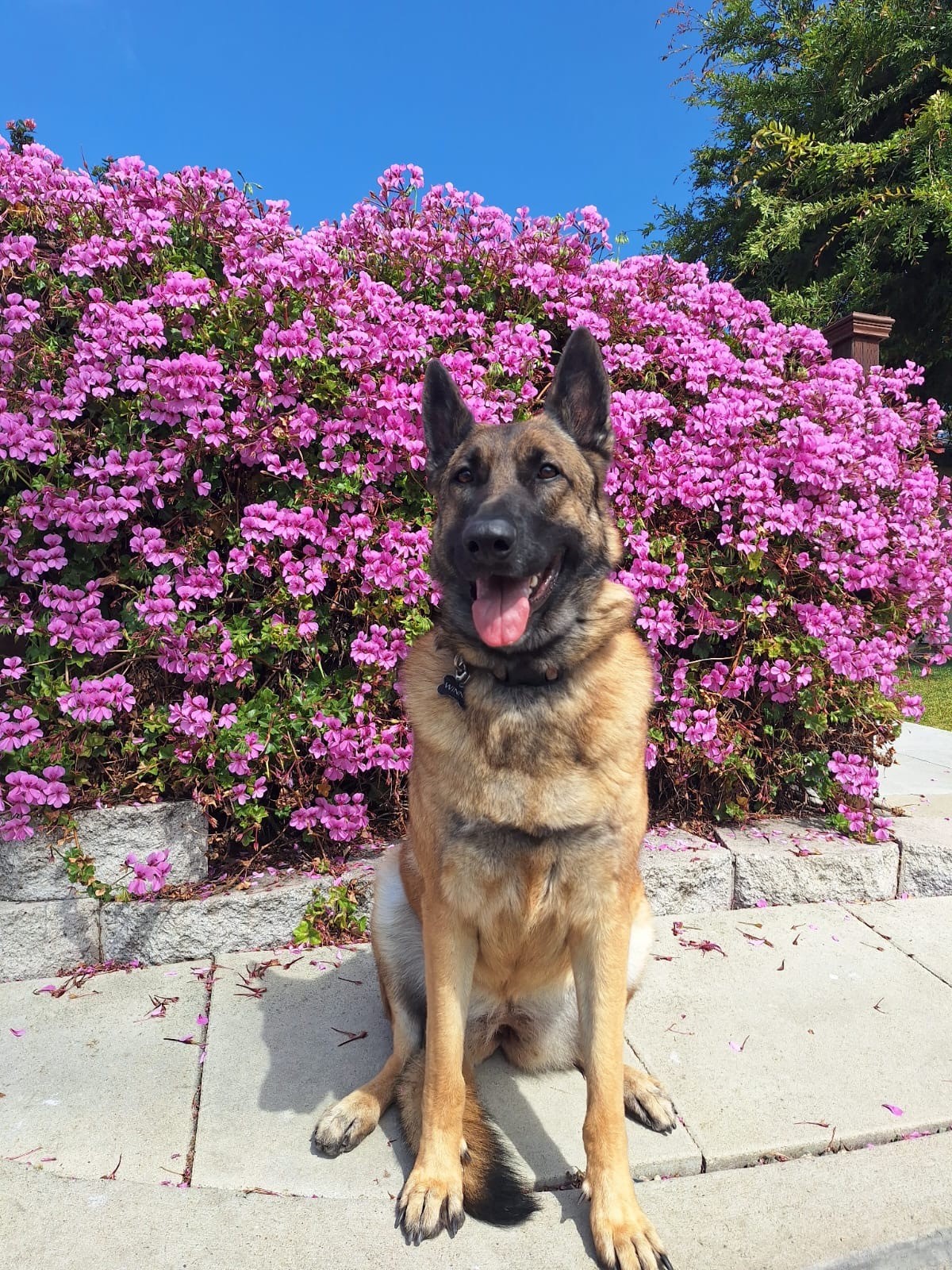
Active dogs thrive with dedicated attention during private walks through beautiful Capistrano Beach neighborhoods.
Why Active Dogs Need Dedicated Handler Attention
Active dogs process environments differently. A Labrador Retriever watching surfers head toward the beach isn't being stubborn when it pulls. The movement triggers prey drive. A German Shepherd scanning side streets during a walk isn't anxious. Breed history built vigilance into its baseline. These behaviors don't disappear in a group setting. They get managed or ignored. In a one-on-one walk, the handler addresses the specific moment the dog's focus shifts and redirects before the behavior chains.
High-energy breeds also move at different speeds. A two-year-old Australian Cattle Dog covers more distance in 45 minutes than a senior Beagle does in 60. Group walks pace to the median. Private walks pace to the dog. The handler adjusts intervals, adds structured stops for composure work, and calibrates distance based on post-walk behavior patterns the owner reports.
Capistrano Beach Geography That Supports Structured Walks
Bluff-top streets between Camino Capistrano and the coastal access points offer low-traffic residential routes where active dogs practice loose-leash work without constant stop-and-redirect moments. Sidewalks run wide enough for passing space. Side streets connect to longer loops when a dog needs extended distance. Beach-adjacent trails near Poche Beach and Doheny State Beach Road add controlled exposure to coastal stimulus without the sand and off-leash chaos of the actual beach.
The street grid here doesn't force U-turns or backtracking. A handler can plan a 2-mile loop that starts residential, adds a bluff-top segment with ocean views, and returns through quieter blocks where the dog practices calm-down transitions after higher-stimulus work. For dogs working on recall, the routes offer natural checkpoints: a parking-lot edge where the handler practices distance holds, a quiet intersection where the dog waits through a sit-stay while a car passes, a return leg where loose-leash work gets reinforced after the dog burned energy on the bluff segment.
How Energy Baseline Shapes Route Design
Energy Level | Route Pattern | Primary Work |
|---|---|---|
Moderate-energy adults | 45-minute residential loop with bluff-top scenic interval | Loose-leash reinforcement, calm-down transitions after visual stimulus |
High-energy young adults | 60-minute extended loop with distance intervals and structured stops | Recall practice at natural checkpoints, impulse control near parking lots and trail access points |
Working breeds under 3 years | Split route: 30 minutes bluff-top distance work, 15 minutes residential composure practice | Building duration under distraction, practicing focus shifts between environments |
The handler tracks post-walk behavior. If the owner reports the dog still pacing at home after a 45-minute walk, the next outing extends to 60 minutes or adds interval sprints on a long line in a parking lot before the residential return leg. If the dog settles well but pulls more on Week 3 than Week 1, the route shifts toward more frequent composure stops and less continuous distance. The structure flexes to what the dog shows, not what a schedule assumes.
Building Recall That Holds Beyond the Backyard
Backyard recall works because the environment stays static. The dog learns "come" in the same 20-by-30-foot space with the same visual cues every time. Coastal neighborhoods add variables: other dogs on leashes across the street, surfers carrying boards, families unloading beach gear from cars. A dog that comes immediately in the backyard might ignore the cue when a skateboarder passes. That's not disobedience. That's context shift.
Private walks in Capistrano Beach build recall in the environment where it has to hold. The handler starts with short-distance cues on a long line. The dog practices "come" at 10 feet while standing on a quiet sidewalk. No distractions. Once the response is immediate, the handler adds a single distraction: a parked car the dog wants to sniff, a jogger passing on the opposite sidewalk. The dog learns that "come" means the same thing whether it's in the backyard or next to a trailhead where people are heading toward the beach.
The progression moves to off-leash work only after the dog holds the cue on-leash in three different high-stimulus settings across three consecutive walks. Most active dogs hit that marker by Week 6. Some need 10 weeks. The timeline follows the dog, not a training manual's schedule.
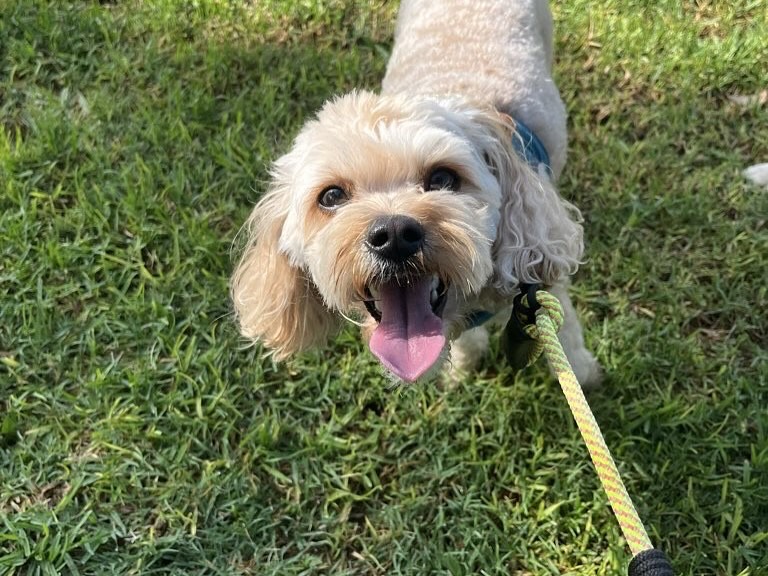
A confident pup enjoys a controlled coastal outing, showing the transformation from reactive pulling to calm, focused walking.
From Leash-Reactive Pulling to Controlled Coastal Outings
Leash reactivity in active dogs often reads as aggression but functions as frustration. The dog sees another dog across the street and pulls because it wants to engage. The leash prevents engagement. The dog pulls harder. The owner pulls back. The cycle reinforces. By the time the dog is two years old, every walk involves constant corrections and the owner avoids routes where other dogs appear.
Private walking interrupts that cycle by removing the emotional load from the owner and transferring it to a handler who doesn't carry the history. The dog doesn't associate the Pack Leader with past frustration. The handler doesn't react to the pull because they expect it and have a structured response ready. When the dog sees another dog and starts to pull, the handler stops, waits for the dog to refocus, and continues only when the leash goes slack. No correction. No verbal cue. Just a pattern: pulling stops forward motion, slack leash resumes it.
Most dogs learn the pattern within three walks. The fourth walk, the dog sees another dog, tenses, and chooses to sit instead of pull because it's learned sitting gets it closer to the interesting thing faster than pulling does. The behavior shift isn't obedience. It's the dog solving a problem the handler structured for it.
What a Typical Outing Includes
A private walk starts with a brief check-in at the door. The handler notes the dog's energy state: calm, aroused, distracted. The route adjusts based on that read. A dog that greets the handler by jumping and pacing gets a longer warm-up on residential streets before the bluff-top segment. A dog that's calm at the door starts on the bluff route immediately.
The outing includes:
Loose-leash intervals. 10- to 15-minute stretches where the dog practices walking next to the handler without pulling. The handler doesn't use verbal cues. The leash stays slack or the walk pauses.
Structured stops. Three to five moments during the walk where the dog practices a sit-stay or down-stay while the handler stands still. Duration builds week over week.
Distance work. For dogs working on recall, the handler uses a 20-foot long line and practices "come" cues at increasing distances in low-distraction settings first, then near parking lots or trail access points.
Controlled exposure. The route includes at least one high-stimulus moment: passing another dog on-leash, walking near surfers heading to the beach, navigating a busy corner. The handler manages the dog's response in real time.
Cool-down return. The final 10 minutes return through quieter residential blocks where the dog practices calm behavior after the higher-energy segment.
The handler sends a post-walk report to the owner noting energy level, behavior highlights, and any adjustments planned for the next outing. If the dog pulled more than usual near a specific intersection, the next walk adds an extra composure stop at that location. If recall improved, the next walk tests it in a slightly higher-distraction setting.
Why One Handler Matters More Here Than in Suburban Settings
Suburban neighborhoods often offer wide sidewalks, low foot traffic, and predictable routines. A dog can adjust to a rotating cast of walkers because the environment itself stays static. Coastal neighborhoods don't stay static. Weekend foot traffic doubles. Surf conditions change daily and shift where people gather. A dog that walked calmly on a Tuesday morning might pull toward a crowded beach access point on a Saturday afternoon because the environment shifted.
Consistency in the handler compensates for variability in the environment. The dog learns the Pack Leader's cues, pacing, and response patterns. When the environment adds stimulus, the dog has a familiar anchor. A new handler every week means the dog spends the first 10 minutes of every walk figuring out the new person's rhythm instead of practicing the behavior work the walk is designed to reinforce.
Most Capistrano Beach families working with Pup Scouts keep the same Pack Leader for six months or longer. The relationship builds. The dog stops treating walks as unpredictable events and starts treating them as structured routines where it knows what's expected.
Frequently Asked Questions
How long does it take for an active dog to settle into a private walk routine?
Most active dogs show measurable behavior changes by Week 3. The first two weeks establish the pattern: same handler, same general route structure, same post-walk routine. By Week 3, the dog anticipates the walk and starts offering calm behavior at the door because it's learned that's what gets the walk started. Full composure under high distraction usually takes 6 to 10 weeks depending on the dog's age, breed drive, and prior training history.
Can private walks transition to off-leash work on the beach?
Private walks build the foundation for off-leash work, but Capistrano Beach and Doheny State Beach enforce leash laws year-round. Off-leash practice happens on long-line work in parking lots or permitted areas only. Handlers don't take dogs off-leash in restricted zones. If a family's goal is off-leash beach access, the private walk program builds reliable recall first, and the owner practices off-leash work in legal settings outside the Pup Scouts outing.
What happens if my dog is reactive toward other dogs on the route?
Reactivity gets managed through distance and structured exposure. The handler identifies the dog's threshold distance, the point where it notices another dog but doesn't react, and keeps all passes outside that range initially. Over multiple walks, the threshold shrinks as the dog learns other dogs passing don't require a response. Most leash-reactive dogs move from lunging at 30 feet to calmly passing at 10 feet within 8 to 12 weeks of consistent private walk work.
Do private walks work for senior active breeds that still need exercise but tire faster?
Yes. The route adjusts to the dog's current physical capacity, not its breed profile. A 10-year-old Labrador Retriever that used to run 5 miles might now walk 2 miles comfortably with rest intervals. The handler paces the outing to the dog's breathing, gait, and post-walk recovery time the owner reports. Senior dogs often benefit more from private walks than group walks because the handler can slow mid-route without holding up other dogs.
How does private walking compare to hiring a neighborhood dog walker?
Private walking through Pup Scouts includes structured behavior work, post-walk reporting, and handler consistency. A neighborhood dog walker typically offers exercise-focused outings without training integration. If the goal is to burn energy, either works. If the goal is to improve leash manners, recall, or reactivity while also providing exercise, the structured private walk addresses both.
Written by Mike and Colleen Bass, founders of Pup Scouts. Mike and Colleen have led structured dog care across Maryland, Orange County, and Charlotte since 2015. More about our team.
Get started with OC Pup Scouts, or call (949) 629-0932. Find us on Google as OC Pup Scouts.
Similar Blogs


