Dog Boarding in Charlotte: No Crates, Just Real Homes
Mike and Colleen Bass
Overnight Dog Boarding

Key Takeaways
In-home dog boarding means your dog stays in a vetted host home, not a kennel or crate facility.
Pup Scouts Charlotte matches dogs to host homes based on temperament, energy, and household compatibility.
Every overnight includes daily routine, post-stay notes, and the same trusted handler who leads their regular pack walks.
Charlotte moves at a steady pace. Morning commuters head toward Uptown. Families walk neighborhoods like Myers Park and Dilworth. Dogs navigate sidewalks, yards, routine. When that routine gets interrupted by travel or work commitments, the question becomes: where does the dog stay?
Most boarding facilities answer with kennels. Steel gates, concrete floors, rotating staff. Dogs adapt because they have to. Some handle it well. Some shut down. Some come home exhausted or anxious.
Pup Scouts Charlotte operates differently. Overnight boarding in Charlotte means your dog stays in a vetted host home with a familiar handler. No kennels. No crates. No rotation. The routine they know continues in a setting that feels like home.
What In-Home Boarding Actually Means
In-home dog boarding is overnight care provided in a private residence, not a commercial facility. The dog stays with a host, often the same Pack Leader who handles their regular walks or training, following a daily structure built around their existing routine. Meals stay consistent. Exercise matches what they're used to. Sleep happens on furniture or dog beds, not behind a gate. The setting mimics home because it is a home.
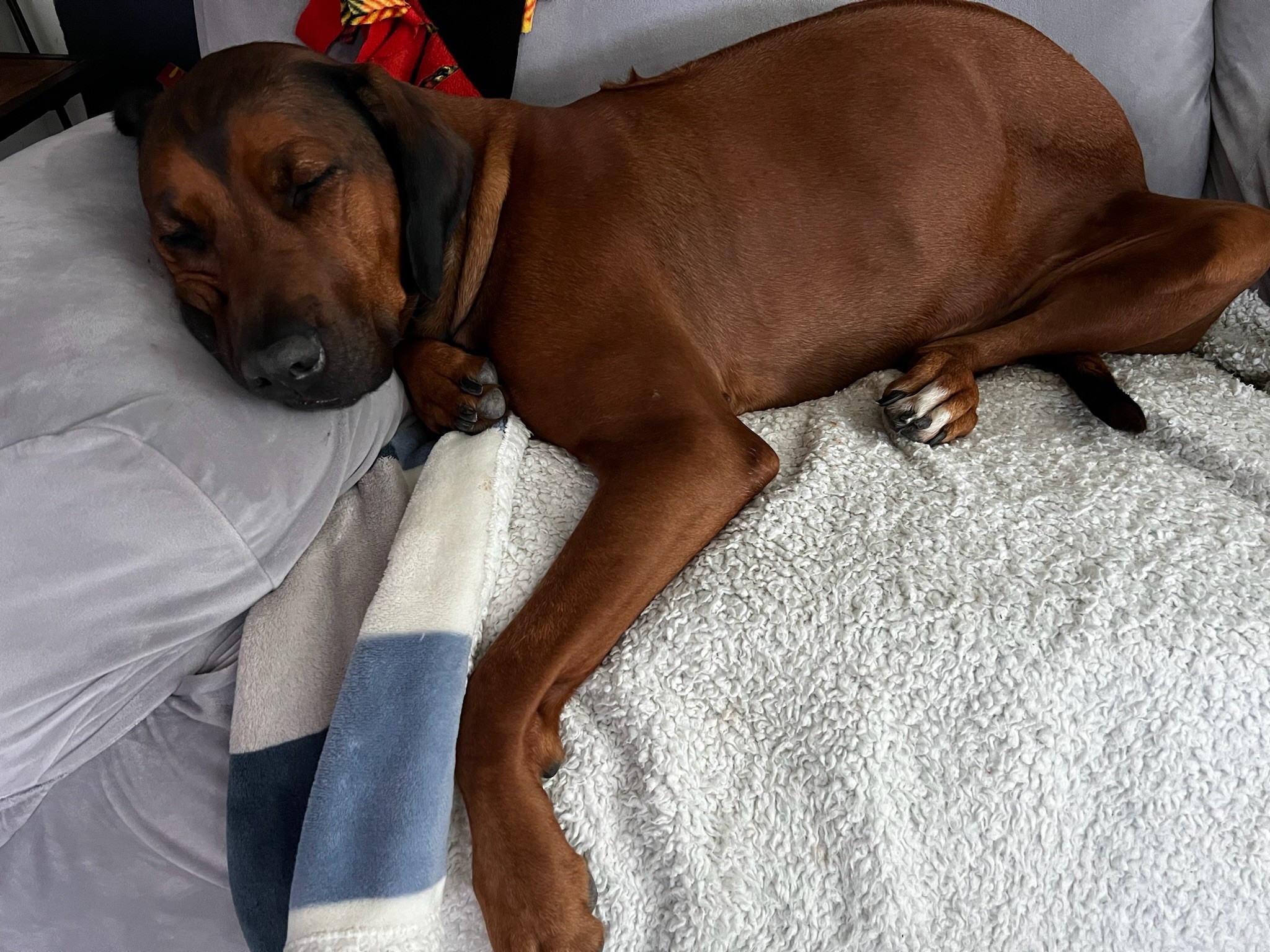
Our overnight boarding guests rest comfortably in real homes, not confined spaces or kennels.
Why Pup Scouts Doesn't Use Crates or Kennels
The decision to avoid kennels isn't ideological. It's behavioral. Crate-based boarding works for some dogs, the ones who already see crates as safe spaces at home. For dogs who don't crate regularly, or who show signs of kennel stress (barking, pacing, refusal to eat), the setting creates regression.
In-home boarding removes that variable. Dogs move through a house the way they move through their own. They settle on couches. They follow handlers into rooms. They respond to household sounds without alarm. The absence of gates and enclosures shifts how they process the stay.
Charlotte families notice the difference in post-boarding behavior. Dogs who come back from kennels often need days to re-settle. Dogs who stay in vetted homes transition back to their own routine within hours.
How We Match Dogs to Host Homes
Placement starts with a written assessment. Owners fill out a profile covering temperament, energy level, household preferences (crate-trained or free-roam, multi-dog or solo, noise sensitivity, yard access). Pup Scouts reviews the profile alongside notes from the dog's Pack Leader, behavioral observations from walks, training sessions, past boarding stays.
From there, matching happens across three filters. First, temperament compatibility: a high-energy adolescent doesn't board with a senior-focused quiet home. Second, household dynamics: multi-dog households get matched with dogs who've shown stable pack behavior. Third, handler consistency: wherever possible, the dog boards with a Pack Leader they already know.
Most Charlotte placements route through handlers in South End, Plaza Midwood, NoDa, and Myers Park. The density of vetted homes in those neighborhoods means shorter travel times and tighter geographic ties to the dog's usual walking routes.
🖼️ Inline photo: placeholder. Drag in a photo of a dog resting in a living room setting from bunny.net.
What the Daily Routine Looks Like
Boarding days follow structure. Morning starts with a walk or yard time, duration and route match the dog's regular schedule. Breakfast happens at the usual time, same food the owner provides. Mid-morning is downtime: the dog settles on furniture, chews a toy, follows the handler through the house.
Midday brings a second outing. For dogs in Pup Scouts' regular pack walks, this is often their scheduled group walk with the same pack they know. For dogs boarding solo, it's a private walk or play session. Afternoon is rest. Evening brings dinner, another outing, then settle-down time before bed.
Handlers document the day in post-stay notes: what the dog ate, how they slept, any behavioral observations, photos from walks. Charlotte families get the notes within 24 hours of pickup.
The Difference Between In-Home and Facility Boarding
Factor | In-home boarding | Facility boarding |
|---|---|---|
Setting | Private residence, furniture access | Commercial space, kennels or crates |
Handler | Consistent (often the dog's regular Pack Leader) | Rotating staff across shifts |
Routine | Matched to dog's existing schedule | Standardized facility schedule |
Social exposure | Controlled, familiar pack or solo | Variable, often large groups |
Overnight | Free-roam or soft crate in living space | Enclosed kennel or crate run |
Facilities handle volume. In-home boarding handles individuality. Both serve different needs. For dogs who thrive on consistency or show stress in kennel settings, in-home wins.
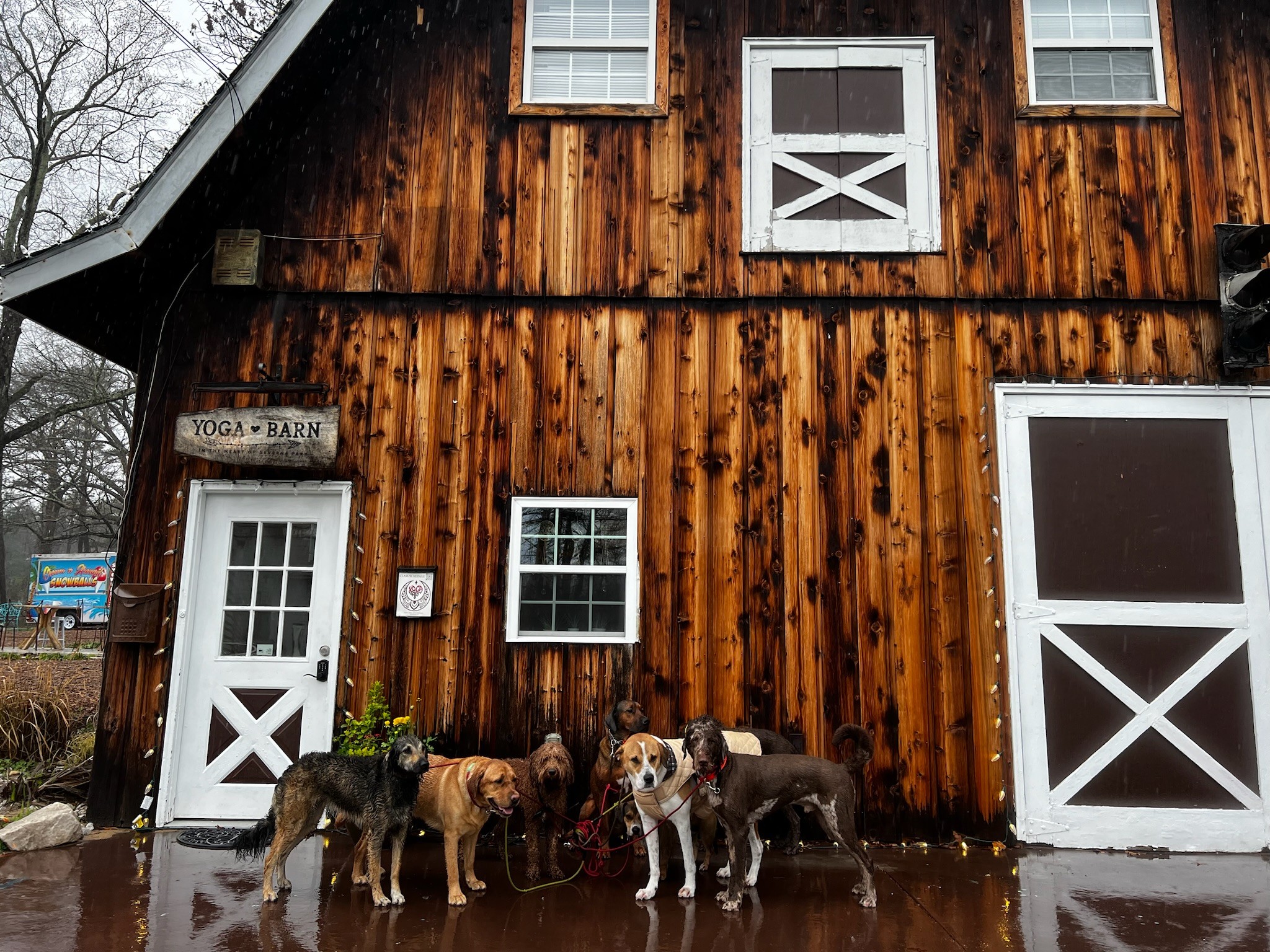
A group of boarding dogs enjoy time together at one of our Charlotte home locations, ready for their overnight stay.
Five Reasons Charlotte Families Choose In-Home Boarding
1. The dog already knows the handler
Most overnight stays route through a Pack Leader the dog has walked with for weeks or months. The voice is familiar. The handling style is known. Stress drops when the human isn't a stranger.
2. Routine doesn't break
Meals, walks, rest periods, all mirror what happens at home. The dog wakes at the same time, eats the same food, goes out on the same schedule. The disruption is location, not structure.
3. No kennel-induced behavior shifts
Dogs who pace, bark, or refuse meals in kennels settle in homes. The absence of gates and enclosed runs removes the trigger. Charlotte families report cleaner transitions post-boarding.
4. Multi-dog households get real compatibility testing
A dog boarding with a multi-dog host home isn't just placed arbitrarily. Pup Scouts tests pack dynamics first, either through prior group walks or a pre-boarding meet. If the chemistry isn't there, placement shifts.
5. Parents get real reporting
Post-stay notes aren't generic checklists. They're behavioral observations: how the dog settled the first night, what moments triggered play, whether they ate eagerly or needed coaxing. The detail comes from single-handler continuity.
🖼️ Inline photo: placeholder. Drag in a photo of a Pack Leader with a dog outdoors in Charlotte from bunny.net.
What Happens When Plans Change
Travel delays, early returns, last-minute extensions, boarding plans shift. In-home setups adapt more fluidly than facilities. Handlers communicate directly with owners. Pickup times flex. If an owner's flight gets delayed by a day, the dog stays an extra night without a facility-transfer scramble.
Emergency contacts sit with the handler, not a front desk. Veterinary records travel with the dog. If a behavioral concern surfaces, skipped meal, unusual lethargy, the handler texts the owner directly, not through a chain of staff.
From Kennel Stress to Calm Stays
Charlotte families move away from facility boarding for specific reasons. One: the dog shows stress signs (pacing, excessive barking, refusal to settle). Two: the owner wants handler consistency, not rotating shifts. Three: the dog thrives in quieter, home-based settings.
In-home boarding doesn't replace every kennel need. For dogs who love high-energy group play all day, facilities offer that. For dogs who need predictable quiet, known voices, and furniture access, in-home delivers it.
The shift happens after the first stay. Families notice the dog transitions back to home routine faster. Post-boarding anxiety drops. The handler's notes reflect real observation, not generic updates. The decision to board again becomes easier.
Frequently Asked Questions
Does my dog need to be crate-trained to board in a home?
No. In-home boarding works for both crate-trained and free-roam dogs. If your dog crates at home and finds it calming, the host can provide a soft crate. If your dog free-roams, they settle on furniture or a designated dog bed. The setup matches your dog's existing habits.
How do you prevent my dog from escaping or getting into things?
Host homes are vetted for secure yards (fenced, gate-checked) and dog-proofed interiors. Handlers follow the protocols outlined in your dog's profile: leash-only outdoor access if the dog is a flight risk, restricted room access if they counter-surf, supervision during high-energy periods. The Match Questionnaire you fill out flags these risks upfront.
What if my dog doesn't get along with the host's pets?
Placement avoids that scenario. If you note that your dog prefers solo stays or has specific triggers around other dogs, Pup Scouts matches them to a solo-dog home or one with a vetted compatible pack. Multi-dog placements only happen after temperament screening through prior group walks or meet-and-greets.
Can I board my dog with the same Pack Leader every time?
Yes, if that Pack Leader's schedule aligns. Most Charlotte families request the handler their dog already walks with. Pup Scouts prioritizes that match when booking opens. If the preferred handler isn't available, placement routes to another vetted home, and the owner approves before confirming.
What happens if my dog gets sick or injured during the stay?
Handlers contact you immediately. If veterinary care is needed, they follow your emergency contact instructions and take the dog to your preferred vet or the nearest available clinic. All boarding agreements include veterinary authorization forms. You're updated in real time, and any care costs are billed separately with full documentation.
Written by Mike and Colleen Bass, founders of Pup Scouts. Mike and Colleen have led structured dog care across Maryland, Orange County, and Charlotte since 2015. More about our team.
Get started with CLT Pup Scouts, or call (704) 330-3089. Find us on Google as Pup Scouts Charlotte.
Similar Blogs


