Dog Training in Myers Park for Anxious Dogs
Mike and Colleen Bass
Dog Training

Key Takeaways
Anxious dogs in Myers Park need a different training approach than confident dogs. Group classes amplify anxiety; one-on-one in-home sessions reduce it. The right training format is the precondition for the right outcomes.
Pup Scouts runs Dog Training as a private in-home service across Charlotte, with sessions in your living room, your block, and the parts of your day where the anxiety actually shows up.
Behavior change for anxious dogs takes weeks, not days. Most Myers Park anxious dogs see meaningful shifts in 5 to 8 sessions, with a custom program built after the in-home assessment.
Anxious dogs in Myers Park don't fit the typical training-class model. Group obedience classes assume the dog can settle in a room with other dogs they don't know, which is the exact thing an anxious dog can't do. The class becomes a stress test, not a learning environment. The dog leaves more reactive than they arrived. The family leaves frustrated.
Dog training in Myers Park for anxious dogs has to start somewhere else. Pup Scouts runs Dog Training as a private in-home service: a certified trainer comes to your house, observes how the anxiety actually shows up in your dog's daily routine, and builds a custom program around the specific patterns. The training happens where the anxiety lives, which is usually not in a classroom.
This piece walks through what that approach looks like for anxious Myers Park dogs and why it tends to outperform group-class training for this category.
What "anxious" usually means here
Anxiety in Myers Park dogs takes a few common shapes: separation anxiety triggered when the family leaves the house, environmental anxiety triggered by sounds or movement (Queens Road traffic, lawn equipment, delivery trucks), social anxiety triggered by encounters with unfamiliar dogs or people, and resource anxiety triggered around food, doorways, or specific household events. The category is broad. The training response gets specific.
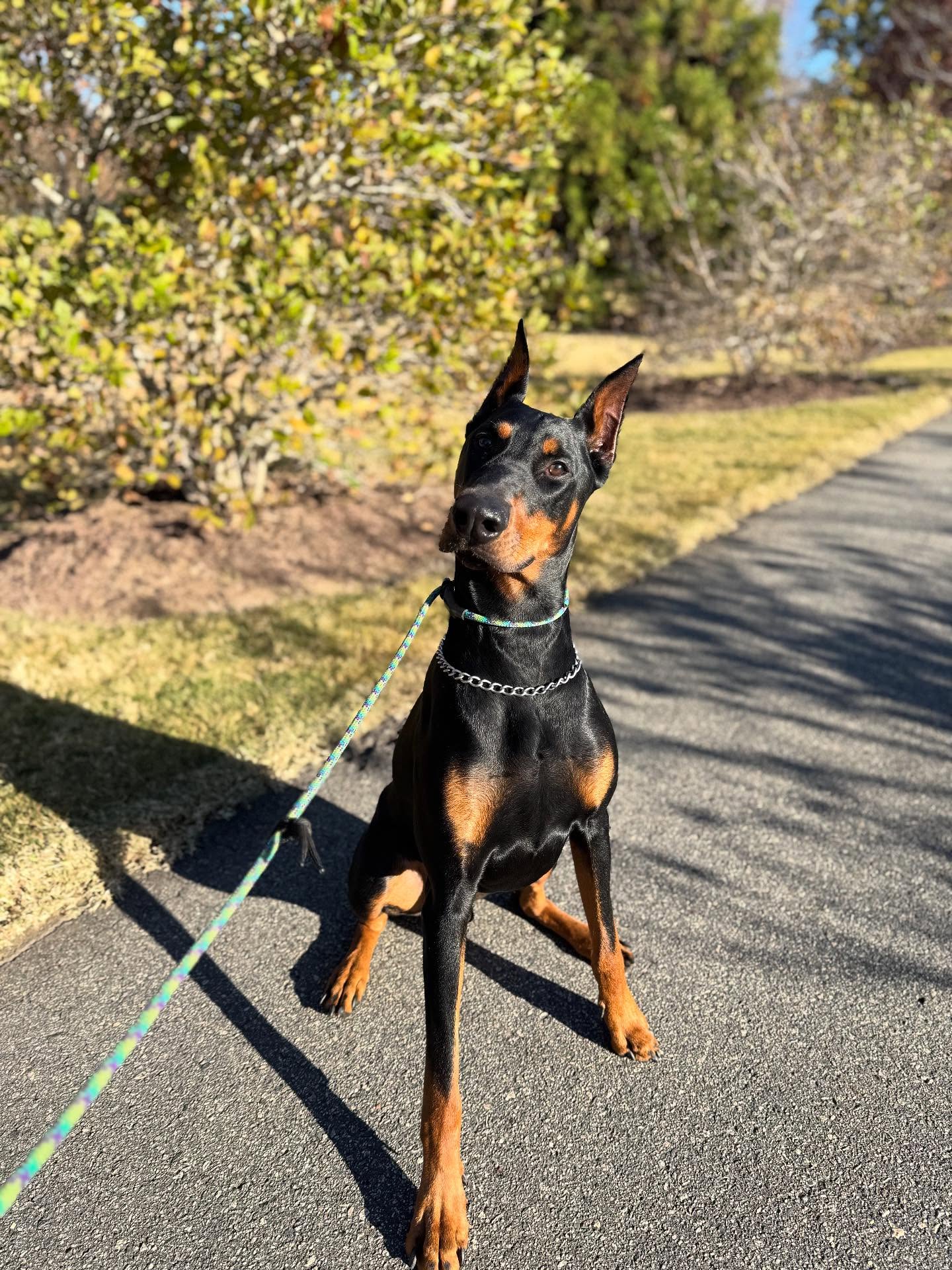
One-on-one training helps anxious dogs build confidence at their own pace in familiar environments.
Why in-home training fits anxious dogs better than group classes
Three reasons in-home training tends to work better for this category.
The setting is familiar. An anxious dog is already managing a baseline level of stress from the unfamiliar. Removing the unfamiliar environment frees up nervous-system bandwidth for actual learning. Sessions happen in your living room, on your couch, in your front yard, where the dog can engage rather than survive.
The trigger is observable. A trainer in your home sees the anxiety in context. If the dog escalates when the doorbell rings, the trainer is there for the doorbell. If the dog can't settle when the kids come home from school, the trainer can be there at 3:15pm. Group classes never see the actual trigger; in-home sessions can be scheduled around it.
The training transfers immediately. Skills learned in your living room don't need to "transfer" home, because they were learned at home. For anxious dogs, the transfer step is often where group-class training fails. The dog learned the skill in the classroom but can't perform it during the actual stress moment at home.
How Pup Scouts approaches Dog Training in Charlotte
Pup Scouts runs Dog Training as a three-step process across Charlotte and surrounding neighborhoods (Myers Park, SouthPark, Dilworth, Plaza Midwood, Elizabeth):
Step 1: Schedule consultation. A first call to discuss what you're seeing, what you've tried, and what your goals are.
Step 2: Private in-home assessment. A certified trainer visits your home to observe your dog's temperament, leash behavior, household dynamics, and the specific patterns of the anxiety. This is where the custom program gets built.
Step 3: Custom program development. Based on the assessment, you and the trainer agree on a training plan with a defined number of sessions, specific behavior goals, and a timeline. Standard packages are 5 sessions ($750) or 8 sessions ($1,100), with longer programs available for dogs whose anxiety needs more time.
The training itself happens at your home, on your block, and in the parts of your day where the anxiety actually shows up. Sessions are paced to the dog, not to a classroom schedule.
Anxious-dog training fit by anxiety type
Anxiety type | Pup Scouts in-home training fit | Recommended starting program |
|---|---|---|
Separation anxiety (mild to moderate) | Strong fit. Training works directly with the trigger (your departures and returns). | 8 sessions, full custom program |
Environmental anxiety (sounds, motion, neighborhood stimuli) | Strong fit. Trainer observes the actual triggers in your home and on your block. | 5 to 8 sessions depending on trigger frequency |
Social anxiety (other dogs, unfamiliar people) | Strong fit. Real-world Charlotte sidewalk and park work, paced by the dog. | 8 sessions, often combined with structured walks |
Resource anxiety (food, doorways, beds) | Strong fit. In-home environment is where the resource triggers live. | 5 sessions, often shorter program |
Severe separation anxiety / panic disorder | In-home training runs alongside vet support. | Vet consult first, then training program |
Generalized anxiety disorder | Vet first. Training supplements medical care, doesn't replace it. | Vet referral; Pup Scouts will say so during the assessment |
The honest answer for severe cases: in-home training reduces day-to-day anxiety expressions, but for dogs with clinical anxiety disorders, training works best as part of a broader plan that includes veterinary care. Pup Scouts will recommend a vet conversation when the assessment shows it.
What an anxious-dog training arc looks like
Consultation and in-home assessment (Week 1). A certified trainer visits the home, observes the dog in context, identifies the anxiety pattern, and proposes a custom program. Most assessments run 60 to 90 minutes.
Foundation work (Weeks 1 to 3). Early sessions focus on building predictability: the dog's daily routine, calm engagement signals, low-stress behavior reps in the easiest contexts. Anxious dogs need a foundation to build on, not behavior corrections to react against.
Trigger work (Weeks 3 to 6). Sessions move toward the actual anxiety triggers, paced carefully. The doorbell. The departure routine. The Queens Road sidewalk. Each trigger gets worked through structured exposure with the trainer present, not through avoidance.
Maintenance and family handoff (Weeks 6 onward). The trainer transfers the program to the family. Daily routines, weekly check-ins, occasional refresh sessions. The goal is for the family to be the anxious dog's primary support system, not the trainer in perpetuity.
This is one common arc. Some dogs move faster, some need a longer program, and some benefit from ongoing weekly sessions for several months before they're stable. The custom program is built around your dog, not a fixed timeline.
What changes at home
The clearest signal training is working isn't usually a dramatic moment. It's an absence: the dog stops doing something that used to happen daily. The pacing at the front door before walks. The trembling when the family puts on shoes. The hour of decompression after a stressful event. Those daily patterns thin out, then stop.
Most Myers Park families notice the shift between weeks 4 and 6. Not a transformed dog. A regulated dog. The same personality, with less of the anxious overlay.
Why neighborhood specificity matters in Myers Park
Myers Park's specifics matter for anxious-dog training. The wide tree-lined streets give cover for distance work. Queens Road's traffic provides a real-world environmental stimulus the trainer can use deliberately. The neighborhood's density of dogs creates frequent low-grade social exposure opportunities, which lets a socially anxious dog progress without leaving home territory. A training program built for Myers Park looks different than one built for downtown Charlotte or a suburban Ballantyne block.
Frequently Asked Questions
How long does it take to train an anxious dog?
Most anxious dogs see meaningful behavior shifts in 5 to 8 sessions. Significant changes typically take 4 to 8 weeks of consistent in-home work. Severely anxious dogs may need longer programs that run 3 to 6 months alongside vet support. The timeline gets calibrated during the in-home assessment, not promised before the trainer has met your dog.
Should I do group classes or in-home training for an anxious dog?
For most anxious dogs, in-home training outperforms group classes. Group classes work for confident dogs learning obedience skills. They're often counterproductive for anxious dogs because the unfamiliar environment competes with the learning. In-home training puts the work in the environment where the anxiety actually shows up.
Will training fix my dog's separation anxiety?
In-home training significantly reduces separation anxiety in most dogs at the mild-to-moderate level. Dogs with severe separation anxiety often benefit from a combined approach (training plus vet input on whether anxiety medication would support the behavioral work). Pup Scouts assesses where your dog falls on that spectrum and recommends accordingly.
Do I need to be present during the training sessions?
Yes. In-home training is a partnership. The certified trainer works with your dog and you simultaneously. The behaviors only stick when the family practices them between sessions. Training a dog without the family is a temporary fix; training the family with the dog is the durable one.
What if I'm not seeing progress after a few sessions?
Tell the trainer. Pup Scouts adjusts the custom program based on what's working and what isn't. Sometimes the issue is pacing (the dog needed slower foundation work). Sometimes it's a missed trigger (the actual anxiety driver wasn't yet in the program). Sometimes it's a vet conversation (the dog's anxiety has a medical component the training alone can't address). Lack of progress is data; the program adapts.
Written by Mike and Colleen Bass, founders of Pup Scouts. Mike and Colleen have led structured dog care across Maryland, Orange County, and Charlotte since 2015. More about our team.
Get started with CLT Pup Scouts, or call (704) 330-3089. Find us on Google as CLT Pup Scouts.
Similar Blogs


