Dog Training in San Clemente for Puppies
Mike and Colleen Bass
Dog Training

Key Takeaways
Puppy training in San Clemente starts with beach-town exposure work. Pier crowds, cyclist traffic, and off-leash dog encounters require early socialization protocols.
The 8-to-16-week critical window determines whether a young dog generalizes calm behavior or develops trigger patterns that compound through adolescence.
Structured in-home sessions paired with real-world walks along the Beach Trail and Calafia Beach build leash skills that hold in high-distraction coastal environments.
Morning foot traffic flows south along Avenida Del Mar. Cyclists navigate the bike path. Surfers carry boards toward the pier. A family walks three dogs. Two pull, one stays loose-leash beside a stroller. The loose-leash dog is eight months old. The other two are adults who never learned to walk calmly through a beach town.
San Clemente moves at a specific rhythm. Pedestrian density shifts block by block. The pier draws crowds. Side streets stay quieter. Dogs here encounter joggers, skateboards, other dogs off-leash at the beach, restaurant patios, and constant visual motion. Puppies absorb this environment during their first sixteen weeks. What they learn now determines whether they navigate it calmly at six months or react to every stimulus.
Dog training in San Clemente for puppies is not about tricks. It's about building composure where distractions are constant and generalization matters more than a single-room sit-stay.
What Puppy Foundations Training Means Here
Puppy foundations training in San Clemente is structured exposure work during the critical socialization window, paired with leash skills that hold in real-world coastal environments. It teaches a young dog to process beach-town stimuli without overarousal or avoidance, using short in-home sessions and progressive outdoor walks that match developmental readiness.
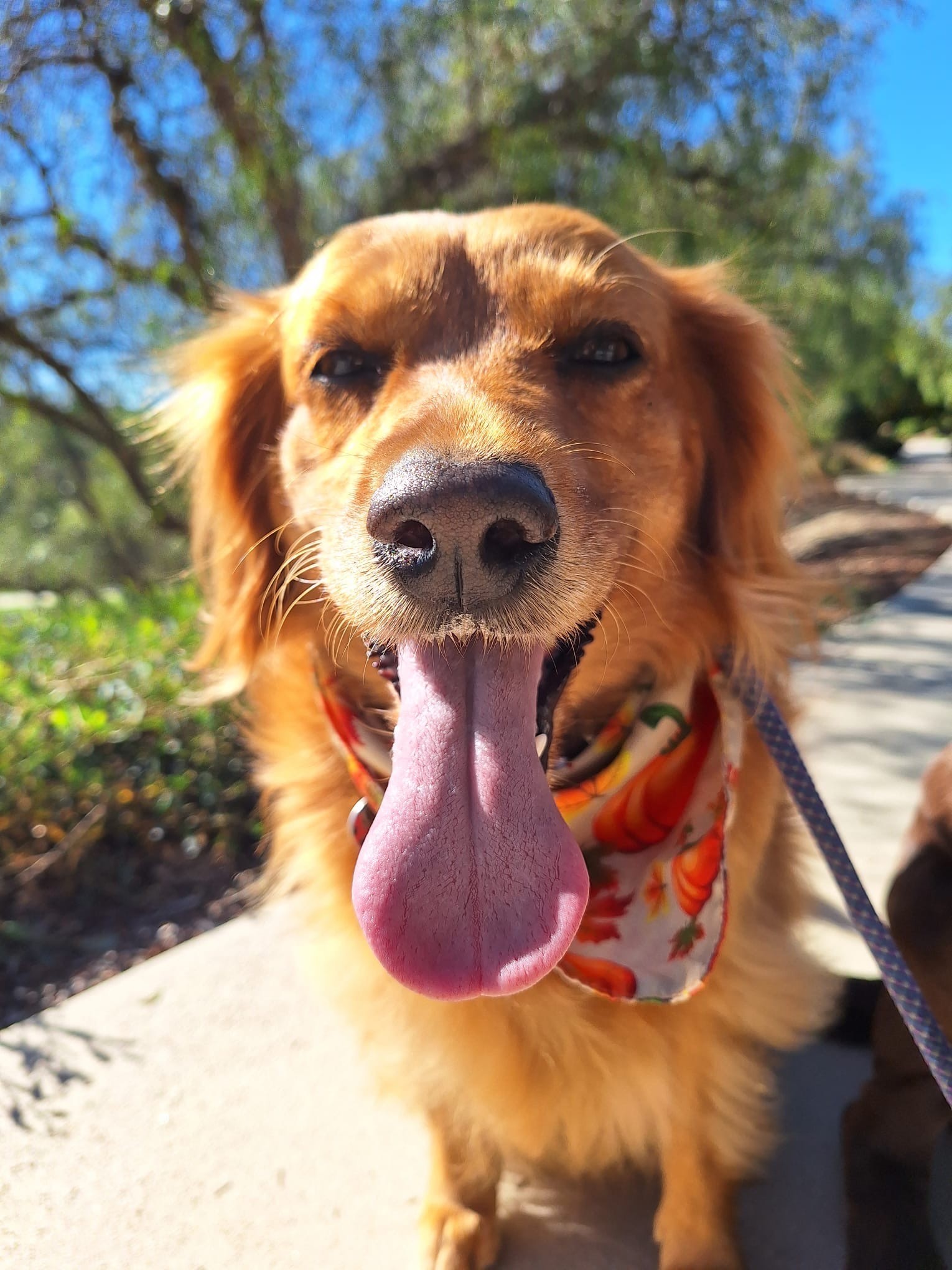
Early positive experiences shape a puppy's lifelong approach to learning and social interaction.
Why the First Sixteen Weeks Set the Pattern
Puppies develop behavioral templates between eight and sixteen weeks. This window closes fast. What a puppy encounters during this phase. And how those encounters are managed. Shapes their adult responses to novelty, other dogs, and environmental pressure.
In San Clemente, that means controlled exposure to pier foot traffic, cyclist paths, off-leash beach dogs at a distance, patio dining scenes, and the Beach Trail's mix of runners and families. A puppy walked through these environments without structure learns to pull toward stimuli or freeze when overwhelmed. A puppy walked with clear handler communication learns to orient back to the walker and move through distractions calmly.
The difference compounds. A four-month-old who has practiced loose-leash walking past the pier fifty times generalizes that skill to new environments. A six-month-old who never trained in distractions requires remedial work that takes longer and feels harder for the dog.
How Socialization Works in a Beach Town
Socialization is not "exposing the puppy to everything." It's controlled, positive-outcome exposure that builds confidence without flooding the dog's processing capacity.
At San Clemente Pier, that looks like standing twenty feet back from the crowd, rewarding the puppy for calm observation, then walking parallel to the activity without forcing proximity. The puppy sees motion, hears voices, smells food stands, but isn't dragged into the center of it. Incrementally, distance decreases as the puppy demonstrates comfort.
On the Beach Trail, it means passing cyclists at a slow walk, not a reactive lunge. It means seeing off-leash dogs at Calafia Beach from the bluff overlook before attempting closer proximity. It means short sessions. Ten minutes of structured walking beats thirty minutes of overwhelm.
The protocol scales to the dog. A confident retriever puppy might handle pier proximity at twelve weeks. A sensitive herding breed might need four weeks of distance work before moving closer. Both dogs can reach the same outcome if the exposure matches their readiness.
What a Structured Session Looks Like
Each in-home puppy training session runs thirty to forty-five minutes. The session starts indoors with name recognition, eye contact on cue, and basic positional work. Sit, down, stand. These aren't performance commands. They're communication tools the puppy uses to ask questions and the handler uses to redirect attention.
The second half moves outdoors. A short walk down Avenida Del Mar or along Ola Vista tests whether the puppy can hold loose-leash position outside the training room. Distractions appear. Another dog across the street, a skateboarder, a sudden gust carrying ocean smells. The trainer marks calm responses and redirects overarousal before it escalates.
Post-walk notes document what the puppy handled well and what triggered reactivity. Each session builds on the last. A puppy who struggled with skateboards at ten weeks practices near a skate park at twelve weeks, with distance and duration controlled to keep the experience sub-threshold.
🖼️ Inline photo: placeholder. Drag in a puppy walking calmly on-leash past a beach scene from bunny.net OC folder.
Do Puppies Need Private Sessions or Group Exposure?
Both serve different purposes, and the right answer depends on the puppy's baseline temperament and the owner's consistency between sessions.
Scenario | Private sessions | Supervised group exposure |
|---|---|---|
Puppy under 12 weeks, first leash experience | Best fit. One-on-one focus builds foundational skills without peer distraction | Not yet. Group settings overwhelm before basics are solid |
Puppy 12 to 16 weeks, basic leash skills in place | Still valuable for handler coaching and real-world walks | Can add controlled puppy meetups to practice neutral greeting behavior |
Puppy over 16 weeks, entering adolescence | Essential for proofing skills as hormones shift behavior patterns | Group walks with age-matched dogs reinforce loose-leash around peers |
Reactive or fearful puppy at any age | Required. Group settings compound anxiety without private remedial work first | Avoided until private sessions build confidence baseline |
Private sessions give the trainer time to teach the handler, not just the dog. Group settings test what the puppy has learned but don't replace structured coaching.
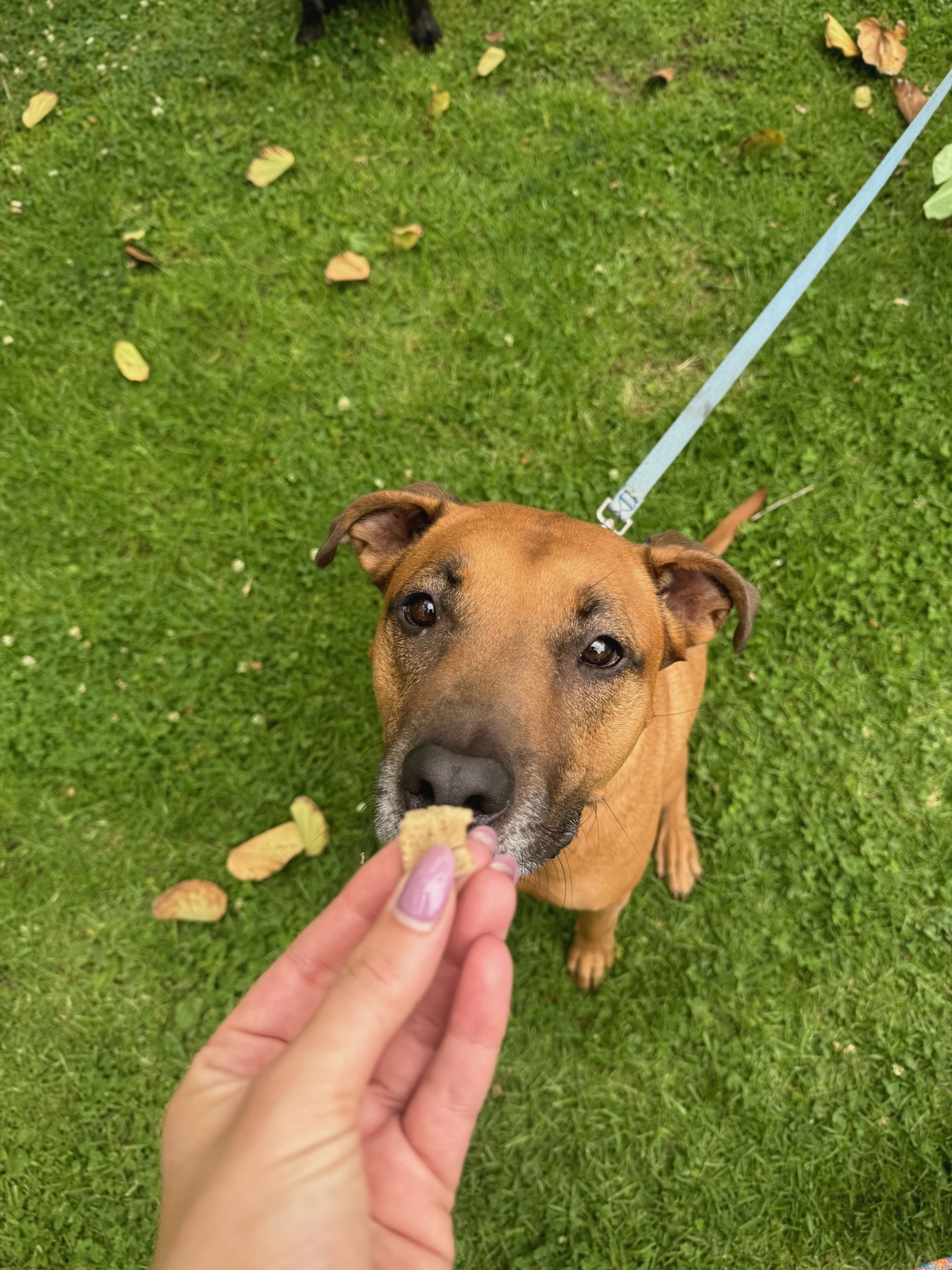
Positive reinforcement is essential during the critical early development stages of puppy training.
The Developmental Timeline from 8 Weeks to 6 Months
Puppy development doesn't progress linearly. Certain windows open and close. Training protocols adjust to match the phase.
8 to 10 weeks. Name recognition and handler focus. The puppy learns their name means "look at me." Sessions happen indoors, in low-distraction spaces. Leash work starts as follows-without-pulling in the backyard, not on public streets yet.
10 to 12 weeks. First outdoor exposures. Short walks on quiet residential streets. The puppy practices loose-leash position for thirty seconds at a time. Distractions are observed from distance. No forced proximity to skateboards, cyclists, or other dogs.
12 to 14 weeks. Progressive distraction work. Walks extend to moderate-traffic areas like Avenida Del Mar side streets. The puppy practices sit-stays while pedestrians pass. Controlled greetings with calm adult dogs happen on-leash, with both dogs held at loose-leash distance.
14 to 16 weeks. Critical socialization closure. The socialization window narrows. This phase prioritizes high-value exposures the puppy hasn't encountered yet. Pier crowds, beach sounds, patio dining scenes. Sessions increase to twice weekly if the owner's schedule allows.
16 weeks to 5 months. Skill reinforcement. The socialization window has closed, but learned behaviors need repetition. Adolescence begins. The puppy tests boundaries. Consistency matters more now than during the earlier cooperative phase.
5 to 6 months. Adolescent proofing. Hormones shift. A previously calm puppy might start pulling toward other dogs or ignoring recall. Training sessions focus on re-establishing handler focus and proofing skills under higher distraction levels.
The timeline isn't rigid, but skipping phases creates gaps that surface later. A puppy who never trained near the pier during the 12-to-16-week window often develops avoidance or overexcitement when exposed at six months.
Why Leash Skills Matter More Than Sit-Stay
Sit-stay is a useful position. Loose-leash walking is a life skill. In San Clemente, most behavioral friction happens on walks. Pulling toward the beach, lunging at off-leash dogs, freezing when a skateboard passes. A puppy who can hold a thirty-second sit-stay indoors but pulls the handler down the Beach Trail hasn't learned the skill that matters most here.
Leash training starts with mechanical clarity. The puppy learns that pulling stops forward motion. Loose-leash walking resumes forward motion. No yanking, no harsh corrections. Just consistent stop-and-start until the puppy figures out the pattern.
Once the puppy understands the mechanic indoors, training moves to low-distraction outdoor environments. A quiet cul-de-sac. A residential sidewalk at 7am. Gradually, distractions layer in. A neighbor walking their dog across the street, a delivery truck, morning joggers. Each distraction becomes a training opportunity to redirect focus back to the handler.
By sixteen weeks, a well-trained puppy walks calmly past Calafia Beach parking lot foot traffic, holds loose-leash position when a cyclist passes on the Beach Trail, and orients back to the handler when another dog appears fifty feet away. These are real-world outcomes that prevent adolescent reactivity patterns.
🖼️ Inline photo: placeholder. Drag in a young dog walking past a beach pier or coastal boardwalk from bunny.net OC folder.
From First Walk to Reliable Behavior
The gap between a puppy's first structured walk and reliable six-month behavior isn't time. It's repetition count. A puppy walked twice weekly in varied environments for twelve weeks logs twenty-four exposures. A puppy walked daily logs eighty-four. Both dogs might reach the same outcome, but the higher-rep dog generalizes faster.
Consistency between sessions matters as much as session quality. A puppy who practices loose-leash walking with a trainer twice a week but pulls on every owner-led walk learns that rules apply only when the trainer is present. The owner must enforce the same mechanics the trainer teaches. Stop forward motion when the leash tightens, resume when it loosens.
Owners who follow through between sessions see results in four to six weeks. Owners who don't often report that "training didn't work," when in reality the training worked during sessions but wasn't reinforced outside them.
The same foundations carry across the coast, from dog training in Laguna Beach to dog training in Mission Viejo.
Frequently Asked Questions
When should I start training my puppy in San Clemente?
Start the week you bring the puppy home, ideally at eight weeks. The critical socialization window closes at sixteen weeks, so early enrollment maximizes the developmental advantage. Private sessions can begin immediately even if group classes require vaccination completion.
How do I socialize my puppy to beach environments safely?
Start with visual and auditory exposure from distance. Watch the beach from a bluff overlook, listen to wave sounds from the parking lot. Progress to short on-leash walks near the sand without allowing off-leash play until the puppy demonstrates calm behavior around other dogs. Avoid forcing proximity to off-leash dogs or crowded pier scenes until the puppy shows confident body language at lower distraction levels.
What if my puppy is afraid of skateboards or bicycles?
Use controlled distance work. Stand far enough back that the puppy notices the skateboard but doesn't react with fear or overexcitement. Reward calm observation. Incrementally decrease distance over multiple sessions as the puppy's confidence builds. Never force proximity or flood the puppy with repeated exposures in a single session.
Can I train my puppy myself or do I need a professional?
Owner-led training works if the owner has prior experience reading canine body language and applying consistent mechanical timing. First-time puppy owners benefit from professional guidance to avoid common mistakes. Rewarding the wrong behavior, inconsistent leash mechanics, or pushing the puppy past threshold during socialization. A few private sessions can teach the owner how to train effectively between professional visits.
How long does it take to see results?
Foundational skills like name recognition and indoor loose-leash walking appear within two to three sessions. Real-world generalization. Calm behavior on the Beach Trail, neutral greetings with other dogs. Takes four to eight weeks of consistent practice. Adolescent proofing extends the timeline to five or six months, but early training during the critical window shortens the overall duration compared to starting remedial work at eight months.
Written by Mike and Colleen Bass, founders of Pup Scouts. Mike and Colleen have led structured dog care across Maryland, Orange County, and Charlotte since 2015. More about our team.
Get started with OC Pup Scouts, or call (949) 629-0932. Find us on Google as OC Pup Scouts.
Similar Blogs


