Dog Walking in Ladera Ranch for Master-Planned Streets
Mike and Colleen Bass
Pack Walking

Key Takeaways
Pack walking in Ladera Ranch is structured group exercise where 4 to 6 temperament-matched dogs share a 60-minute outing led by a certified Pack Leader, reinforcing leash skills on sidewalk-friendly streets.
Ladera Ranch's master-planned layout provides wide sidewalks, minimal through-traffic on residential loops, and consistent tree canopy that make daily pack walks predictable and safe.
Dogs in family-heavy neighborhoods benefit from exposure to strollers, bikes, and other dogs within structured outings rather than unmanaged social encounters.
Ladera Ranch sidewalks stretch wide and smooth. Street trees form canopy cover over residential loops. Families with strollers pass dog walkers at predictable intervals. The community was built with connectivity in mind, which means a dog who walks here regularly sees the same environmental triggers at the same intersections. Pack walks take that predictability and turn it into behavior reinforcement. A dog who learns to pass a stroller calmly on Avenida de las Banderas will apply that skill when a bike crosses the path near Sienna Park. Repetition builds composure. Pack Walking Adventures in Orange County use this infrastructure intentionally.
What Pack Walking Means in a Master-Planned Community
Pack walking is group exercise with behavior structure built in. Four to six dogs share a 60-minute outing led by one certified Pack Leader. Dogs are temperament-matched before the walk begins, which means energy levels align and no one dog dominates the pack. The walk itself follows a consistent route with intentional exposure to real-world distractions: passing cars, other dogs on leash, delivery trucks, landscaping crews. In Ladera Ranch, those distractions arrive predictably because the streets follow a grid. Dogs learn to hold neutral behavior around stimuli they see every week.
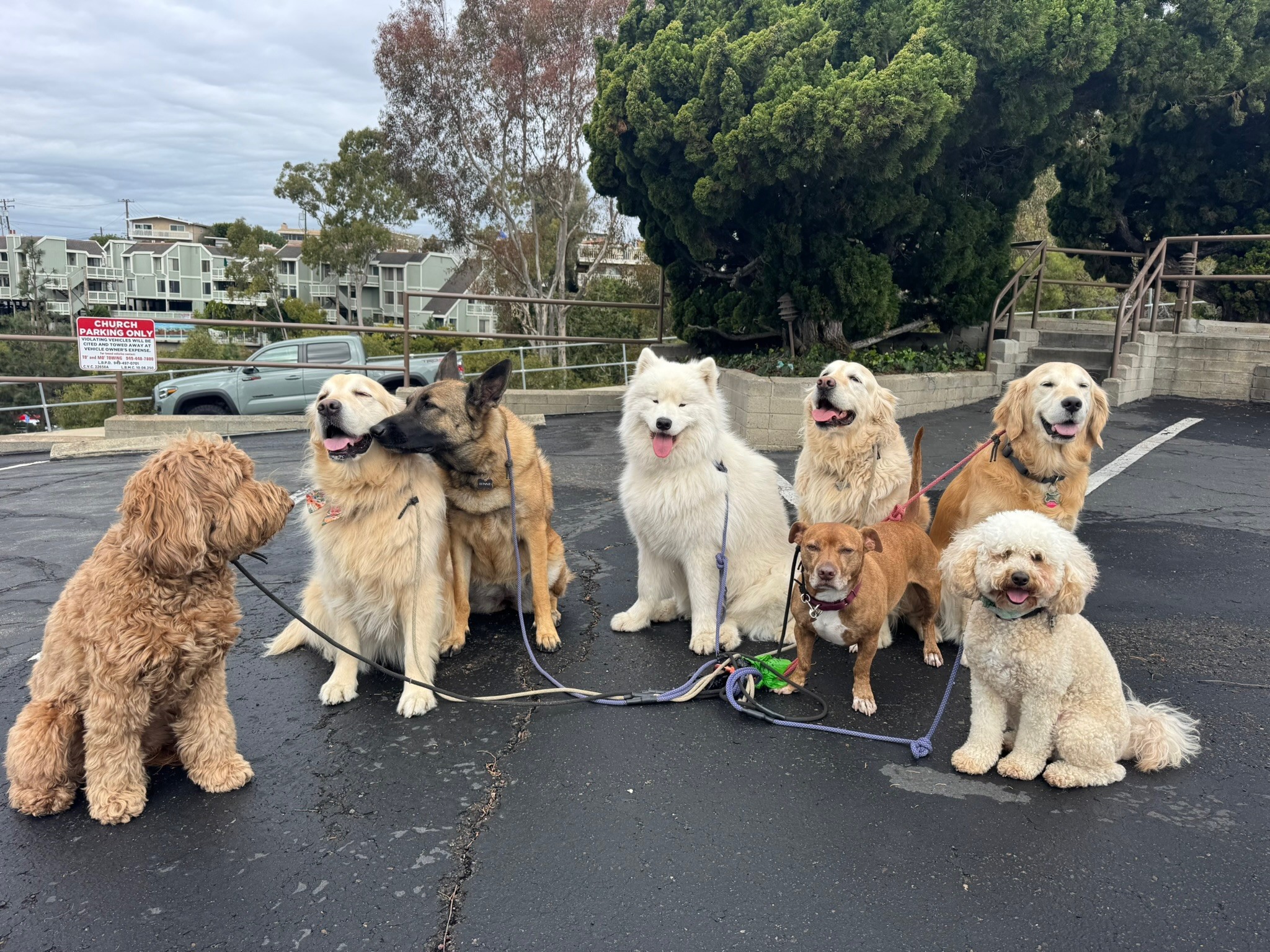
Nine dogs of varying sizes and coat colors gather on an asphalt surface during a Pack Walking Adventures session.
Why Sidewalk Infrastructure Matters for Dog Behavior
Most neighborhoods claim to be walkable. Ladera Ranch delivers it structurally. Sidewalks on both sides of the street. Curb cuts at every corner. Crosswalks with pedestrian signals at major intersections. Street parking that keeps parked cars from blocking the path. When a Pack Leader can walk a group of dogs without stepping into traffic or navigating uneven pavement, the dogs stay focused on the walk instead of reacting to footing changes or sudden obstacles. Consistent infrastructure means consistent behavior.
The neighborhood also controls traffic flow through residential loops rather than through-streets. Most cars traveling through Ladera Ranch are residents heading to or from home, not commuters using the neighborhood as a shortcut. That keeps vehicle speed predictable and reduces horn noise, sudden braking, and other triggers that spike a dog's arousal mid-walk. Dogs who walk in low-chaos environments build composure faster than dogs exposed to unpredictable traffic patterns.
The Family Demographic and Dog Socialization
Ladera Ranch skews heavily toward families with children. Strollers, scooters, bikes, and sidewalk chalk appear daily. For dogs living here, that demographic becomes the socialization baseline. A dog who sees strollers only at the park will react to them as novelty. A dog who passes three strollers per walk learns they are background features. Pack walks formalize that exposure. The Pack Leader positions the group to pass strollers at a controlled distance, rewards calm behavior, and moves on. No forced interaction, no dramatized avoidance. The stroller exists, the dog notices, the walk continues.
Other dogs appear frequently on these streets too. Ladera Ranch has a high pet ownership rate, which means every outing includes at least two or three on-leash encounters with other dogs. Pack walks treat these moments as training opportunities. The group passes another dog without breaking stride. No pulling toward or away. No vocalizations. The dogs in the pack mirror each other's composure, which makes the behavior easier to hold than it would be for a solo dog. Social proof works for dogs the same way it works for humans.
How Pack Walking Routes Work in Ladera Ranch
Routes rotate through three zones to maintain novelty without sacrificing structure. The Sienna Park loop covers the northern residential streets, where sidewalks curve past single-family homes with front yards that back up to larger green spaces. The Covenant Hills connector follows the western edge, where the street climbs slightly and offers longer sight lines. The Oak Knoll circuit stays flat and dense, with narrower gaps between homes and more frequent intersections. Each zone offers different visual and auditory stimuli, but the infrastructure remains consistent: wide sidewalks, minimal traffic, predictable intersections.
Pack Leaders adjust routes based on the group's energy level and behavioral goals. A high-energy group might take the Covenant Hills route for the elevation change. A reactive dog working on impulse control might stick to the Oak Knoll circuit for the frequent stop-and-go practice at crosswalks. The flexibility exists because the infrastructure supports it. Every street in Ladera Ranch can accommodate a pack walk safely.

Eight dogs of varying sizes stand together on grass during a pack walk.
Morning, Midday, and Afternoon Walk Patterns
Pack walks in Ladera Ranch follow three daily time slots, each with different environmental conditions. Understanding those patterns helps explain why consistency matters.
Morning walks (8:00 to 10:00 AM). School drop-off traffic peaks between 8:15 and 8:45. Sidewalks fill with parents walking kids to bus stops. Dogs encounter higher pedestrian density but lower ambient noise because most homes are still quiet. Morning walks prioritize leash skills around people.
Midday walks (11:00 AM to 1:00 PM). Foot traffic drops. Landscaping crews appear on certain days. Delivery trucks arrive at predictable intervals. Dogs practice holding neutral behavior around vehicles and loud machinery without the distraction of heavy pedestrian flow. Midday walks build focus.
Afternoon walks (3:00 to 5:00 PM). School pickup reverses the morning pattern. Kids on bikes, strollers returning from parks, joggers finishing workouts. Afternoon walks layer multiple stimuli at once, which tests a dog's ability to filter distractions. The Pack Leader controls pace and distance to keep the exposure manageable.
Dogs who walk at the same time slot every week begin to anticipate the routine. Anticipation reduces anxiety. A dog who knows that Tuesday midday means a walk through Oak Knoll settles faster in the truck and holds composure better on the leash.
From Unstructured Off-Leash Time to Reliable Leash Behavior
Many families in Ladera Ranch start with dog parks or backyard playdates as the primary outlet for their dog's energy. Those setups work for some dogs but create problems for others. A dog who learns that play means unstructured chaos will struggle to hold calm behavior when on leash in public. Pack walks reverse that pattern. The walk itself becomes the reward. Dogs learn that moving forward, exploring new scents, and being part of a group happen through composure, not excitement.
The shift from off-leash chaos to structured on-leash outings takes time. Most dogs need three to four weeks of consistent pack walks before leash pulling decreases and impulse control improves. The behavior change happens because the routine stays the same. Same Pack Leader, same group composition, same route structure. Dogs stop testing boundaries when the boundaries never shift.
Frequently Asked Questions
How many dogs walk together in a pack?
Four to six dogs per group. Pack size stays small enough that one Pack Leader can monitor every dog's body language and correct behavior in real time. Groups are temperament-matched before the first walk.
Does my dog need prior training to join a pack walk?
No prior training required. Pack Leaders assess behavior during the first walk and adjust group placement if needed. Most dogs adapt to the pack structure within two to three outings.
What happens if my dog reacts to another dog on the route?
The Pack Leader repositions the group to increase distance and redirects your dog's focus back to the walk. Repeated exposure at controlled distances teaches dogs to ignore other dogs rather than react to them.
Can I request a specific route for my dog's pack?
Routes rotate to maintain novelty, but Pack Leaders prioritize behavioral goals when selecting the day's path. If your dog is working on a specific skill, the Pack Leader will choose routes that support that goal.
How do I know which pack my dog is assigned to?
OC Pup Scouts matches dogs to packs based on energy level, size, and temperament. You receive confirmation of your dog's group composition before the first walk, and the group stays consistent week to week.
Written by Mike and Colleen Bass, founders of Pup Scouts. Mike and Colleen have led structured dog care across Maryland, Orange County, and Charlotte since 2015. More about our team.
Get started with OC Pup Scouts, or call (949) 629-0932. Find us on Google as OC Pup Scouts.
Similar Blogs


