Dog Walking in Charlotte for Anxious Dogs: Pack vs Private
Mike and Colleen Bass
Pack Walking

Key Takeaways
For anxious Charlotte dogs, the choice between Pack Walks and Private Walks isn't about which service is better. It's about which service fits the dog's specific anxiety profile and where the dog is in their progression.
Private Walks usually fit best for early-stage anxious dogs, severely anxious dogs, and dogs who escalate around other dogs even at distance. Pack Walks usually fit best for dogs whose anxiety is environmental rather than dog-specific, and for dogs further along in their progression who benefit from peer modeling.
The decision is rarely permanent. Many anxious Charlotte dogs start in Private Walks, build stability over a few months, and graduate into a carefully matched Pack Walk later. Some stay in Private Walks long-term and that's also fine.
When a Charlotte family with an anxious dog reaches out to Pup Scouts, the first decision usually isn't which neighborhood to walk in or which schedule to keep. It's which service is the right starting point: Pack Walks or Private Walks. Both are professional dog walking services. Both run with certified Pack Leaders. Both come with the post-walk report card. The difference for an anxious dog isn't logistics. It's whether the dog needs peer support or solo space to make progress.
This piece is the framework Pup Scouts uses during the in-home assessment to make that recommendation. It lays out which factors matter, which don't, and how anxious Charlotte dogs typically progress through the two services over time.
What kind of anxiety the dog has matters more than how anxious they are
A common mistake is to scale services by anxiety severity: mildly anxious dog gets Pack Walks, severely anxious dog gets Private Walks. The actual decision factor is the trigger profile. A mildly anxious dog who's specifically anxious around other dogs may need Private Walks. A severely anxious dog whose anxiety is environmental (sounds, motion, unfamiliar people) may do well in a small calm Pack Walk because the peer dogs are not the trigger. Sort by trigger first. Severity matters second.
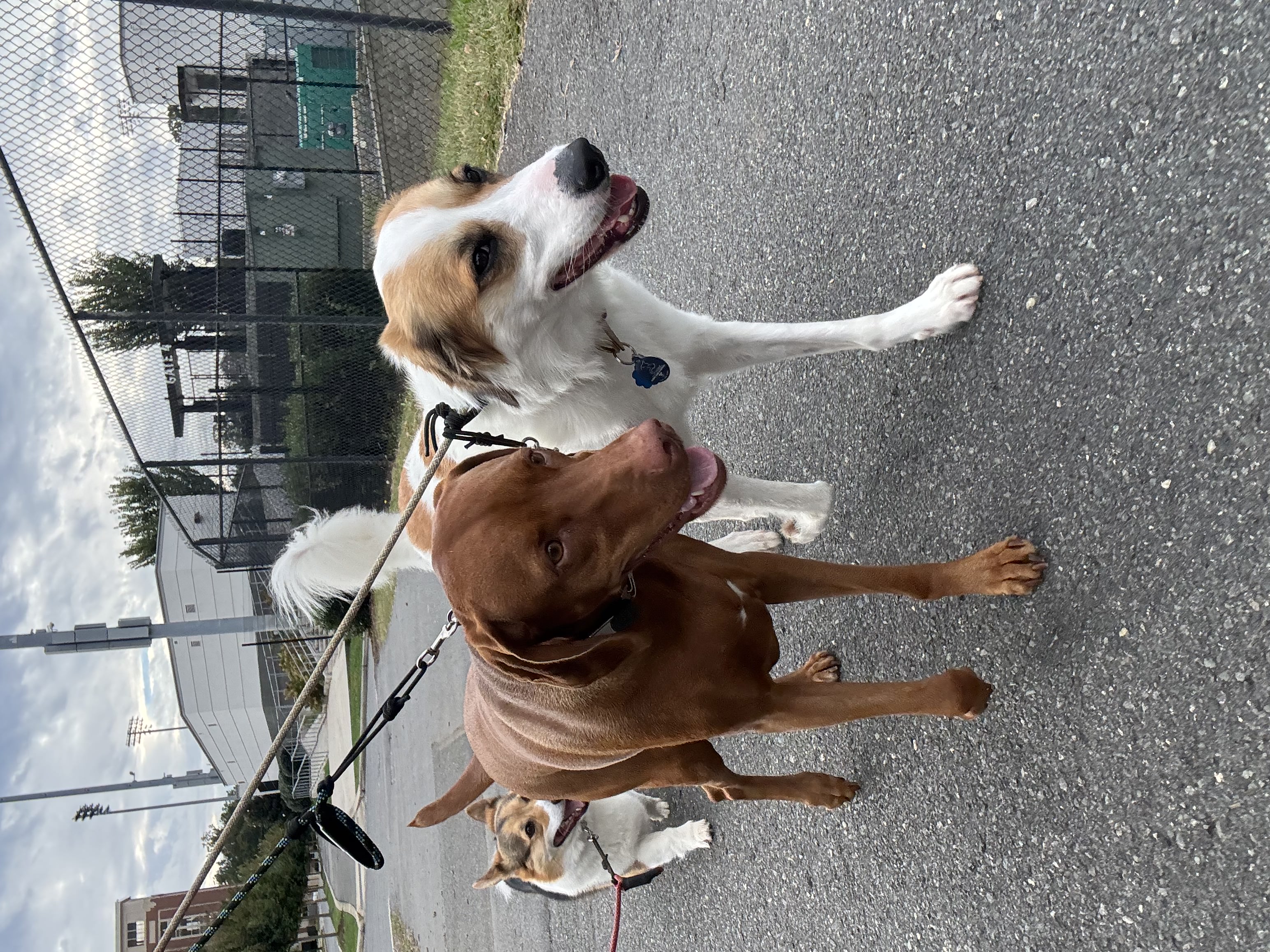
Pack walks offer anxious dogs the comfort of canine companionship while building confidence in a structured group environment.
Side-by-side: Pack Walks vs Private Walks for anxious Charlotte dogs
Factor | Pack Walks | Private Walks |
|---|---|---|
Setting | Structured group walk with 5 to 8 temperament-matched peer dogs | One-on-one with the certified Pack Leader |
Best for | Dogs whose anxiety isn't triggered by other dogs at moderate distance | Dogs whose anxiety includes other dogs, or whose anxiety is severe enough to need full handler attention |
Pacing | Pack pace, with the Pack Leader holding extra buffer for anxious dogs | Fully customized to the dog, with full freedom to slow, pause, redirect, or change route |
Peer modeling | Yes (this is one of the main benefits) | No |
Stimulus exposure | Real-world Charlotte stimuli managed in a small pack | Real-world stimuli managed solo with the handler's full attention |
Cost relative | Lower per walk than Private | Higher per walk; commensurate with one-on-one attention |
Best progression model | Often the second step after a few weeks of Private Walks build stability | Often the right starting point for newly anxious or severely anxious dogs |
Continuity | Same Pack Leader, same pack, same days | Same Pack Leader, same days |
The right choice depends on which row matters most for your specific dog.
When to start with Private Walks
Private Walks usually fit best in five scenarios.
Scenario 1: The dog escalates around other dogs even at moderate distance. If your dog can't pass another dog at 30 feet without escalating, a Pack Walk's group setting is too much. Private Walks let the handler manage exposure on the dog's terms.
Scenario 2: The dog is newly anxious (after a recent move, medical event, or stress incident). Stability has to come first. A few weeks of solo work with a consistent handler often returns the dog to a baseline where Pack Walks become possible.
Scenario 3: The dog has had a bad pack experience elsewhere. Some dogs come to Pup Scouts after a daycare incident, a poorly managed group walk, or an unsafe handler experience. Those dogs need to rebuild trust in a one-on-one setting before re-entering any group.
Scenario 4: The dog is a recent rescue still building basic trust. Rescue dogs in their first weeks or months in a new home benefit from one consistent human handler. Pack composition is too many variables for a dog still learning what "safe" looks like.
Scenario 5: The anxiety is severe enough to need a vet's involvement. For dogs whose anxiety is at the clinical level, Private Walks can run alongside vet care while a treatment plan stabilizes. Pack Walks come later if at all.
When to start with Pack Walks
Pack Walks fit anxious dogs in three specific scenarios.
Scenario 1: The anxiety is environmental, not dog-specific. A dog who's anxious about Plaza Midwood traffic noise but neutral around other dogs at moderate distance is a strong Pack Walk candidate. The peer dogs aren't the trigger; the environment is. A small calm pack actually helps because the peer dogs handle the environmental stimuli calmly and demonstrate the response.
Scenario 2: The dog is socially anxious but not reactive. Some dogs avoid other dogs without escalating around them. They retreat rather than confront. For these dogs, a carefully matched Pack Walk in a small pack of 5 to 6 with calm experienced peers can be the on-ramp to social confidence. The peer dogs are non-threatening, the route is structured, the handler is reading every signal.
Scenario 3: The dog is past the early-stage anxiety phase and has been stable on Private Walks. Many anxious Charlotte dogs graduate from Private Walks to Pack Walks after a few months of stability. The Pack Walk gives them peer engagement they couldn't safely have when they started.
How to decide between Pack Walks and Private Walks
Identify the anxiety trigger profile. Is the anxiety environmental, social, or both? Is it mild, moderate, or severe? Recent or longstanding?
Consider the dog's progression stage. Newly anxious (last 3 months) often warrants Private Walks. Stable for 6+ months often allows Pack Walk consideration.
Schedule the in-home assessment. Pup Scouts evaluates each dog at home before recommending a service. The trigger profile and progression stage become observable when a certified Pack Leader watches the dog in their familiar environment.
Start with the more conservative option if uncertain. When the assessment is borderline, Private Walks is the safer starting point. The dog can always graduate to Pack Walks later. Starting in Pack Walks and stepping back is harder for the dog than starting solo and stepping up.
Plan for re-evaluation. The right service in week 1 may not be the right service in month 6. Pup Scouts re-evaluates anxious dogs regularly and recommends transitions when they fit.
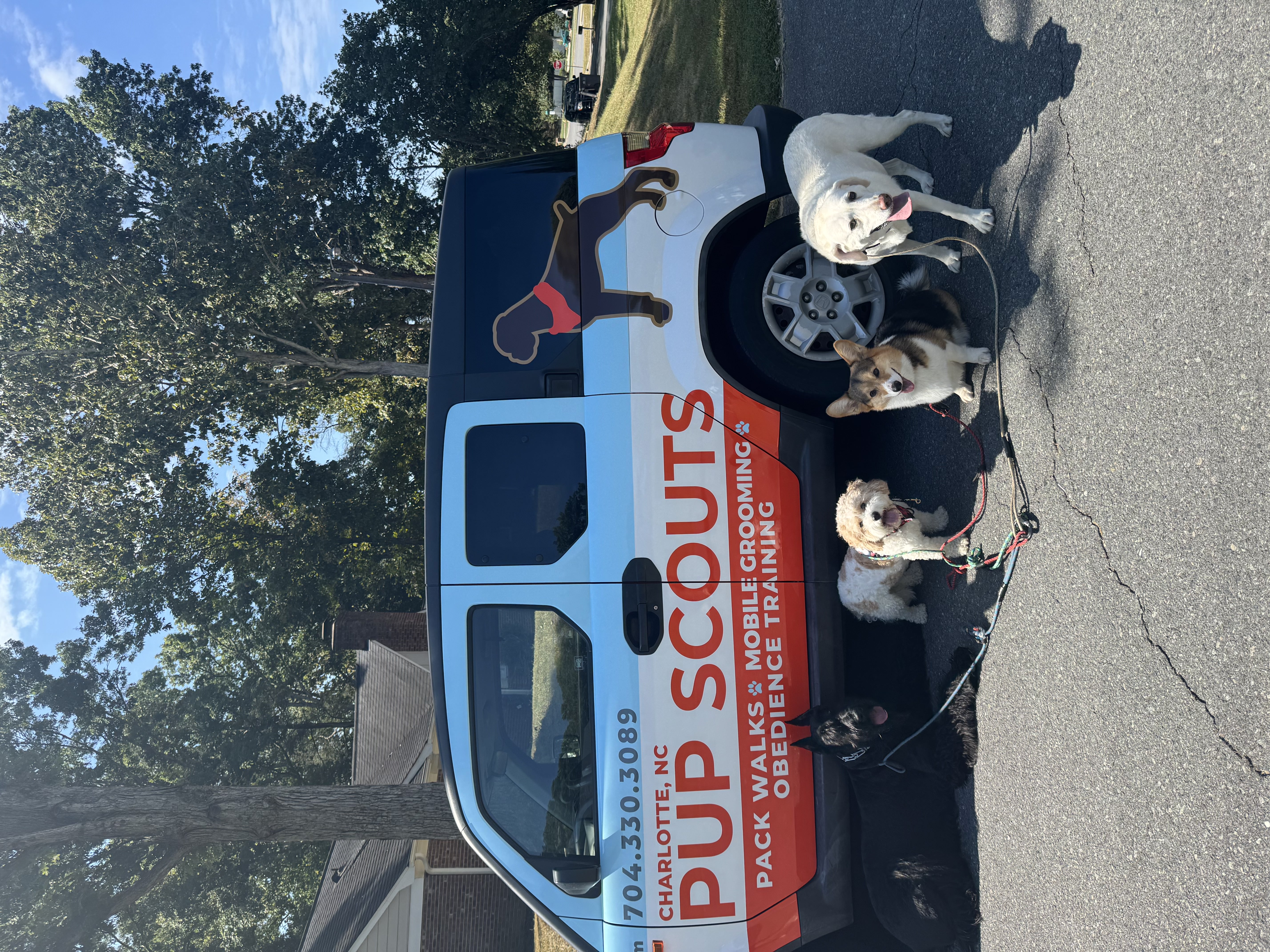
Pack walks bring together dogs of different sizes and temperaments for supervised socialization and exercise in Charlotte.
Common combined paths
Some anxious Charlotte dogs end up using both services in sequence or in combination.
Sequence: Private Walks for 2 to 3 months, then a transition assessment, then a smaller Pack Walk of 5 to 6 calm peers. This is the most common path for moderately anxious dogs.
Combination: Private Walks two days a week plus one Pack Walk day a week. This works for dogs who benefit from peer engagement but still need solo time to maintain stability.
Pack-only with smaller pack: Some anxious dogs do well from the start in a Pack Walk specifically composed for anxious-friendly profiles. A pack of 5 calm experienced peers in Myers Park or SouthPark can be more supportive than solo work for the right dog.
The Pack Leader recommends the path. The family decides.
What progression actually looks like
Most anxious Charlotte dogs see meaningful behavior shifts in 6 to 10 weeks of consistent walks, regardless of which service they start with. The shift typically isn't dramatic. It's a series of small observable wins: less recovery time after a trigger, calmer pacing on the leash, willingness to make eye contact when the handler arrives, anticipation of walk days as good things rather than dreaded events.
The post-walk report card tracks these shifts visit over visit. Families often notice the change in the report card before they notice it in the dog. By month 3, the change is usually obvious in both.
When neither service is the right fit
The honest answer: some anxious dogs need Dog Training before any walking service can work. If the assessment shows the anxiety is severe enough that even Private Walks would create stress without addressing root behavior, Pup Scouts will recommend starting with Dog Training. The certified trainer addresses the specific anxiety patterns at home, then walks resume once the foundation is in place.
This recommendation isn't a setback. It's the right pacing. Dogs who do training first often progress faster on walks afterward than dogs who skip the foundation.
Frequently Asked Questions
Can my anxious dog start in a Pack Walk if I think they'd love the social aspect?
Sometimes, with caveats. The in-home assessment determines whether your dog can safely start in a pack. Even social-curious anxious dogs benefit from a smaller pack of 5 to 6 with calm peers rather than the standard 5 to 8 mixed pack. If the assessment shows your dog isn't quite ready, Pup Scouts will recommend a few weeks of Private Walks first. The wait usually pays off.
Will my dog ever transition from Private Walks to Pack Walks?
Many anxious dogs do. Most who start in Private Walks transition to Pack Walks within 2 to 6 months as their anxiety stabilizes. Some stay in Private Walks long-term because the one-on-one fit is what works best for them. Both outcomes are fine. The goal is the right service for your dog, not graduation through a hierarchy.
How much more do Private Walks cost than Pack Walks?
Private Walks cost more per walk than Pack Walks because the certified Pack Leader is dedicated to one dog. The difference varies by frequency and length. The in-home assessment includes a pricing conversation specific to your dog's recommended schedule.
Can I switch between services week to week?
Generally not week to week, but yes over months. Anxious dogs benefit from consistency in their service type. The Pack Leader and pack composition stay stable. Switching services frequently undermines the consistency that makes anxious-dog progression possible. That said, transitions between Private and Pack Walks happen on a planned basis when the dog is ready.
What if my dog has separation anxiety specifically?
Separation anxiety usually responds best to a combination: Dog Training for the separation-specific behaviors, plus Private Walks during the stabilization period. Pack Walks come later if at all. The in-home assessment determines the right starting combination.
Written by Mike and Colleen Bass, founders of Pup Scouts. Mike and Colleen have led structured dog care across Maryland, Orange County, and Charlotte since 2015. More about our team.
Get started with CLT Pup Scouts, or call (704) 330-3089. Find us on Google as CLT Pup Scouts.
Similar Blogs


