Dog Walking in Maryland: Why We Don't Rotate Pack Leaders
Mike and Colleen Bass
Pack Walking

Key Takeaways
Most dog walking services rotate walkers across families based on schedule. Pup Scouts doesn't. One certified Pack Leader gets assigned to your dog and stays your dog's lead, week over week.
Continuity matters more for dogs than humans usually realize. Dogs read handler-specific cues (voice tone, leash pressure, body language) and learn from one person's signals far faster than from rotating signals.
The same-Pack-Leader rule shapes everything from Pack Walking Adventures to Private Walks to the post-walk report card. It's not a perk. It's a structural part of how Pup Scouts runs dog care across Maryland.
Most dog walking services in Maryland rotate. The walker who handles your Annapolis dog on Monday isn't the walker who handles your dog on Wednesday. The Friday walker is someone else again. From the service's perspective, this is efficient: one walker gets sick, another covers the route. From the dog's perspective, every walk is a recalibration. New voice. New pace. New corrections. New redirections. The dog spends the first ten minutes of every walk learning the handler before learning the walk.
Pup Scouts runs differently. One certified Pack Leader gets assigned to your dog at intake and stays your dog's lead. Same person on Monday. Same person on Wednesday. Same person six months from now, unless the family or the Pack Leader explicitly changes the arrangement. This applies across Pack Walking Adventures in Maryland and the Private Walks service. It's the structural choice that makes the rest of the program work.
This piece walks through why that choice matters and how it shows up day to day.
What "same Pack Leader" actually means
It means your dog has one human leading their walks, full stop. The certified Pack Leader who runs your dog's first walk runs the second, the tenth, the fiftieth. The Pack Leader is the consistent variable across hundreds of walks and report cards. Substitutes happen rarely (vacation coverage, sick days), and when they do, the substitute is briefed on your specific dog before the walk, not assigned blindly.
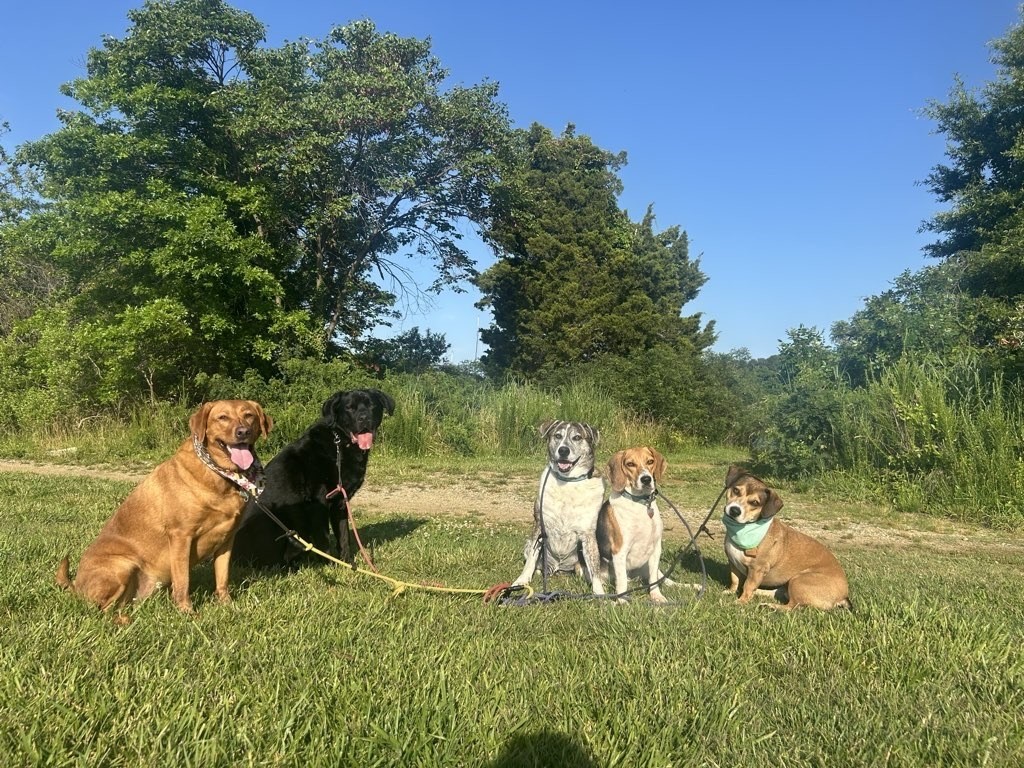
Each dog responds to their familiar Pack Leader's unique cues and commands developed over time together.
Reason 1: Dogs learn from individual cues, not generic ones
Every handler signals differently. A leash twitch from one person means "redirect attention." The same twitch from another person means nothing. A change in walking pace from one person is a "we're slowing for a stimulus" cue. From another person, it's just slower walking. Dogs read the specific person, not a universal language of dog walking.
When the Pack Leader stays consistent, the dog learns one set of cues and gets fluent in them. The walk becomes communication, not negotiation. When the Pack Leader rotates, the dog never gets fluent. Every walk is conversational static.
Reason 2: Trust between dog and handler is built, not assumed
A dog's trust in a handler isn't a switch. It builds through repetition: the handler showed up at the same time, on the same block, with the same approach. The dog calibrated and recalibrated and eventually settled. That trust takes weeks to establish. With rotating walkers, the dog never gets there. With one Pack Leader, the dog reaches it within the first month and continues compounding from there.
Reactive dogs and anxious dogs benefit from this most. They can't afford to recalibrate their trust every other day. Confident social dogs can tolerate rotation, but they don't actually prefer it.
Reason 3: Behavior changes get noticed before they escalate
The certified Pack Leader who has walked your Annapolis or Bethesda or Severna Park dog every week for three months knows your dog's baseline. They notice the small things first: a hesitation that wasn't there last week, a slightly different leash response, an unusual reaction to a stimulus the dog used to ignore. Those small signals are early data. Behavior changes are easier to address when they're caught early.
A rotating walker doesn't have a baseline. They have a snapshot from today. By the time a behavior shift is obvious, it's already been escalating for weeks.
Reason 4: The post-walk report card is more useful when the same person writes it
Every Pack Walk and Private Walk ends with a post-walk report card sent to the dog's family. When the same Pack Leader writes those cards visit over visit, the cards become a longitudinal record. You're not reading isolated reports from rotating handlers. You're reading one continuous story of how your dog is doing, told by the person closest to it.
That continuity makes the report card more than a courtesy. It becomes a planning tool. Patterns are visible. Progress is measurable. Concerns get raised against the right context.
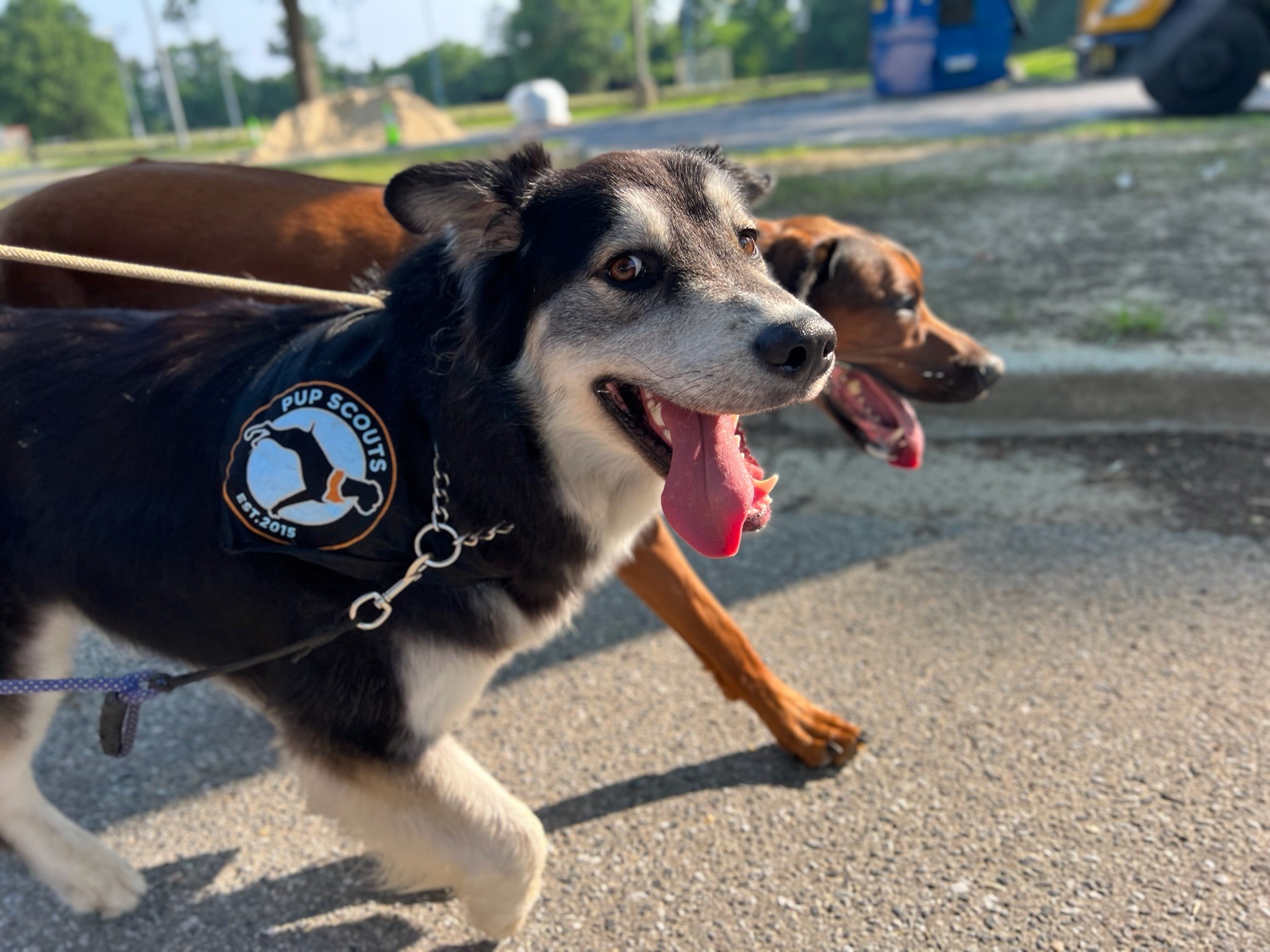
Our Pack Leaders develop deep bonds with dogs through consistent, daily pack walking experiences across Maryland.
Reason 5: It's how Pup Scouts hires Pack Leaders in the first place
The hiring choice and the assignment choice are linked. Pup Scouts hires Pack Leaders for relationship work, not for shift coverage. Certified Pack Leaders go through dedicated training before any client work. They're not interchangeable. They specialize in specific neighborhoods, route types, and dog profiles. Pairing one Pack Leader to your dog uses that specialization. Rotating Pack Leaders would waste it.
This is a structural choice, not a marketing position. The rotation alternative is more efficient for the business. Continuity is more effective for the dog. Pup Scouts chose the dog.
Pack Leader continuity by service
Service | Same Pack Leader? | What changes if continuity breaks |
|---|---|---|
Pack Walking Adventures (Explorer Hour, Scout Expedition) | Yes | New Pack Leader requires re-acclimation; dog usually settles within 2 to 3 walks |
Yes | Same dog-specific cue work transfers; substitute walks adjust pacing | |
Same certified trainer for the program | Custom programs continue; the trainer-family relationship is the through-line | |
Overnight Boarding | Same handler when scheduling allows | Boarding handlers and Pack Leaders may differ; consistency is maintained where possible |
Mobile Grooming | Same Fear-Free Certified Groomer | Same continuity rule applies on the grooming side |
The continuity rule extends across the brand, not just Pack Walks. Different services have different specialists, but within each service, the family gets one consistent face.
How this affects an Annapolis or Bethesda or Severna Park family's experience
The day-to-day experience for a Maryland family with a Pup Scouts Pack Leader looks like this: the same person arrives at roughly the same time on the same days. Your dog learns that person's car, voice, leash style, and pace. The dog stops needing the first ten minutes of each walk to recalibrate. By month two, the dog reads the Pack Leader's arrival as a reliable signal that today's good thing is starting. The family stops worrying about "what kind of walk the dog will get this week" because that variable is already locked.
Some families talk about this as the dog "having a person." That's a fair description.
When does Pup Scouts switch a Pack Leader?
Switches happen when they actually need to, not on a rotation. Common reasons:
The Pack Leader leaves Pup Scouts (rare, but it happens; in those cases the family is briefed and the new Pack Leader is introduced via a transition walk)
The dog's behavior profile shifts significantly and a different Pack Leader's specialty fits better (after a major medical event, after a move within Maryland, after a stress event)
The family requests a change for any reason
What doesn't trigger a switch: schedule convenience, rotation efficiency, "trying something different."
Frequently Asked Questions
What happens if my Pack Leader is sick or on vacation?
A substitute Pack Leader covers the walk, briefed on your specific dog before arrival. Pup Scouts notifies the family in advance whenever possible. The substitute follows the established cue patterns to the extent they can; the dog usually handles the substitute walk fine for short coverage and resumes normal rhythm when the regular Pack Leader returns.
Can I request a specific Pack Leader for my Annapolis dog?
You can request, and Pup Scouts will accommodate when scheduling and route logistics allow. Most matches happen during the in-home assessment based on which Pack Leader's specialty and route coverage fit your dog. If the match doesn't feel right within the first few walks, the family can request a switch.
What if my dog doesn't bond with their assigned Pack Leader?
This is uncommon (the in-home assessment is designed to prevent it), but it happens. Tell Pup Scouts. The family can request a different Pack Leader and Pup Scouts will reassign without a long process. The Pack Leader is supposed to be the right human for your dog, not just any human in the program.
Does the same Pack Leader walk my dog with the rest of the pack?
Yes. The Pack Leader runs both the assigned dog and the rest of the matched pack of 5 to 8 dogs. The Pack Leader knows every dog in their pack the same way they know your dog. That collective familiarity is what allows the pack to function during real-world moments.
How does this work if I have two dogs from the same household?
Both dogs are typically assigned to the same Pack Leader, even if they're in different packs. The Pack Leader knows the household, the routine, the family's preferences. This often means one Pack Leader running two visits to your home (one for each dog's matched pack) rather than two different walkers showing up.
Written by Mike and Colleen Bass, founders of Pup Scouts. Mike and Colleen have led structured dog care across Maryland, Orange County, and Charlotte since 2015. More about our team.
Get started with MD Pup Scouts, or call (410) 980-7855. Find us on Google as MD Pup Scouts.
Similar Blogs


