Dog Training in Charlotte: In-Home vs Group Classes
Mike and Colleen Bass
Dog Training

Key Takeaways
In-home dog training addresses behavioral issues in the exact environment where problems occur, ideal for anxious or reactive dogs who struggle in group settings.
Group classes build social exposure and distraction work for confident dogs who need structured peer interaction, typically offered in controlled indoor or outdoor spaces.
The right format depends on your dog's current behavior profile, not your preference. Anxious dogs overwhelm in groups, while under-socialized dogs need controlled peer exposure to progress.
Uptown Charlotte mornings move quickly. Commuters fill light-rail platforms. Dogs cross Third Ward sidewalks on leash. South End greenways see runners and stroller traffic by 7am. It's not chaotic, but it's active. A dog who freezes at the sight of another dog three blocks away can't navigate this. A puppy who has never been off their home block doesn't know how to process it yet. The question isn't whether your dog needs training. It's where that training should happen.
Dog training in Charlotte can take place in your living room, at a local training facility, or in a park. Each format serves a different starting point. The right choice depends on what your dog can handle now, not what you hope they'll handle eventually.
What In-Home and Group Training Actually Mean
In-home dog training is private instruction delivered in the dog's home environment, led by a certified trainer who works one-on-one with the dog and owner. Sessions address the specific behaviors occurring in that space: doorway lunging, counter-surfing, crate anxiety, reactivity to neighborhood sounds.
Group classes are structured training sessions held at a facility or outdoor venue, typically with 6 to 10 dog-handler pairs working simultaneously under instructor guidance. They emphasize controlled exposure to other dogs, generalized obedience commands, and distraction tolerance.
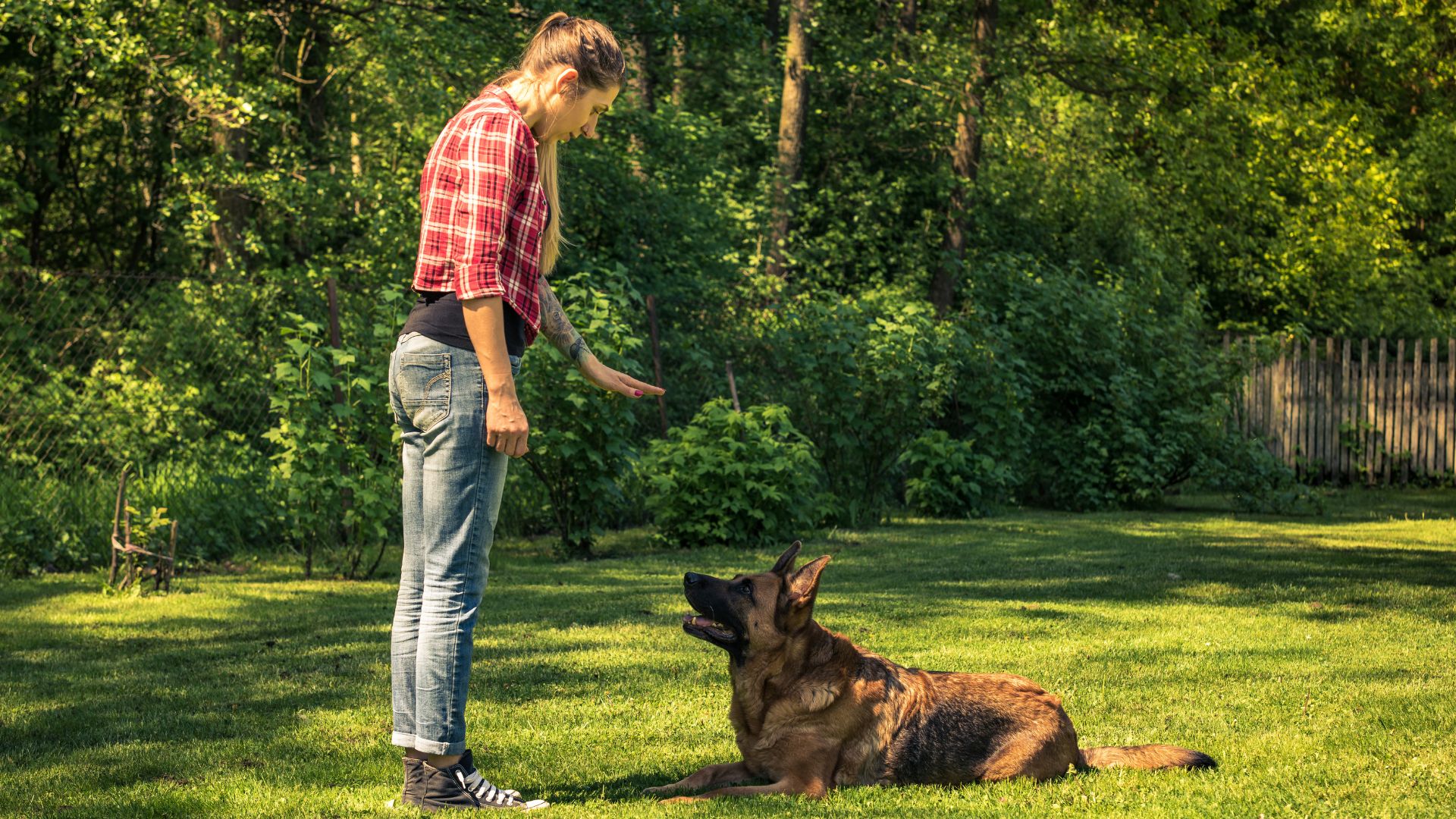
A Pack Leader works with a German Shepherd on an open grassy area surrounded by trees.
The Core Difference: Environment Control
In-home training isolates variables. The trainer sees where your dog sleeps, how they react to the doorbell, what triggers barking at the window. Sessions happen in the exact context where problems show up. No transport stress. No unfamiliar smells. No other dogs yet.
Group classes add variables intentionally. Other dogs are the point. The environment is neutral ground. The goal is generalization: your dog learns to hold a sit-stay while another dog walks past, to ignore a tennis ball rolling across the floor, to recall through a room with five handlers calling their own dogs.
The format you choose controls how much your dog has to manage at once.
The Decision Matrix: Which Format Fits Your Dog?
Use your dog's current behavior profile, not their breed or age, to determine starting format.
Dog profile | In-home training | Group class | Why |
|---|---|---|---|
Anxious / fearful | ✅ Start here | ❌ Wait until foundations hold | Anxious dogs shut down in group settings. Build confidence at home first. |
Leash-reactive | ✅ Start here | ❌ Wait until controlled exposure succeeds | Reactive dogs rehearse bad behavior in group classes before they're ready. Distance and control matter first. |
Confident but untrained | ✅ or ➡️ Either works | ✅ Good fit | If the dog isn't stressed by novelty, group classes provide efficient distraction work. |
Under-socialized puppy | ➡️ Depends on age | ✅ After vaccine series complete | Puppies need peer exposure, but not before 12 to 16 weeks and full immunity. In-home foundations bridge the gap. |
Senior dog, new behavior issue | ✅ Start here | ❌ Unlikely to benefit | Seniors often develop anxiety or pain-related behaviors better addressed in low-stress environments. |
The mistake most Charlotte pet parents make: enrolling a reactive dog in a group class because "they need to learn to be around other dogs." That dog isn't ready. They're over-threshold the moment they walk into the room. No learning happens.
When In-Home Training Is the Right Start
In-home training fits four scenarios well.
1. The dog has a behavior problem tied to the home. Separation anxiety, crate refusal, resource guarding in the kitchen, door-charging when the mail arrives. A group class can't address these. The trainer needs to see the trigger in context.
2. The dog is anxious or fearful in new environments. Some dogs tuck their tail the moment they leave the driveway. Asking them to focus on obedience cues in a room full of strangers and unfamiliar dogs is unrealistic. In-home sessions let the dog stay below their stress threshold while building skills.
3. The household has specific challenges a group class won't cover. Multi-dog households, homes with young children, or owners with mobility limitations benefit from instruction tailored to their exact setup.
4. The dog is leash-reactive. Reactivity requires distance management and controlled exposure. Group classes place reactive dogs too close to triggers too quickly. In-home training establishes foundation skills first, then transitions to controlled outdoor work at the dog's pace.
Private training doesn't mean the dog never sees another dog. It means exposure happens on a timeline the dog can handle, with the trainer controlling distance and intensity.
When Group Classes Work Better
Group classes serve dogs who are behaviorally ready for distraction and social exposure.
1. The dog is confident but needs structure. A friendly, social dog who pulls on leash or ignores recalls benefits from group-class distraction work. Other dogs become teaching tools, not stressors.
2. The owner wants ongoing skill development. Group classes often run in multi-week series (6 to 8 weeks). They provide accountability and incremental progression. In-home training typically delivers faster initial results but requires the owner to maintain consistency afterward.
3. The dog needs controlled socialization. Puppies and adolescents who haven't been exposed to enough dogs benefit from the structured interaction group classes provide. This is not the same as a dog park. It's supervised, with clear rules and instructor intervention when needed.
4. Cost is a primary factor. Group classes cost less per session than private in-home training. For a dog who doesn't have severe behavioral issues, the format is efficient.
The environment in a group class isn't neutral for every dog. If your dog spends the entire session focused on other dogs instead of you, they're not learning obedience. They're practicing distraction.
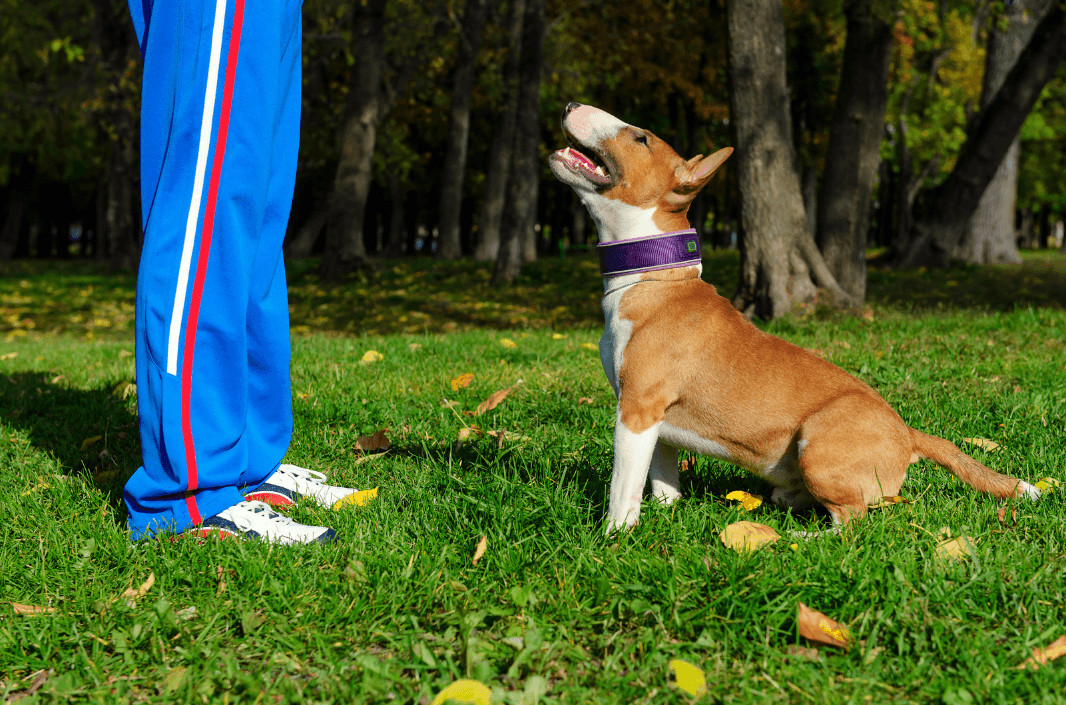
One brown and white dog sits on grass while a handler holds training equipment nearby.
Profile Breakdown: What Each Dog Type Needs
Anxious Dogs
Anxious dogs benefit from in-home training that builds confidence in familiar surroundings first. Once basic cues (sit, stay, place command) hold reliably at home, the trainer introduces low-level outdoor distractions: a quiet sidewalk, a parked car with the engine running, a neighbor walking past at distance.
Group classes come later, if at all. Some anxious dogs never need group exposure. They learn to navigate their actual daily life (vet visits, walks through their neighborhood, car rides) without requiring peer-dog interaction.
Reactive Dogs
Leash reactivity is distance-sensitive. A reactive dog may lunge at another dog 15 feet away but stay calm at 40 feet. In-home training establishes this threshold, then uses controlled setups to gradually reduce it. The trainer brings in a neutral helper dog at a known safe distance, rewards calm behavior, and increases difficulty incrementally.
Group classes place reactive dogs inside their threshold distance immediately. The result: rehearsal of the exact behavior you're trying to eliminate.
Social, Confident Dogs
These dogs thrive in group classes. They're not stressed by novelty or proximity to other dogs. The challenge is focus. Group-class environments teach them to ignore exciting distractions and respond to their handler. This translates directly to real-world scenarios: walking past a dog park, holding a stay while another dog approaches, ignoring a squirrel mid-recall.
In-home training works for these dogs too, but it's less efficient. The owner has to create distractions artificially (dropping a toy mid-command, asking a neighbor to walk past the window). Group classes provide distractions naturally.
Puppies
Puppies under 16 weeks shouldn't attend group classes until their vaccine series is complete. The risk of exposure to parvo or distemper outweighs the training benefit. In-home training during this window focuses on crate conditioning, bite inhibition, and early socialization with known-vaccinated dogs in controlled settings.
Once vaccinated, group puppy classes are ideal. Puppies learn bite inhibition from each other, practice recalls in chaotic environments, and generalize basic cues across different spaces. The socialization window closes around 14 to 16 weeks. Waiting until six months to start group work misses critical exposure time.
Senior Dogs
Senior dogs develop new behaviors for two reasons: pain or cognitive decline. A 10-year-old dog who suddenly starts snapping at visitors likely has an underlying medical issue. A 12-year-old who begins barking at night may have canine cognitive dysfunction.
In-home training addresses these behaviors in context and allows the trainer to recommend veterinary consultation when appropriate. Group classes don't serve seniors well. The physical demands (holding position for extended periods, navigating obstacles) and sensory overload (noise, unfamiliar dogs) often worsen anxiety.
The Transition Point: When to Switch Formats
Most dogs don't stay in one format forever. The pattern for anxious or reactive dogs:
In-home foundation work (4 to 6 weeks). Basic cues, threshold identification, calm protocols.
Controlled outdoor exposure (2 to 4 weeks). Trainer-led walks in low-distraction environments, gradually increasing difficulty.
Optional group class (6 to 8 weeks). Only if the dog demonstrates calm behavior around other dogs at close range during Step 2.
For confident, social dogs, the pattern reverses:
Group class (6 to 8 weeks). Obedience foundations, distraction work, social exposure.
In-home follow-up (optional, 1 to 2 sessions). Address household-specific issues (doorway behavior, counter-surfing) that group classes don't cover.
The trainer decides when a dog is ready to transition, not the owner's timeline or preference.
What "Real-World Skills" Actually Means in Charlotte
Charlotte's layout demands specific skills. Uptown and South End require leash work on crowded sidewalks. Dilworth and Myers Park have narrow streets where dogs pass each other closely. Plaza Midwood has restaurant patios where dogs need to hold calm positions while foot traffic moves past.
In-home training prepares dogs for their actual environment. If you live in Uptown and your dog will spend time at rooftop bars, the trainer works on place commands and duration holds in your living room first, then transitions to outdoor cafe setups.
Group classes prepare dogs for generalized obedience. The skills translate, but they're not context-specific. A dog who can hold a sit-stay in a training facility may still lunge at skateboards on the Rail Trail if they've never been exposed to wheeled distractions.
Our Charlotte training program starts with an in-home assessment to determine which format fits your dog's current state. Some dogs go straight into group work. Most benefit from private sessions first.
How to Evaluate a Trainer or Class Before Enrolling
For In-Home Trainers
Ask three questions:
What certifications do you hold? Look for CPDT-KA (Certified Professional Dog Trainer to Knowledge Assessed) or equivalent. Avoid trainers who rely solely on "years of experience" without formal credentials.
What methods do you use? Balanced training (combining positive reinforcement with corrections) works for most dogs. Purely punishment-based methods (prong collars as primary tools, alpha rolls) create more problems than they solve.
Do you offer follow-up support? Training doesn't end after six sessions. The best trainers provide phone or text support between sessions and schedule check-ins after the program concludes.
For Group Classes
Ask three different questions:
What's the dog-to-instructor ratio? Anything above 8:1 means individual dogs won't get meaningful feedback. Look for 6:1 or better.
How do you handle reactive dogs in class? The answer should include: screening process during enrollment, protocols for dogs who become over-threshold mid-session, and criteria for recommending private training instead.
Can I observe a class before enrolling? Reputable facilities allow prospective clients to watch. If they don't, walk away.
Red flags for both formats: guarantees ("your dog will be trained in four weeks"), pressure to commit to long-term packages upfront, or unwillingness to explain techniques in plain language.
Frequently Asked Questions
Can my reactive dog ever attend a group class?
Yes, but only after private training establishes calm behavior around other dogs at close range. Most reactive dogs need 6 to 10 weeks of in-home and controlled outdoor work before they're ready for group settings. Some never need group exposure. They learn to navigate their actual daily environment without requiring peer-dog interaction.
How long does in-home training take to see results?
Most dogs show measurable improvement within 2 to 3 weeks if the owner practices daily between sessions. Severe behavioral issues (aggression, separation anxiety) require 8 to 12 weeks. The timeline depends on consistency, not the trainer's skill alone.
Are group classes safe for puppies?
Only after the vaccine series is complete, typically around 16 weeks. Before that, puppies risk exposure to parvo and distemper. In-home training during the early weeks focuses on crate conditioning and socialization with known-vaccinated dogs in controlled settings.
What if my dog does poorly in a group class?
If your dog spends the session fixated on other dogs, barking, or unable to focus on you, they're not ready. The instructor should recommend transitioning to private training. Continuing in a group class when a dog is over-threshold reinforces the exact behaviors you're trying to eliminate.
Do I need ongoing training after a program ends?
Training is maintenance, not a one-time fix. Most dogs benefit from occasional refresher sessions (every 6 to 12 months) or structured activities that keep skills sharp. Pack walks, advanced obedience classes, or scent work all serve as ongoing reinforcement.
Written by Mike and Colleen Bass, founders of Pup Scouts. Mike and Colleen have led structured dog care across Maryland, Orange County, and Charlotte since 2015. More about our team.
Get started with CLT Pup Scouts, or call (704) 330-3089. Find us on Google as CLT Pup Scouts.
Similar Blogs


